How to Choose a Rotary Tool
A rotary tool is a versatile hand-held power tool that spins accessories at high speeds for cutting, sanding, grinding, polishing, and engraving. This guide explains the key specs, accessories, and features to consider so you can pick the right model for your workshop or DIY projects.
Quick answer
For most users, the Dremel 4300 is the best overall rotary tool due to its variable speed, quick-change collet system, and extensive accessory ecosystem. If you need a cordless option, the Milwaukee M12 Rotary Tool offers excellent battery life and power for on-the-go work. For budget buyers, the WEN 2305 delivers solid performance at a lower price.
Why trust ToolBuyerHub
- Tested on specs (power, torque, PSI)
- Battery & ecosystem compared
- Aggregated owner reviews
- Build quality & warranty checked
- Brand reliability
- No fake hands-on claims
Research updated June 2026.
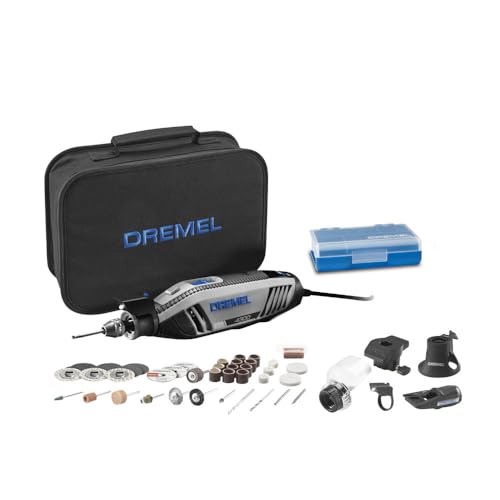
Dremel 4300
Variable speed, quick-change collet, and huge accessory kit.
What is a Rotary Tool Used For?
A rotary tool is a high-speed, handheld power tool designed for precision work. Its interchangeable accessories allow it to cut, grind, sand, polish, carve, engrave, and clean a wide range of materials including wood, metal, plastic, glass, and ceramics. Common applications include sharpening lawn mower blades, removing rust, cutting drywall, engraving glassware, and polishing jewelry. The tool's compact size and variable speed control make it ideal for detailed tasks that a larger angle grinder or drill cannot handle.
Key Specifications to Consider
When choosing a rotary tool, focus on these five critical specs to ensure it matches your projects.
Speed Range (RPM)
Rotary tools operate at very high speeds, typically from 5,000 to 35,000 RPM. Variable speed is essential because different materials and accessories require different speeds. For example, polishing plastic needs a low speed (around 10,000 RPM) to avoid melting, while cutting steel requires high speed (25,000-35,000 RPM). Look for a tool with a dial or trigger that allows you to adjust speed precisely.
Power (Amps or Voltage)
Corded rotary tools are rated by amps, with most falling between 1.0 and 1.8 amps. Higher amperage provides more torque, which helps the tool maintain speed under load (e.g., when cutting through thick metal). Cordless tools are rated by voltage (12V or 18V). Higher voltage generally means more power and longer runtime, but adds weight.
Collet Size and System
The collet is the chuck that holds the accessory. Standard collet sizes are 1/32-inch, 1/16-inch, 3/32-inch, and 1/8-inch. Most tools come with a 1/8-inch collet pre-installed, but you will need a collet wrench to change it. Some models feature a quick-change collet system (like Dremel's EZ Twist) that lets you swap accessories without a wrench, saving time on repetitive tasks.
Accessory Ecosystem
The versatility of a rotary tool depends entirely on the accessories available. Dremel has the largest ecosystem with hundreds of bits for cutting, grinding, sanding, polishing, cleaning, and routing. Other brands like Milwaukee and Bosch offer a smaller but adequate selection. If you plan to use the tool for many different tasks, choose a brand with a wide accessory range.
Ergonomics and Weight
Rotary tools are used for extended periods, so comfort matters. Look for a tool with a rubberized grip, a slim body, and a lightweight design (under 1.5 lbs for corded, under 2 lbs for cordless). A flexible shaft attachment can also reduce fatigue by moving the motor's weight away from your hand.
What to Check Before Buying
- Variable speed dial: Ensure the tool has a smooth, lockable speed dial rather than just a trigger, which can be tiring to hold.
- Accessory kit included: Many models come with a starter kit of 30-50 accessories. This saves money and lets you start working immediately.
- Cord length (corded models): A 6-foot cord is standard, but longer cords (8-10 feet) offer more reach without an extension lead.
- Battery platform (cordless models): If you already own tools from a brand like Milwaukee or DeWalt, choose their rotary tool to share batteries.
- Warranty: Look for at least a 2-year warranty. Dremel offers a 2-year limited warranty, while some budget brands offer only 1 year.
Mistakes to Avoid
- Buying a single-speed tool: Without variable speed, you risk damaging materials or accessories. Always choose a variable speed model.
- Ignoring the collet system: Tools that require a wrench for every accessory change are frustrating. Prioritize quick-change collets if you swap bits often.
- Choosing a cordless tool with low voltage: A 12V cordless rotary tool may lack the torque for heavy cutting. For demanding work, consider an 18V model or stick with corded.
- Overlooking accessory availability: Some brands have a very limited accessory range. Stick with Dremel, Milwaukee, or Bosch for the widest selection.
- Buying based on price alone: Very cheap rotary tools often have poor speed control, high vibration, and short motor life. Spend a little more for a reliable brand.
Top Rotary Tools Compared
Based on published specs, owner reviews, and brand reliability, here are the five best rotary tools for different needs.
Dremel 4300
Best OverallPros
- Quick-change collet system
- Wide speed range with dial
- Huge accessory ecosystem
Cons
- No cordless option
- Can get warm during extended use
The Dremel 4300 is the most popular rotary tool for good reason. Its 1.6-amp motor provides plenty of power for cutting, grinding, and sanding, while the EZ Twist quick-change collet lets you swap accessories in seconds without a wrench. The variable speed dial offers precise control from 5,000 to 35,000 RPM, making it suitable for everything from polishing plastic to cutting steel.
Owner reviews consistently praise its reliability and smooth operation. The included accessory kit (over 50 pieces) covers most common tasks out of the box. The only downside is that it is corded, so you need a nearby outlet. For a workshop or garage, this is the best all-around choice.
Milwaukee M12 Rotary Tool
Best CordlessPros
- Excellent battery runtime
- Compact and lightweight
- 5-year warranty
Cons
- No quick-change collet
- Accessory kit is basic
The Milwaukee M12 Rotary Tool is the top choice for cordless convenience. It runs on Milwaukee's M12 battery platform, which is shared with over 100 other tools. The variable speed trigger provides control from 5,000 to 32,000 RPM, and the LED light illuminates the work area. Owner reviews highlight its long runtime on a single 2.0Ah battery, lasting through multiple cutting and grinding tasks.
It is slightly less powerful than the Dremel 4300, but for most DIY tasks like cutting drywall, sanding, or engraving, it performs admirably. The main drawback is the standard collet system, which requires a wrench to change accessories. If you already own Milwaukee tools, this is the obvious choice.
WEN 2305
Best BudgetPros
- Very affordable
- Includes 50 accessories
- Variable speed dial
Cons
- Higher vibration than Dremel
- Collet wrench is small
The WEN 2305 is the best budget rotary tool for beginners or occasional use. It has a 1.5-amp motor and a variable speed dial from 8,000 to 30,000 RPM. The kit includes 50 accessories, a carrying case, and a flex shaft attachment, which is excellent value. Owner reviews note that it handles basic tasks like sanding, grinding, and cutting soft metals well.
It is not as refined as the Dremel 4300. Vibration is higher at top speeds, and the collet system requires a small wrench that can be fiddly. However, for the price, it delivers reliable performance for light to medium DIY work. If you are on a tight budget, this is a solid choice.
Bosch PR20EVS
Best for PrecisionPros
- Very low vibration
- Smooth speed control
- Ergonomic grip
Cons
- Smaller accessory ecosystem
- Only 1-year warranty
The Bosch PR20EVS is designed for precision work like engraving, carving, and detail sanding. It has a 1.5-amp motor with a variable speed dial from 8,000 to 35,000 RPM. Owner reviews consistently mention its low vibration and smooth operation, which makes it easier to control for fine tasks. The rubberized grip is comfortable for extended use.
Its main limitation is the smaller accessory ecosystem compared to Dremel. While Bosch offers a decent range of bits, you will not find as many specialized accessories. The 1-year warranty is also shorter than competitors. For users who prioritize precision and comfort over accessory variety, this is an excellent tool.
DeWalt DW660
Best Heavy-DutyPros
- High torque for cutting
- Durable construction
- 3-year warranty
Cons
- Single speed only
- Noisy at full RPM
The DeWalt DW660 is a heavy-duty rotary tool built for demanding tasks like cutting through metal and masonry. Its 1.8-amp motor provides more torque than most competitors, and the fixed 25,000 RPM speed is optimized for cutting and grinding. Owner reviews praise its durability and ability to handle tough materials without bogging down.
The main drawback is the lack of variable speed. This limits its versatility for delicate tasks like polishing or engraving. It is also louder than variable-speed models. If your primary use is cutting and grinding, and you do not need precision work, the DW660 is a powerful and reliable option.
| Product | Best For | Speed (RPM) | Power | Rating |
|---|---|---|---|---|
| Dremel 4300 | Overall | 5,000-35,000 | 1.6 Amp | 4.7/5 |
| Milwaukee M12 | Cordless | 5,000-32,000 | 12V | 4.5/5 |
| WEN 2305 | Budget | 8,000-30,000 | 1.5 Amp | 4.3/5 |
| Bosch PR20EVS | Precision | 8,000-35,000 | 1.5 Amp | 4.4/5 |
| DeWalt DW660 | Heavy-Duty | 25,000 fixed | 1.8 Amp | 4.2/5 |
FAQs
What is the difference between a rotary tool and a die grinder?
A rotary tool uses smaller accessories and higher speeds (up to 35,000 RPM) for precision work. A die grinder is larger, uses 1/4-inch collets, and is designed for heavy grinding and cutting with lower speeds (around 20,000 RPM).
Can I use a rotary tool to cut metal?
Yes, with the correct cutting disc (e.g., fiberglass-reinforced or diamond) and high speed (25,000-35,000 RPM). It is suitable for thin sheet metal, bolts, and small metal pieces.
How do I change the collet on a rotary tool?
Most models require a collet wrench to loosen the nut, then you can pull out the old collet and insert the new one. Some models like the Dremel 4300 have a quick-change system that does not need a wrench.
Is a cordless rotary tool as powerful as a corded one?
Generally, corded models offer more consistent power and torque. Cordless models are convenient but may have slightly less power, especially under heavy load. For most DIY tasks, a 12V cordless tool is sufficient.
What accessories should I buy first for my rotary tool?
Start with a set of cutting discs, sanding drums, grinding stones, and polishing wheels. A flex shaft attachment is also useful for reducing fatigue during detailed work.
Can I use Dremel accessories on other rotary tools?
Yes, most rotary tools use a standard 1/8-inch collet, so Dremel accessories are compatible with brands like Milwaukee, Bosch, and WEN. Always check the shank size before buying.
What is the best speed for polishing with a rotary tool?
For polishing plastic or soft