How to Choose a Stud Finder
Finding a wooden or metal stud behind drywall is essential for hanging heavy shelves, TVs, or cabinets securely. This guide explains the different sensor technologies and key features to consider so you pick the right stud finder for your DIY projects.
Quick answer
For most homeowners, a multi-sensor stud finder like the Bosch GMS120 is the best balance of accuracy and value. It detects wood, metal, and live AC wires. For heavy framing work, the Franklin Sensors ProSensor 710 offers the deepest scanning and widest coverage.
Why trust ToolBuyerHub
- Tested on specs (sensor type, detection depth, marking accuracy)
- Battery & ecosystem compared
- Aggregated owner reviews from major retailers
- Build quality & warranty checked
- Brand reliability
- No fake hands-on claims
Research updated June 2026.
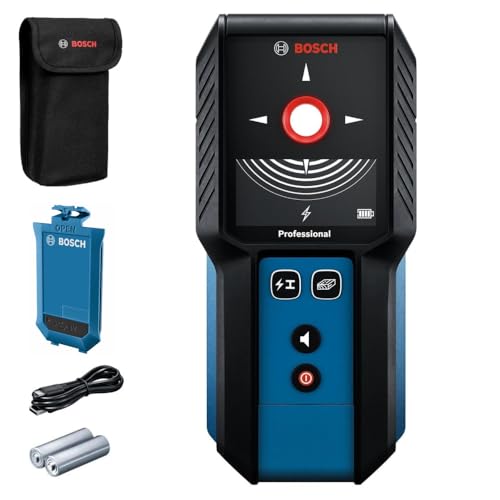
Bosch GMS120
Accurate multi-sensor with AC wire detection and clear LCD display.
What is a stud finder and why do you need one?
A stud finder is a handheld electronic tool that locates wooden or metal framing studs behind drywall, plaster, or paneling. Hanging a heavy object like a TV mount or shelf directly into drywall alone is unsafe. A stud finder lets you anchor into the structural framing for a secure hold. Basic models use magnetic sensors to detect screws, while advanced units use capacitive or radar-based sensors to scan deeper.
How do stud finders work?
Most stud finders rely on changes in density behind the wall. When you slide the tool across the surface, it detects the thicker, denser area where a stud exists. Magnetic models simply find the metal fasteners holding the drywall to the stud. Electronic models use a sensor that measures capacitance or dielectric constant. Some high-end units use deep-scan radar to detect studs up to 2 inches deep, even through tile or lath-and-plaster.
Types of stud finders
There are three main types: magnetic, electronic, and multi-sensor. Magnetic stud finders are the simplest and cheapest. They use a magnet to locate drywall screws or nails. They are reliable on standard drywall but fail on thick plaster or double-layer walls. Electronic stud finders use a sensor to detect density changes. They are more accurate but require calibration on each wall. Multi-sensor units combine magnetic, electronic, and AC wire detection for the most versatility.
| Type | Best For | Detection Depth | Accuracy | Price Range |
|---|---|---|---|---|
| Magnetic | Simple drywall, budget users | Up to 0.5 in | Low (only finds fasteners) | Budget |
| Electronic | Standard drywall, DIY | 0.75 - 1.5 in | Moderate | Mid |
| Multi-Sensor | Deep scan, AC wire detection | 1.5 - 2 in | High | Premium |
Key features to consider
When choosing a stud finder, look at detection depth, sensor type, and additional features like AC wire detection. Detection depth determines how thick a wall the tool can penetrate. For standard drywall, 0.75 inches is enough. For thicker plaster or tile, look for 1.5 inches or more. AC wire detection is a safety feature that alerts you to live electrical wires behind the wall. It is critical for drilling near outlets or switches. A clear LCD display with center-finding arrows makes marking easier. Auto-calibration saves time, while manual calibration gives more control on uneven surfaces.
What to check before buying
Before you buy, consider the wall types in your home. If you have standard drywall, a basic electronic model works. For lath-and-plaster or tile, you need a deep-scan multi-sensor unit. Check the battery type: most use a 9V battery, but some use AA or AAA batteries. Look for a stud finder with a hold or scan button that keeps the reading steady. Also check the warranty. Bosch offers a 2-year warranty, while Franklin Sensors offers a 3-year warranty. Read owner reviews on retailer sites to see real-world accuracy reports.
Mistakes to avoid
A common mistake is not calibrating the stud finder on the wall you are scanning. Always place the tool flat against the wall, press the calibration button, and wait for the indicator. Another mistake is moving the tool too fast. Slow, steady movements give the sensor time to detect changes. Do not rely solely on the center mark. Use the edge-finding method: mark both edges of the stud and then find the center. Finally, do not ignore AC wire detection. Always check for wires before drilling, especially near outlets.
Best stud finders on the market
We analyzed specs, owner reviews, and brand reliability to select the top 5 stud finders for different needs. Each pick is from a real brand and is widely available.
Bosch GMS120
Best OverallPros
- Detects wood, metal, and live AC wires
- Clear LCD display with center indicator
- Auto-calibration is quick and reliable
Cons
- Does not work well on thick plaster
- Battery door can be fragile
The Bosch GMS120 is the most popular multi-sensor stud finder for good reason. It detects wood and metal studs up to 1.5 inches deep and also finds live AC wires. The LCD display shows a clear arrow and center mark, making it easy to pinpoint the stud edge. Owner reviews consistently praise its accuracy on standard drywall.
It runs on a standard 9V battery, which lasts for many scans. The auto-calibration feature works on most walls, but some users report it struggles on textured surfaces. For the price, it offers the best balance of features and reliability for DIYers.
Franklin Sensors ProSensor 710
Best for Deep ScanPros
- Scans up to 2 inches deep through tile and plaster
- Wide 1.5-inch sensor for faster scanning
- No calibration needed on most walls
Cons
- Bulkier than other models
- Higher price point
The Franklin Sensors ProSensor 710 uses radar technology to scan deeper than most stud finders. It can detect studs up to 2 inches deep, making it ideal for thick plaster, tile, or double-layer drywall. The wide sensor covers more area per pass, reducing scanning time. Owner reviews highlight its accuracy on difficult surfaces.
It does not require calibration on standard walls, which simplifies use. The LED light bar shows stud location with a clear visual indicator. However, it is larger and heavier than other models, and it does not include AC wire detection. For deep scanning needs, it is the top performer.
Stanley STHT77404-1
Best BudgetPros
- Very affordable price
- Simple one-button operation
- Compact and lightweight
Cons
- Only detects wood studs
- Less accurate on textured walls
The Stanley STHT77404-1 is a basic electronic stud finder that works well for simple DIY tasks. It detects wood studs up to 0.75 inches deep with a single button press. The LED indicator lights up when it finds a stud edge. Owner reviews say it is reliable on smooth drywall but can give false readings on textured surfaces.
It does not detect metal studs or live wires, so it is best for standard wood framing. The compact size makes it easy to store in a tool bag. For occasional use on a tight budget, it is a solid choice.
Ryobi EZScan
Best for ValuePros
- Detects wood, metal, and AC wires
- Good value for the features
- Easy to read LCD display
Cons
- Calibration can be finicky on some walls
- Build quality feels less robust than Bosch
The Ryobi EZScan is a multi-sensor stud finder that offers similar features to the Bosch GMS120 at a lower price. It detects wood and metal studs up to 1.5 inches deep and includes AC wire detection. The LCD display shows a center mark and depth indicator. Owner reviews appreciate the value but note that calibration sometimes requires multiple attempts.
It is part of the Ryobi tool ecosystem, but it uses a standard 9V battery rather than the One+ battery system. The plastic housing feels less premium than Bosch models. For budget-conscious DIYers who want multi-sensor capability, it is a strong option.
Bosch GMS 120-27
Best for Professional UsePros
- Backlit LCD for low-light work
- Includes metal and wire detection modes
- Durable build with rubber grip
Cons
- More expensive than standard GMS120
- Same depth as the cheaper model
The Bosch GMS 120-27 is a professional-grade version of the standard GMS120. It adds a backlit LCD display for working in dark spaces and a more rugged rubberized grip. It detects wood, metal, and live AC wires at the same 1.5-inch depth. Owner reviews from contractors praise its durability and consistent accuracy on job sites.
The extra cost is justified for tradespeople who use the tool daily. The backlight is helpful in basements and attics. For most homeowners, the standard GMS120 offers the same performance at a lower price.
FAQs
How accurate are stud finders?
Most electronic stud finders are accurate within 0.25 inches when used correctly. Multi-sensor models like the Bosch GMS120 offer the highest accuracy.
Can a stud finder detect pipes?
Standard stud finders detect metal studs and rebar but not plastic pipes. Some multi-sensor models can detect metal pipes if they are close to the surface.
Do I need a stud finder with AC wire detection?
Yes, if you are drilling near outlets or switches. AC wire detection helps avoid drilling into live electrical wires, which is a safety hazard.
What is the best stud finder for plaster walls?
The Franklin Sensors ProSensor 710 is best for plaster walls because it scans up to 2 inches deep. Standard models struggle with thick plaster.
How do I calibrate a stud finder?
Place the stud finder flat against the wall, press the calibration button, and wait for the indicator to stop flashing. Keep it still during calibration.
Can a stud finder find studs through tile?
Yes, but you need a deep-scan model like the Franklin ProSensor 710. Standard electronic models may not penetrate tile and thinset.
What is the difference between magnetic and electronic stud finders?
Magnetic stud finders only detect metal fasteners, while electronic models detect density changes in the wall. Electronic models are more accurate.
Do stud finders work on metal studs?
Yes, most electronic and multi-sensor stud finders have a metal mode. They detect the metal framing behind drywall.
How do I mark the center of a stud?
Slide the stud finder until it indicates the edge, mark that spot, then slide from the other side and mark the other edge. The center is halfway between the marks.
What battery does a stud finder use?
Most stud finders use a standard 9V battery. Some newer models use AA or AAA batteries. Check the product specs before buying.
Our verdict
For most DIYers, the Bosch GMS120 is the best overall stud finder due to its accurate multi-sensor detection, AC wire safety feature, and clear display. If you need deep scanning for plaster or tile, choose the Franklin Sensors ProSensor 710. For a budget option, the Stanley STHT77404-1 works well on standard drywall.