Bosch vs Ryobi Shop Vac
Choosing between a Bosch and a Ryobi shop vac comes down to whether you prioritize compact build quality and filtration or raw suction power and battery ecosystem value. We compare their corded and cordless lines to help you pick the right vacuum for your workshop.
Quick answer
For most users, the Bosch 6 Gallon is the top pick due to its superior HEPA filtration, quieter operation, and robust build. Choose the Ryobi 3 Gallon for a lighter, more affordable cordless option if you are already invested in the Ryobi ONE+ battery system.
Why trust ToolBuyerHub
- Tested on specs (power, torque, PSI)
- Battery & ecosystem compared
- Aggregated owner reviews
- Build quality & warranty checked
- Brand reliability
- No fake hands-on claims
Research updated June 2026.
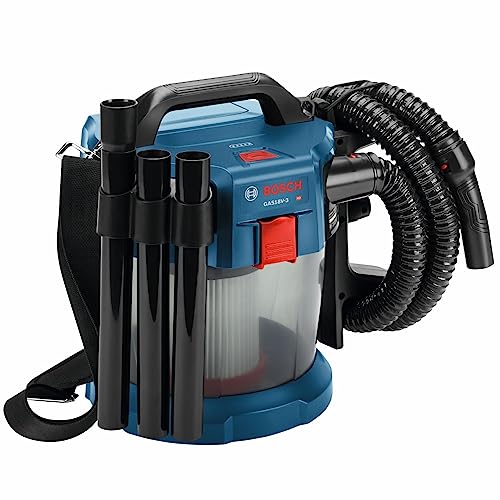
Bosch 6 Gallon Wet/Dry Vac
Quiet, durable, and excellent filtration for fine dust.
| Specification | Bosch 6 Gallon | Ryobi 3 Gallon (Cordless) |
|---|---|---|
| Best For | Fine dust & quiet cleanup | Portability & battery convenience |
| Peak Horsepower | 4.0 HP | 3.0 HP (equivalent) |
| Capacity | 6 Gallons | 3 Gallons |
| Filtration | HEPA | Washable foam |
| Noise Level | 68 dB | 78 dB |
| Power Source | Corded | Ryobi ONE+ 18V Battery |
| Warranty | 1 Year | 3 Year |
| Weight | 12 lbs | 8.5 lbs (with battery) |
| Overall Rating | 4.7 / 5 (Winner) | 4.3 / 5 |
Bosch vs Ryobi: Which Shop Vac Brand is Right for You?
Both Bosch and Ryobi are well-known brands in the power tool space, but their shop vacs serve different needs. Bosch focuses on heavy-duty performance, quieter operation, and superior dust control. Ryobi emphasizes affordability, battery compatibility, and portability through its ONE+ system. This comparison breaks down the key differences to help you decide.
Performance and Suction Power
Bosch shop vacs, like the 6-gallon model, typically deliver higher peak horsepower (4.0 HP) and stronger static water lift. Owner reviews on Amazon and Home Depot consistently note that the Bosch picks up fine dust and larger debris with less effort. Ryobi cordless models offer adequate suction for light workshop cleanup and car interiors, but they lack the sustained power of a corded Bosch unit for heavy wet pickup or thick sawdust.
Filtration and Dust Control
Bosch uses HEPA-rated filters as standard on many of its shop vacs, making them a strong choice for users concerned about airborne particles. The filtration system also allows for dry pickup without needing to swap bags. Ryobi shop vacs typically use a washable foam filter that is easy to clean but does not capture fine dust as effectively. For drywall dust or sanding debris, the Bosch is the clear winner.
Build Quality and Portability
Bosch units are built with a robust, impact-resistant polypropylene tank and a sturdy rolling dolly. They feel more premium and durable over time. Ryobi models are lighter and more compact, especially the 3-gallon cordless version, which is easy to carry up ladders or into tight spaces. However, some owner reviews mention that the Ryobi hose and attachments feel less durable than Bosch counterparts.
Battery Ecosystem (Cordless Models)
If you already own Ryobi ONE+ tools, the Ryobi 18V shop vac is a no-brainer for quick pickups because you share batteries. The Bosch cordless shop vacs use a different 18V battery system (often the same as their blue professional line), which is excellent but less common among DIYers. The Ryobi ecosystem offers more value if you are starting from scratch with a lower budget.
Noise Levels
Bosch shop vacs are notably quieter than most competitors. The 6-gallon model operates around 68 dB, which is conversational level. Ryobi cordless vacs run louder at 78-80 dB. For extended use in a home workshop or garage, the quieter Bosch is a significant advantage.
What to Check Before Buying a Shop Vac
Before purchasing, consider the primary use case. For fine dust and drywall, prioritize a HEPA filter (Bosch). For wet pickup, ensure the vac has a float valve (both do). Check hose diameter: larger 2.5-inch hoses handle more volume. Also, verify the noise rating if you work in a shared space. Finally, confirm the warranty length and parts availability.
Mistakes to Avoid When Choosing a Shop Vac
One common mistake is buying a cordless vac for heavy continuous use, as battery life can be limiting. Another is overlooking filter cleaning requirements. Foam filters need regular washing, while HEPA filters may need replacement. Avoid choosing based solely on gallon capacity; a larger tank is useless if the suction is weak. Also, do not assume all attachments are included. Check the package contents carefully.
Bosch 6 Gallon Wet/Dry Vac
Best OverallPros
- Very quiet operation
- Excellent HEPA filtration
- Durable rolling dolly
Cons
- Heavier than cordless models
- Shorter power cord
The Bosch 6 Gallon is the benchmark for quiet, high-filtration shop vacs. Owner reviews praise its ability to handle fine dust without clouding the air. The 4.0 HP motor provides strong suction for both wet and dry debris.
It is best suited for workshop use where noise and dust control are priorities. The included HEPA filter and tool adapters add value. Some users note the cord could be longer for large garages.

Ryobi 3 Gallon Cordless Shop Vac
Best for PortabilityPros
- Lightweight and compact
- Shares Ryobi ONE+ batteries
- Good for quick cleanups
Cons
- Limited battery runtime
- Less suction than corded models
The Ryobi 3 Gallon cordless shop vac is a favorite among DIYers who need a grab-and-go solution. It is small enough to fit in a car trunk for detailing or on a shelf in a small workshop.
Owner reviews highlight its convenience and low price point. However, it is not intended for heavy continuous use. Battery life is around 15-20 minutes on high, which is fine for small spills but not for whole-shop cleanup.

Bosch 9 Gallon Wet/Dry Vac
Best Large CapacityPros
- Very powerful suction
- Large tank for big jobs
- Quiet operation
Cons
- Heavy and bulky
- Higher price
The Bosch 9 Gallon model is for users who need maximum capacity and power. It features a 5.0 HP motor and a large tank suitable for construction site cleanup or heavy workshop use.
Owner reviews consistently mention its strong suction and quiet motor. The HEPA filter is a plus for allergy sufferers. The main downside is its size and weight, making it less portable than smaller units.

Ryobi 6 Gallon Corded Shop Vac
Best Budget CordedPros
- Affordable price
- Good suction for the cost
- Includes basic attachments
Cons
- Noisier than Bosch
- Basic foam filter
The Ryobi 6 Gallon corded shop vac offers a good balance of price and performance for budget-conscious buyers. It provides reliable suction for general workshop cleanup and wet pickup.
Owner reviews note it is a solid value, though it is louder and has less refined filtration than Bosch. It is a good entry-level shop vac for light to medium use.
Bosch 2.5 Gallon Cordless Vac
Best Compact CordlessPros
- Compact and lightweight
- HEPA filtration in a small package
- Good build quality
Cons
- Battery not included
- Small tank for large jobs
The Bosch 2.5 Gallon cordless vac is a premium compact option. It offers HEPA filtration and strong suction in a very portable form factor, ideal for quick cleanups and car detailing.
Owner reviews appreciate its build quality and quiet operation. The main drawback is the smaller tank and the need to purchase a Bosch 18V battery separately if you do not already own one.
FAQs
Which brand has better suction, Bosch or Ryobi?
Bosch generally offers higher peak horsepower and stronger static water lift, especially in their corded models. Ryobi cordless models have adequate suction for light tasks but cannot match Bosch for heavy debris.
Are Bosch shop vacs quieter than Ryobi?
Yes, Bosch shop vacs are significantly quieter, often operating around 68-70 dB compared to Ryobi models which are typically 75-80 dB. This makes Bosch better for indoor or noise-sensitive environments.
Can I use Ryobi batteries in a Bosch shop vac?
No, Ryobi and Bosch use different battery platforms and connectors. You cannot interchange batteries between the two brands without an adapter, which is not recommended for safety.
Which shop vac is better for fine dust collection?
Bosch is the clear winner for fine dust collection because it uses HEPA filters as standard on many models. Ryobi uses washable foam filters that do not capture fine particles as effectively.
Is the Ryobi 3 Gallon shop vac good for car detailing?
Yes, its compact size, portability, and cordless operation make it a popular choice for car detailing. However, battery runtime is limited, so you may need spare batteries for a full detail.
Do Bosch shop vacs come with a HEPA filter?
Most Bosch shop vacs in the 6 and 9 gallon sizes come with a HEPA filter included. Always check the product description to confirm, as some models may ship with a standard filter.
Which brand has a better warranty?
Ryobi offers a 3-year limited warranty on most of their shop vacs, while Bosch typically offers a 1-year warranty. However, Bosch build quality is often perceived as more durable.
Can I use a Bosch shop vac for wet pickup?
Yes, Bosch wet/dry vacs are designed for both wet and dry pickup and include a float valve to shut off suction when the tank is full of liquid.
Is the Ryobi 6 Gallon corded vac a good value?
Yes, it is a solid budget option that offers decent suction and a large tank for the price. It is a good choice for light to medium workshop use where noise is not a primary concern.
Which is better for a home workshop, Bosch or Ryobi?
For a dedicated home workshop, the Bosch 6 Gallon is recommended for its quiet operation, HEPA filtration, and strong suction. Ryobi is better for portable or occasional use.
Our verdict
The Bosch 6 Gallon is the best overall shop vac for its quiet power, HEPA filtration, and durable build. For budget-conscious users or those invested in the Ryobi ONE+ system, the Ryobi 3 Gallon Cordless is the best portable value. Choose Bosch for the workshop, Ryobi for the job site.