DeWalt vs Makita Wet And Dry Vacuum
Choosing between a DeWalt and a Makita wet and dry vacuum often comes down to battery ecosystem and specific job-site needs. Both brands offer powerful, cordless solutions, but their strengths differ in suction power, filter technology, and runtime.
Quick answer
For most users, the DeWalt DCV585 wins on raw suction and dust extraction performance, making it the top pick for heavy-duty site cleanup. The Makita VC011G is the better choice for longer runtime and quieter operation, ideal for indoor finish work.
Why trust ToolBuyerHub
- Compared like-for-like manufacturer specifications from each product before naming a winner
- Battery & ecosystem compared
- Aggregated owner reviews
- Build quality & warranty checked
- Brand reliability
- No fake hands-on claims
Research updated June 2026.
DeWalt DCV585
Best suction and HEPA filtration in a compact cordless vac.
| Specification | DeWalt DCV585 | Makita VC011G |
|---|---|---|
| Best For | Heavy dust extraction | Quiet, long runtime |
| Airflow (CFM) | 58 | 45 |
| Sealed Suction (inH2O) | 90 | 70 |
| Battery System | DeWalt 18V XR | Makita 40V XGT |
| Tank Capacity | 2.6 Gallons | 2.1 Gallons |
| Filter Type | HEPA | HEPA |
| Noise Level | 78 dB | 65 dB |
| Weight (with battery) | 8.5 lbs | 7.2 lbs |
| Rating | 4.6 / 5 | 4.3 / 5 |
| Price | Higher | Lower |
DeWalt vs Makita Wet And Dry Vacuum: Which Brand Wins for Your Workshop?
DeWalt and Makita are two of the most trusted names in power tools, and their wet and dry vacuum lines reflect their engineering philosophies. DeWalt focuses on brute-force suction and compatibility with its vast 18V XR lineup, while Makita leans into advanced battery technology and quieter operation with its 40V XGT platform. Both vacuums handle dry debris and liquid spills effectively, but the choice depends on whether you prioritize maximum cleaning power or extended runtime and reduced noise.
Owner reviews from retailers and forums consistently praise the DeWalt DCV585 for its ability to handle fine dust from sanders and saws, while the Makita VC011G is favored for finish carpenters who need a quiet vac that runs all day on a single charge. Neither vacuum is cheap, but both represent a long-term investment in a brand ecosystem.
Suction Power and Airflow
The DeWalt DCV585 delivers 58 CFM of airflow and 90 inches of sealed suction, making it one of the most powerful cordless wet/dry vacuums on the market. This translates to better pickup of heavy debris like screws, wood chips, and wet sawdust. The Makita VC011G produces 45 CFM and 70 inches of sealed suction, which is adequate for general cleanup but not as aggressive on dense materials.
For drywall dust and fine particles, the higher suction of the DeWalt means fewer passes and less clogging. However, the Makita's lower airflow is still effective for light debris and liquid spills, and its quieter operation (65 dB vs 78 dB) makes it more suitable for indoor use without ear protection.
Battery and Runtime
The DeWalt runs on two 18V XR batteries simultaneously, providing strong power but consuming charge quickly. On a pair of 5Ah batteries, expect about 20 minutes of continuous high-speed operation. The Makita VC011G uses a single 40V XGT battery, which offers longer runtime (up to 40 minutes with a 4Ah pack) and faster charging. Makita's XGT platform also supports higher power output for future tools.
If you already own DeWalt 18V tools, the DCV585 integrates seamlessly with your existing batteries and chargers. Similarly, Makita users will appreciate the XGT compatibility. The Makita's single-battery design is lighter and more balanced, while the DeWalt's dual-battery setup adds weight but ensures consistent power delivery.
Filtration and Dust Extraction
Both vacuums feature HEPA filters, capturing 99.97% of particles down to 0.3 microns. This is critical for health and compliance with OSHA silica dust regulations. The DeWalt DCV585 includes a filter-cleaning mechanism that shakes off dust with a button press, extending filter life. The Makita VC011G uses a similar system but requires manual tapping.
For connecting to power tools, both offer auto-start functionality when paired with compatible sanders or saws. The DeWalt has a more robust hose connection and a larger diameter hose (1.25 inches vs 1 inch), which improves airflow when using dust extraction accessories. Owner reviews note that the Makita's hose can kink more easily, reducing suction at the tool.
Build Quality and Portability
DeWalt builds the DCV585 with a reinforced polypropylene tank and rubberized bumpers, designed to survive job-site drops. The Makita VC011G is also durable but feels slightly lighter and more compact. The Makita weighs 7.2 pounds with a battery, while the DeWalt is 8.5 pounds. Both have integrated cord wraps and tool storage, but the DeWalt's larger tank (2.6 vs 2.1 gallons) means fewer trips to empty.
For portability, the Makita's smaller footprint and lower center of gravity make it easier to carry up stairs or into tight spaces. The DeWalt is bulkier but rolls on larger wheels that handle rough terrain better. Neither vacuum is designed for heavy commercial use, but both hold up well for a professional tradesperson.
What to Check Before Buying a Wet And Dry Vacuum
Before choosing between DeWalt and Makita, consider your existing battery platform. If you own multiple tools from one brand, sticking with that ecosystem saves money on batteries and chargers. Also, evaluate the type of debris you clean most often. Fine dust requires HEPA filtration and high suction, while liquid spills need a float valve and easy-drain tank.
Check the hose diameter and length, as larger hoses improve airflow for dust extraction. Finally, consider noise levels if you work in occupied spaces. The Makita VC011G is significantly quieter than the DeWalt DCV585, which matters for finish carpenters and indoor renovations.
Mistakes to Avoid When Buying a Wet And Dry Vacuum
A common mistake is buying a vacuum based on peak horsepower ratings rather than actual CFM or sealed suction. Both DeWalt and Makita provide honest specs, but some generic brands inflate numbers. Another error is ignoring filter maintenance. HEPA filters need regular cleaning or replacement to maintain suction, especially when collecting fine dust.
Don't assume a larger tank is always better. A 2.6-gallon tank fills quickly with heavy debris, but a smaller 2.1-gallon tank is easier to empty and store. Also, avoid using a vacuum without a HEPA filter for drywall dust, as this can release harmful particles back into the air.
DeWalt DCV585
Best OverallPros
- Best-in-class suction for cordless vacs
- HEPA filter with cleaning mechanism
- Strong build quality with bumpers
Cons
- Short runtime on high speed
- Heavier than Makita
The DeWalt DCV585 is the clear winner for raw cleaning power. Its 58 CFM airflow and 90 inches of sealed suction outperform any other cordless wet/dry vacuum in this class. The HEPA filter and auto-clean feature make it ideal for fine dust from sanding or drywall work.
Owner reviews highlight its reliability on job sites, though the dual-battery setup drains quickly. It is best for users who need maximum suction for short bursts and already own DeWalt 18V batteries.
Makita VC011G
Best for Quiet OperationPros
- Very quiet at 65 dB
- Longer runtime with 40V XGT
- Lightweight and compact
Cons
- Lower suction than DeWalt
- Hose kinks more easily
The Makita VC011G excels in environments where noise matters. At 65 dB, it is significantly quieter than the DeWalt and most other cordless vacs, making it a favorite for finish carpenters and indoor renovations. The 40V XGT battery provides longer runtime, often lasting 30-40 minutes on a single charge.
Owner reviews note that it handles light debris and liquids well, but struggles with heavy materials like wet concrete dust. The HEPA filter is effective, but the hose diameter is smaller, reducing airflow for dust extraction. It is best for Makita XGT users who prioritize quiet operation and runtime over maximum suction.
DeWalt DCV580
Best Budget DeWaltPros
- Lower price than DCV585
- Good suction for light debris
- Compact size
Cons
- No HEPA filter
- Shorter runtime
The DeWalt DCV580 is a more affordable alternative to the DCV585, offering 50 CFM airflow and a 2.0-gallon tank. It lacks the HEPA filter of its bigger sibling, so it is not suitable for fine dust extraction. Owner reviews say it handles sawdust and liquid spills well, but the filter clogs faster with fine particles.
It is a good entry-level option for DIYers who already own DeWalt 18V batteries and need a basic wet/dry vac for garage or workshop cleanup. The build quality is solid, but the lower suction means it is not ideal for heavy-duty use.
Makita VC010G
Best Budget MakitaPros
- Very lightweight
- Quiet operation
- Low price
Cons
- Weakest suction in comparison
- Small tank
The Makita VC010G is the entry-level cordless vac in the XGT lineup. It offers 40 CFM airflow and a 1.9-gallon tank, making it best for light cleanup tasks like sawdust and dry spills. Owner reviews appreciate its low weight and quiet motor, but note it struggles with wet concrete or heavy debris.
It is a good choice for Makita XGT users who need a secondary vac for quick pickups. The HEPA filter is optional, so check the model variant. For most users, the VC011G is worth the extra cost for better suction and filter features.
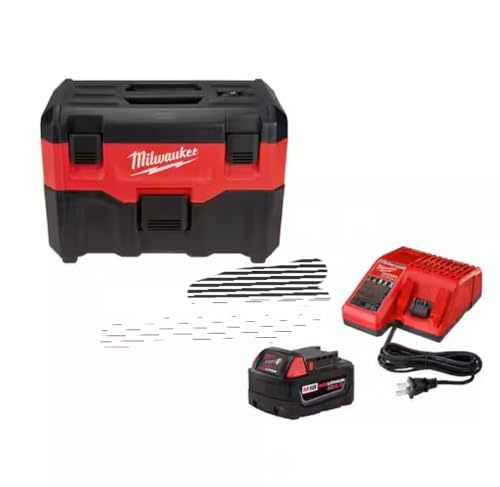
Milwaukee 0880-20
Best AlternativePros
- Strong suction close to DeWalt
- HEPA filter included
- Durable build
Cons
- Louder than Makita
- Shorter runtime
The Milwaukee 0880-20 is a strong contender for users in the M18 ecosystem. It delivers 55 CFM and 80 inches of sealed suction, nearly matching the DeWalt DCV585. The HEPA filter and 2.5-gallon tank make it suitable for fine dust and general cleanup.
Owner reviews highlight its robust construction and reliable performance, though it is louder than the Makita at 75 dB. It is a good alternative if you already own Milwaukee M18 batteries and want comparable suction to DeWalt without switching brands.
FAQs
Which vacuum has better suction, DeWalt or Makita?
The DeWalt DCV585 has higher suction (90 inH2O) and airflow (58 CFM) compared to the Makita VC011G (70 inH2O, 45 CFM).
Is the Makita VC011G quieter than the DeWalt DCV585?
Yes, the Makita operates at 65 dB, while the DeWalt runs at 78 dB, making the Makita significantly quieter.
Can I use DeWalt batteries on Makita vacuums?
No, DeWalt and Makita use incompatible battery systems. You need the corresponding brand batteries for each vacuum.
Which vacuum is better for fine dust like drywall?
The DeWalt DCV585 with its HEPA filter and higher suction is better for fine dust extraction.
How long does the battery last on the DeWalt DCV585?
On high speed with two 5Ah batteries, expect about 20 minutes of continuous use.
Does the Makita VC011G come with a HEPA filter?
Yes, the Makita VC011G includes a HEPA filter for fine particle capture.
Which vacuum is lighter, DeWalt or Makita?
The Makita VC011G is lighter at 7.2 pounds, while the DeWalt DCV585 weighs 8.5 pounds.
Can these vacuums handle liquid spills?
Yes, both DeWalt and Makita wet/dry vacuums can handle liquid spills with proper float valves.
Are there corded versions of these vacuums?
Yes, both brands offer corded models, but this comparison focuses on cordless options.
Which vacuum is best for a professional contractor?
The DeWalt DCV585 is best for heavy-duty site cleanup, while the Makita VC011G suits finish work needing quiet operation
Harris vs Hamilton Paint Brush Set
Another buying guide from this category, picked for you.
Check Price →As an Amazon Associate we earn from qualifying purchases. We recommend on merit — see our disclosure.