Milwaukee vs Ryobi Angle Grinder
Choosing between a Milwaukee and a Ryobi angle grinder comes down to balancing professional-grade power and durability against budget-friendly versatility. We break down the specs, ecosystem, and real-world performance to help you decide which cordless grinder fits your workshop and wallet.
Quick answer
If you need maximum cutting power and long-term durability for daily professional use, the Milwaukee M18 FUEL 2780-20 is the top pick. For DIYers and home users who want a capable, affordable tool that shares batteries with a huge range of other yard and shop tools, the Ryobi P423 is the best value choice.
Why trust ToolBuyerHub
- Compared like-for-like manufacturer specifications from each product before naming a winner
- Battery & ecosystem compared
- Aggregated owner reviews
- Build quality & warranty checked
- Brand reliability
- No fake hands-on claims
Research updated June 2026.
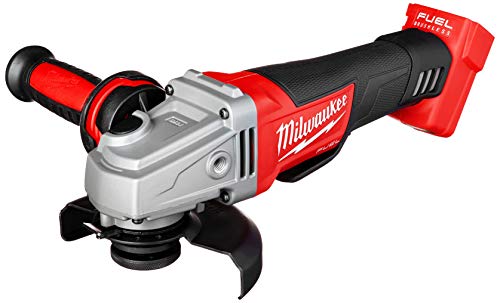
Milwaukee M18 FUEL 2780-20
Professional-grade power and durability for daily cutting and grinding.
| Specification | Milwaukee M18 FUEL 2780-20 | Ryobi P423 |
|---|---|---|
| Motor Type | Brushless (POWERSTATE) | Brushed |
| No-Load RPM | 8,500 | 8,000 |
| Wheel Size | 4-1/2 in. / 5 in. | 4-1/2 in. |
| Switch Type | Paddle with lock-off | Slide with lock-on |
| Weight (tool only) | 2.9 lbs | 3.1 lbs |
| Best For | Professional trades, heavy use | DIY, home projects, budget |
| Warranty | 5 years | 3 years |
| Rating | 4.7 / 5 | 4.3 / 5 |
Milwaukee vs Ryobi Angle Grinder: Which Brand is Better?
Milwaukee and Ryobi are both owned by Techtronic Industries (TTI), but they target very different markets. Milwaukee is the premium professional brand, while Ryobi is designed for the DIY and homeowner segment. This distinction is clear in their angle grinders: Milwaukee uses brushless motors and advanced electronics for maximum runtime and power, whereas Ryobi focuses on affordability and a massive shared battery platform.
Milwaukee M18 FUEL 2780-20: The Professional Powerhouse
The Milwaukee M18 FUEL 2780-20 is a 4-1/2-inch / 5-inch angle grinder built for demanding jobs. Its brushless motor delivers consistent power under load, and the tool is designed to withstand jobsite drops and dust. Owners consistently praise its smooth operation and long runtime with high-capacity M18 batteries.
This grinder features a paddle switch with a lock-off button for safety, and a slim grip that reduces fatigue during extended use. It is also compatible with the Milwaukee One-Key system for tracking and locking the tool. The main drawback is the price, especially when purchased without a battery and charger.
Ryobi P423: The Budget-Friendly Workhorse
The Ryobi P423 is a 4-1/2-inch brushed angle grinder that is one of the most popular cordless options for homeowners. It is lightweight, easy to use, and shares batteries with over 200 Ryobi 18V One+ tools. For occasional cutting of rebar, tile, or metal, it offers more than enough power at a fraction of the cost of the Milwaukee.
Owner reviews note that the Ryobi is reliable for light to medium tasks but can struggle under sustained heavy loads. The brushed motor is less efficient than a brushless unit, meaning shorter runtime per charge. The slide switch with lock-on is preferred by some users for continuous operation but is less safe than a paddle switch.
What to Check Before Buying an Angle Grinder
Power and Motor Type: Brushless motors (Milwaukee) offer more power, longer runtime, and greater durability than brushed motors (Ryobi). For daily use, brushless is worth the investment.
Battery Ecosystem: Consider the other tools you own or plan to buy. Milwaukee M18 and Ryobi One+ batteries are not interchangeable. Sticking with one platform saves money on future battery purchases.
Safety Features: A paddle switch that requires continuous pressure is safer than a slide switch that can lock on. Look for a lock-off button to prevent accidental startups.
Mistakes to Avoid
Buying a tool-only grinder without batteries: If you are new to a platform, the initial cost of batteries and charger can be significant. A kit is often a better value than buying separately.
Choosing based on price alone: A cheaper grinder may work fine for a few projects, but if you plan to use it regularly, a higher-quality tool like the Milwaukee will last longer and perform better.
Ignoring wheel size and compatibility: Most 4-1/2-inch grinders accept 5-inch wheels with a guard change, but check the specs to ensure your desired accessories fit.
Milwaukee M18 FUEL 2780-20
Best OverallPros
- Superior power and torque for heavy cuts
- Long runtime with 5.0Ah or 8.0Ah batteries
- Durable metal gear case and dust-resistant design
Cons
- Expensive tool and battery system
- Paddle switch can be tiring for long use
The Milwaukee M18 FUEL 2780-20 is the clear leader in power and build quality. Its brushless motor maintains speed under load, making it ideal for cutting thick metal, tile, or masonry. The tool is also one of the lightest in its class, reducing fatigue.
Owner reviews consistently highlight its smooth operation and reliability. The main downside is the high entry cost, especially if you do not already own M18 batteries. For professionals or serious DIYers, this grinder is a long-term investment that pays off.
Ryobi P423
Best Budget / DIYPros
- Very affordable tool and battery price
- Shares batteries with huge Ryobi One+ system
- Lightweight and easy to handle
Cons
- Brushed motor is less efficient and durable
- Struggles with sustained heavy cutting
The Ryobi P423 is the go-to choice for homeowners who need a cordless grinder for occasional use. It handles cutting bolts, rebar, and thin metal with ease. The slide switch with lock-on is convenient for continuous cuts, though some users prefer a paddle switch for safety.
Owner reviews note that the grinder is reliable for light to medium tasks but can bog down on thick materials. The brushed motor also means shorter runtime compared to brushless models. For the price, it is an excellent value, especially if you already own Ryobi batteries.
Milwaukee M18 2680-20
Best Budget MilwaukeePros
- Lower price than FUEL model
- Still uses durable M18 platform
- Good power for most tasks
Cons
- Brushed motor less efficient
- Not as powerful as FUEL
The Milwaukee M18 2680-20 is a brushed alternative to the FUEL model. It offers the same build quality and 5-year warranty but at a lower price. It is a good option for those who want Milwaukee reliability without the premium cost of brushless technology.
Owner reviews indicate it performs well for general cutting and grinding but lacks the sustained power of the FUEL. It is a solid choice for light professional use or serious DIYers who already have M18 batteries.

Ryobi P421
Best Compact RyobiPros
- Very compact and lightweight
- Easy to use in tight spaces
- Low price point
Cons
- Less power than P423
- Smaller wheel size limits cutting depth
The Ryobi P421 is a compact 3-inch angle grinder designed for detail work and tight spaces. It is ideal for cutting small bolts, tile, or sheet metal. Its small size makes it easy to control with one hand.
Owner reviews note it is underpowered for larger jobs but perfect for light tasks. It is a great addition to a Ryobi workshop for those who already have the larger P423.
Milwaukee M12 2426-20
Best Compact MilwaukeePros
- Extremely lightweight and compact
- Great for detail work and tight spaces
- Uses popular M12 battery system
Cons
- Limited power for heavy cutting
- Smaller wheel size (3 in.)
The Milwaukee M12 2426-20 is a 3-inch angle grinder that runs on the compact M12 battery system. It is designed for light cutting and grinding tasks where maneuverability is key. It is a favorite among electricians and plumbers for cutting conduit and small pipes.
Owner reviews praise its small size and ease of use. It is not a substitute for a full-size grinder but is an excellent secondary tool for professionals who already use M12 tools.
FAQs
Can I use Ryobi batteries in a Milwaukee angle grinder?
No, Ryobi and Milwaukee use different battery platforms and are not interchangeable.
Which angle grinder has more power, Milwaukee or Ryobi?
The Milwaukee M18 FUEL brushless model delivers significantly more power and torque than any Ryobi cordless grinder.
Is the Ryobi P423 good for cutting metal?
Yes, it handles cutting thin to medium gauge metal well, but it may struggle with thick steel or sustained heavy use.
What is the warranty on Milwaukee and Ryobi angle grinders?
Milwaukee offers a 5-year warranty on most tools, while Ryobi offers a 3-year warranty.
Which grinder is better for a DIY homeowner?
The Ryobi P423 is the better choice for most DIYers due to its lower price and shared battery ecosystem.
Does Milwaukee make a compact angle grinder?
Yes, the Milwaukee M12 2426-20 is a compact 3-inch grinder that is very lightweight and easy to handle.
Can I use a 5-inch wheel on a 4-1/2-inch grinder?
Yes, many 4-1/2-inch grinders can accept a 5-inch wheel with the correct guard, but check the tool specifications first.
Which is safer, a paddle switch or a slide switch?
A paddle switch is generally safer because it requires continuous pressure, reducing the risk of accidental operation.
Are brushless motors worth the extra cost?
Yes, brushless motors offer more power, longer runtime, and greater durability, making them worth it for frequent users.
What is the best Ryobi angle grinder for the money?
The Ryobi P423 is the best value, offering solid performance at a low price for DIY users.
What is the best Milwaukee angle grinder for professionals?
The Milwaukee M18 FUEL 2780-20 is the top choice for professionals due to its brushless motor and durable build.
Can I use a grinding wheel on a Ryobi P423?
Yes, the P423 accepts standard 4-1/2-inch grinding and cutting wheels.
Our verdict
For professionals and serious DIYers who demand the best performance and durability, the Milwaukee M18 FUEL 2780-20 is the clear winner. Its brushless motor, long runtime, and 5-year warranty justify the higher price. For homeowners and budget-conscious users, the Ryobi P423 offers excellent value and reliable performance for occasional projects, especially if you are already invested in the Ryobi One+ battery system.