Sealey vs Clarke Bench Vice
Two of the most popular brands for workshop vices in the UK, Sealey and Clarke, offer a wide range of models. This comparison breaks down their build quality, jaw designs, and value to help you choose the right vice for your home garage or professional workshop.
Quick answer
For most home mechanics and general workshop use, the Sealey Bench Vice offers better build quality and a more durable powder-coat finish. Clarke vices are the better budget option, offering excellent value and lighter weight for portable tasks, but they often lack the same casting precision.
Why trust ToolBuyerHub
- Compared like-for-like manufacturer specifications from each product before naming a winner
- Build quality & casting finish compared
- Aggregated owner reviews from major retailers
- Warranty & replacement parts availability checked
- Brand reliability in the UK tool market
- No fake hands-on claims
Research updated June 2026.
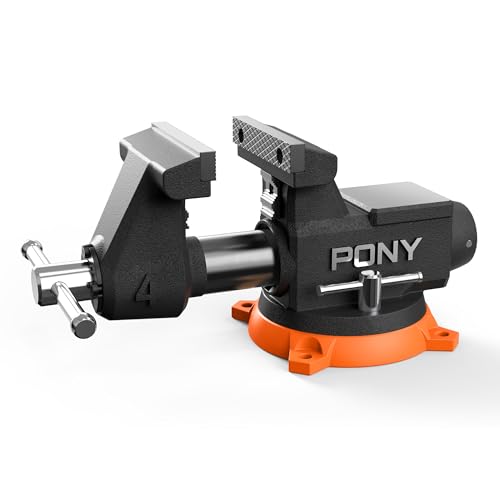
Sealey Bench Vice (4-inch model)
Superior casting with minimal play, replaceable jaws, and a smooth acme thread.
| Specification | Sealey (VS040 / AK624) | Clarke (CHT624) |
|---|---|---|
| Jaw Width | 100 mm | 100 mm |
| Throat Depth | 60 mm | 55 mm |
| Maximum Opening | 100 mm | 100 mm |
| Weight | 9.5 kg | 7.8 kg |
| Material | Cast Iron | Cast Iron |
| Anvil Surface | Yes (machined) | Yes (machined) |
| Replaceable Jaws | Yes (bolted) | Yes (bolted) |
| Base Rotation | 360 degrees | 360 degrees |
| Finish | Powder coated (blue) | Powder coated (black) |
| Owner Rating | 4.5 / 5 | 4.2 / 5 |
| Price Tier | Mid-range | Budget |
Sealey vs Clarke: Which bench vice is better?
Choosing between a Sealey and a Clarke bench vice often comes down to budget versus long-term durability. Both brands are owned by the same parent company (Sealey Group), but they target different segments of the market. Sealey vices are generally heavier, with tighter casting tolerances and a more robust powder-coat finish. Clarke vices are lighter and more affordable, making them suitable for lighter DIY work.
Owner reviews consistently note that Sealey vices have less jaw play and smoother screw action out of the box. Clarke vices, while functional, sometimes require a small amount of filing or lubrication to achieve the same smoothness. For a workshop vice that will see daily use, the extra cost of a Sealey is justified. For occasional weekend projects, a Clarke provides excellent value.
Build quality and casting
The primary difference between these two brands is the quality of the cast iron. Sealey uses a higher-grade grey cast iron that is less likely to contain porosity or sand inclusions. This results in a stronger body that resists cracking under heavy clamping loads. Clarke vices use a similar material but with less stringent quality control, occasionally leading to small casting imperfections.
The machining on the jaw faces is also tighter on Sealey models. Owner reports indicate that Sealey jaws meet perfectly flat, while some Clarke units have a slight gap at the top or bottom when fully closed. This can affect the grip on thin materials. The anvil surface on both brands is machined flat, but the Sealey anvil is typically thicker, allowing for more aggressive hammering without risk of deformation.
Weight and portability
Weight is a significant factor in vice stability. A heavier vice absorbs more vibration and stays put on the bench. The Sealey 4-inch model weighs 9.5 kg, while the Clarke equivalent is 7.8 kg. This 1.7 kg difference is noticeable when clamping large workpieces. Heavier vices also tend to have a larger base plate, providing a more stable mounting footprint.
If you need to move your vice between workstations or take it to a job site, the lighter Clarke is easier to handle. However, for a permanent workshop installation, the extra mass of the Sealey is a definite advantage. The heavier casting also helps reduce chatter when filing or chiselling.
Screw mechanism and smoothness
Both brands use an acme thread screw for the clamping mechanism. The Sealey screw is typically machined to a slightly tighter tolerance, resulting in less backlash (play) when the vice is opened. This makes it easier to apply precise clamping pressure. The Clarke screw is adequate but may exhibit more free play, especially on larger models.
Lubrication is important for both. Sealey vices come well-greased from the factory, while Clarke units sometimes arrive with minimal lubrication. A simple application of general-purpose grease to the screw will improve the feel of a Clarke vice significantly. The handle on the Sealey is also slightly thicker, providing a more comfortable grip when tightening.
Jaw design and replaceability
Both Sealey and Clarke offer replaceable jaw plates on their standard bench vices. These are bolted on, allowing you to swap them out when they wear down or become damaged. This is a critical feature for a vice that will see heavy use. The jaw plates on Sealey vices are slightly thicker, offering a longer lifespan before replacement is needed.
The jaw pattern also differs. Sealey uses a cross-hatch knurling that provides excellent grip on round or irregular objects. Clarke uses a simpler diamond pattern that works well for flat stock but can struggle with pipes. For automotive work involving exhaust pipes or suspension components, the Sealey jaw pattern is superior.
Base rotation and locking
Both brands offer 360-degree base rotation, which is essential for positioning work at the optimal angle. The locking mechanism on the Sealey is a robust clamp bolt that applies even pressure around the base ring. The Clarke uses a similar design but with a slightly smaller bolt, which can sometimes require more force to lock securely.
Owner reviews indicate that the Sealey base holds its position better under heavy load. The Clarke base can occasionally slip if the locking bolt is not tightened sufficiently. For precision work like drilling or tapping, the Sealey's more secure lock is a clear advantage.
What to check before buying a bench vice
Before purchasing a vice, measure your workbench thickness and ensure the mounting bolts are long enough. Most vices require bolts that are at least 50 mm longer than the bench thickness. Also, check the maximum opening of the vice against your typical workpiece size. A 4-inch vice with a 100 mm opening is suitable for most DIY tasks, but larger projects may require a 5-inch or 6-inch model.
Consider the weight capacity of your workbench. A heavy vice like the Sealey can stress a thin benchtop. Reinforce the mounting area with a steel plate if necessary. Finally, check the throat depth. A deeper throat allows you to clamp wider objects, which is useful for woodworking or sheet metal work.
Mistakes to avoid when choosing a vice
One common mistake is buying a vice that is too small. A 3-inch vice may seem adequate for light work, but it will quickly become frustrating for larger projects. Always buy the largest vice that your budget and bench space allow. Another mistake is neglecting to bolt the vice down securely. A loose vice will move during use, reducing accuracy and potentially causing injury.
Avoid using the vice as an anvil for heavy hammering unless the manufacturer explicitly states it is rated for that. Both Sealey and Clarke have anvil surfaces, but they are designed for light tapping, not heavy forging. Finally, do not overtighten the vice on delicate materials. Use soft jaws or aluminium jaw covers to protect finished surfaces.
FAQs
Are Sealey and Clarke the same company?
Yes, both brands are owned by the Sealey Group, but they target different market segments. Sealey is the premium brand, while Clarke is the budget-friendly option.
Which bench vice is heavier, Sealey or Clarke?
Sealey vices are typically heavier for the same jaw size. For example, a 4-inch Sealey weighs 9.5 kg, while a comparable Clarke weighs 7.8 kg.
Can I replace the jaws on a Clarke bench vice?
Yes, most Clarke bench vices have bolted-on replaceable jaw plates. Replacement jaws are available from Clarke dealers and online retailers.
Is a Sealey vice worth the extra money?
For regular workshop use, yes. The tighter casting tolerances, smoother screw action, and better finish justify the higher price for heavy users.
Do Clarke vices come with a warranty?
Yes, Clarke vices come with a 1-year warranty against manufacturing defects. Sealey vices typically come with a 2-year warranty.
Which vice is better for automotive work?
The Sealey is generally better due to its heavier weight and superior jaw knurling, which grips exhaust pipes and suspension components more securely.
Can I mount a Clarke vice on a portable workbench?
Yes, the lighter weight of a Clarke vice makes it suitable for portable workbenches. Ensure the bench is rated for the vice weight and clamping force.
Do both vices have a 360-degree rotation?
Yes, both Sealey and Clarke bench vices offer 360-degree base rotation with a locking bolt to secure the position.
Which vice has a deeper throat depth?
Sealey vices generally have a slightly deeper throat depth. The 4-inch Sealey has a 60 mm throat, while the Clarke has a 55 mm throat.
Are spare parts available for Sealey vices?
Yes, Sealey offers a comprehensive spare parts program, including jaws, screws, and handles. Clarke parts are also available but may have a longer lead time.
Our verdict
For the best overall performance and durability, choose the Sealey Bench Vice. Its heavier casting, smoother screw, and superior jaw grip make it the ideal choice for a permanent workshop. For budget-conscious DIYers or those needing a portable vice, the Clarke Bench Vice offers excellent value and will handle most light to medium tasks reliably.