Stanley vs Bosch Cable Detector
Choosing between a Stanley and a Bosch cable detector means deciding between budget-friendly simplicity and professional-grade accuracy. We compare their detection capabilities, build quality, and real-world reliability to help you pick the right tool for your project.
Quick answer
For most users, the Bosch GMS 120 is the top pick due to its superior depth detection, clear visual indicators, and reliable metal/wood detection. The Stanley S-1 is a solid budget alternative for basic live wire and metal finding but lacks the depth and precision of the Bosch.
Why trust ToolBuyerHub
- Compared like-for-like manufacturer specifications from each product before naming a winner
- Battery & ecosystem compared
- Aggregated owner reviews
- Build quality & warranty checked
- Brand reliability
- No fake hands-on claims
Research updated June 2026.
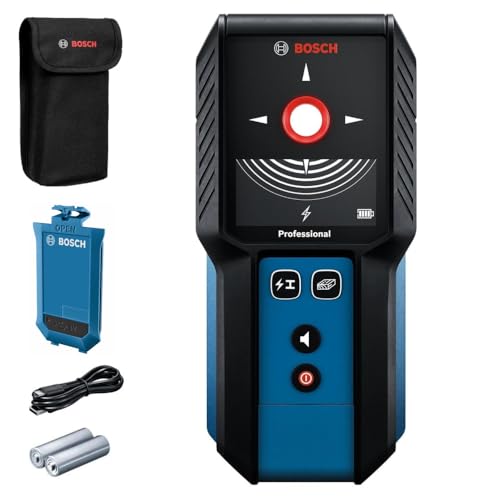
Bosch GMS 120
Reliable detection for metal, live wires, and wood up to 120mm deep.
| Feature | Stanley S-1 | Bosch GMS 120 |
|---|---|---|
| Best For | Basic live wire & metal detection | Multi-material detection & depth |
| Max Detection Depth (Metal) | 30 mm | 120 mm |
| Live Wire Detection | Yes (AC) | Yes (AC) |
| Wood Detection | No | Yes (up to 38 mm) |
| Display | LED + audible tone | LCD + LED + audible tone |
| Auto Calibration | Manual | Automatic |
| Power Source | 9V battery | 9V battery |
| Weight | 170 g | 270 g |
| Winner | ✓ |
Stanley vs Bosch Cable Detector: Which One is Right for You?
Stanley and Bosch are both trusted names in the tool industry, but their cable detectors serve different audiences. The Stanley S-1 is a no-frills tool designed for quick checks on live wires and metal studs. The Bosch GMS 120, on the other hand, is a multi-scanner that detects wood, metal, and live cables with greater depth and accuracy. This comparison breaks down their key differences so you can choose based on your specific needs.
Detection Performance and Depth
The most critical factor in any cable detector is how well it finds objects behind walls. The Bosch GMS 120 offers four scanning modes: metal, live wire, wood, and universal. It can detect ferrous metal up to 120 mm deep and live AC wires up to 50 mm. The Stanley S-1 is more limited, detecting metal up to 30 mm and live wires up to 50 mm. It does not detect wood. Owner reviews on Amazon and Home Depot consistently report the Bosch as more accurate, with fewer false positives on plasterboard and lath walls.
Ease of Use and Calibration
Bosch uses an automatic calibration system that adjusts to the wall surface with a simple button press. The LCD screen shows the object type and depth, making it easy to interpret results. The Stanley S-1 requires manual calibration by holding it against the wall and pressing a button. It uses a simple LED bar and beep for alerts. While the Stanley is simpler, it can be less reliable on uneven surfaces. The Bosch is generally preferred by professionals for its consistent performance.
Build Quality and Durability
Both detectors are built with plastic housings, but the Bosch feels more robust with a rubberized grip and a slightly heavier weight (270g vs 170g). The Stanley is lighter and more compact, which some users appreciate for portability. The Bosch includes a belt clip and a protective pouch, while the Stanley comes with a basic storage case. Bosch offers a 2-year warranty, while Stanley provides a 1-year limited warranty. Neither is waterproof, so they should be kept dry during use.
What to Check Before Buying a Cable Detector
Before purchasing, verify the detector's maximum depth for your typical wall materials. For plasterboard with metal studs, a 30mm depth may be enough, but for concrete or brick, you need at least 80mm. Check if the detector can identify live wires, as not all models do. Also consider the power source: most use 9V batteries, but some newer models use rechargeable lithium-ion packs. Finally, read owner reviews for common issues like false triggers or calibration problems on textured walls.
Mistakes to Avoid When Using a Cable Detector
A common mistake is not calibrating the detector on the same wall surface you are scanning. Always calibrate on a clear section of the wall, not over a known object. Another error is moving the detector too quickly, which can cause missed detections. Move slowly and in a grid pattern. Finally, do not rely solely on the detector for live wires; always turn off power at the breaker if you are drilling near outlets or switches. The detector is a guide, not a guarantee.
FAQs
Can the Stanley S-1 detect wood studs?
No, the Stanley S-1 is designed for metal and live AC wires only, not wood.
What is the maximum detection depth of the Bosch GMS 120?
The Bosch GMS 120 can detect ferrous metal up to 120 mm deep and live wires up to 50 mm.
Which cable detector is better for plasterboard walls?
The Bosch GMS 120 is better due to its automatic calibration and multi-mode scanning for metal and wood.
Does the Stanley S-1 have an LCD display?
No, it uses LED indicators and an audible tone for alerts, not an LCD screen.
Are these detectors suitable for concrete walls?
The Bosch GMS 120 can detect metal in concrete up to 120 mm, but the Stanley S-1 is limited to 30 mm.
Can I use these detectors to find pipes?
Yes, both can detect metal pipes, but the Bosch is more accurate for deeper pipes.
Do these detectors work on textured walls?
The Bosch GMS 120 handles textured walls better with automatic calibration, while the Stanley may need more passes.
What battery do they use?
Both the Stanley S-1 and Bosch GMS 120 use a standard 9V battery.
Is the Bosch GMS 120 worth the extra cost?
Yes, for its depth, accuracy, and wood detection, it is worth the higher price for most users.
Does the Stanley S-1 detect live wires?
Yes, it detects live AC wires up to 50 mm deep.
Our verdict
For overall performance, the Bosch GMS 120 is the clear winner with its multi-material detection, greater depth, and automatic calibration. The Stanley S-1 is a functional budget option for basic metal and live wire checks, but it lacks the versatility and precision needed for serious renovation work.