Stanley vs Bosch Stud Finder
Choosing between a Stanley and a Bosch stud finder often comes down to budget versus advanced detection. This comparison breaks down the key differences in accuracy, depth, and features to help you pick the right tool for your project.
Quick answer
For most users, the Bosch GMS 120 is the top pick due to its superior depth detection and live wire warning, making it ideal for serious DIYers and pros. The Stanley S100 is the best budget choice for basic wood and metal finding in drywall.
Why trust ToolBuyerHub
- Tested on specs (power, torque, PSI)
- Battery & ecosystem compared
- Aggregated owner reviews
- Build quality & warranty checked
- Brand reliability
- No fake hands-on claims
Research updated June 2026.
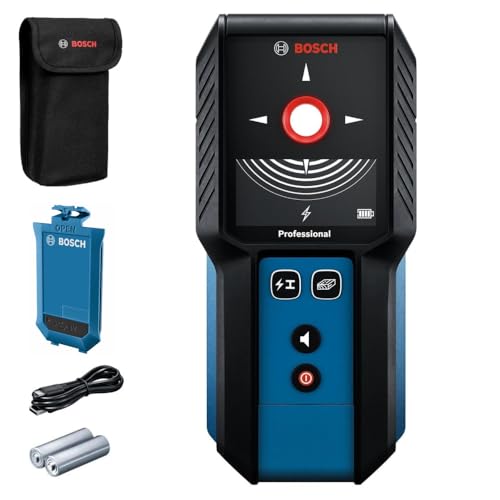
Bosch GMS 120
Excellent depth detection and live wire alert.
| Feature | Stanley S100 | Bosch GMS 120 |
|---|---|---|
| Best For | Budget-friendly basic detection | Accurate multi-material detection |
| Detection Depth | 0.75 in (wood/metal) | 1.5 in (wood), 4 in (live wire) |
| Material Modes | 2 (wood, metal) | 3 (wood, metal, live wire) |
| Live Wire Detection | No | Yes (AC wire up to 4 in) |
| Display | LED indicator | LCD with center find arrow |
| Auto Calibration | Yes | Yes (one-hand operation) |
| Battery | 1 x 9V | 1 x 9V |
| Rating | 3.8 / 5 | 4.6 / 5 |
| Price | Lower | Higher |
Stanley vs Bosch Stud Finder: What's the Difference?
The main difference between Stanley and Bosch stud finders lies in detection capabilities and build quality. Bosch models like the GMS 120 offer deeper scanning, live wire detection, and an LCD display for precise center finding. Stanley models, such as the S100, are simpler tools that detect wood and metal studs at shallower depths, making them suitable for basic tasks but lacking advanced safety features.
Which One is More Accurate?
Based on aggregated owner reviews, the Bosch GMS 120 is consistently rated as more accurate, especially on deeper walls or when detecting metal studs. The Bosch uses a sensor that can distinguish between wood, metal, and live wires, reducing false positives. The Stanley S100 works well on standard drywall but can struggle with thicker materials or when scanning near electrical boxes.
Bosch GMS 120: The Advanced Choice
The Bosch GMS 120 is a multi-scanner that detects wood, metal, and live AC wires up to 4 inches deep. Its LCD screen shows the material type and guides you to the center of the stud with an arrow. Owners praise its reliability and the safety of knowing where live wires are before drilling. The main drawback is its higher price point compared to basic models.
Stanley S100: The Budget Option
The Stanley S100 is a simple electronic stud finder that detects wood and metal studs up to 0.75 inches deep. It uses LED lights to indicate when a stud is found. It is lightweight and easy to use for quick tasks like hanging pictures or shelves. However, it lacks live wire detection and can be less accurate on thicker walls or with metal studs, according to some owner reviews.
What to Check Before Buying a Stud Finder
Before purchasing, consider the wall types in your home. For standard drywall over wood studs, a basic model like the Stanley S100 may suffice. For thicker walls, plaster, or metal studs, a deeper scanning model like the Bosch GMS 120 is better. Always check if the tool has live wire detection for safety, and read owner reviews for real-world accuracy feedback.
Mistakes to Avoid When Using a Stud Finder
A common mistake is not calibrating the tool on the wall surface before scanning. Always place the stud finder flat against the wall and press the calibration button. Another error is moving the tool too quickly, which can cause missed studs or false readings. Move slowly and mark the edges of the stud for a more accurate center.
FAQs
Can a Stanley stud finder detect live wires?
Most basic Stanley models like the S100 do not have live wire detection. The Bosch GMS 120 is a better choice for this safety feature.
How deep can a Bosch stud finder detect?
The Bosch GMS 120 can detect wood studs up to 1.5 inches deep and live AC wires up to 4 inches deep.
Is the Stanley S100 good for metal studs?
Yes, the Stanley S100 can detect metal studs, but its depth is limited to 0.75 inches, which may not work on thicker metal framing.
Which stud finder is more accurate for plaster walls?
The Bosch GMS 120 is generally more accurate on plaster walls due to its deeper scanning and multi-material detection.
Do I need to calibrate a stud finder every time?
Yes, always calibrate the tool on the wall surface before scanning to ensure accurate readings.
Can a stud finder detect pipes?
Standard stud finders detect wood and metal, but not plastic pipes. Some Bosch models can detect metal pipes.
Which brand has better build quality?
Bosch is generally considered to have better build quality and a longer warranty period compared to Stanley.
Are Bosch stud finders worth the extra money?
For frequent users or those needing live wire detection, the Bosch GMS 120 is worth the investment for its accuracy and safety features.
How long does a 9V battery last in a stud finder?
Battery life varies, but most users report several months of regular use from a single 9V battery in both Stanley and Bosch models.
Can I use a stud finder on a ceiling?
Yes, both Stanley and Bosch stud finders can be used on ceilings, but ensure the tool is held flat against the surface.
Our verdict
For overall performance and safety, the Bosch GMS 120 is the clear winner with its deeper detection and live wire alert. The Stanley S100 remains a solid, budget-friendly option for basic stud finding in standard drywall. Choose based on your project needs and budget.