Yale vs August Keyless Door Lock
Choosing between a Yale and an August keyless door lock means deciding between a traditional security giant and a modern smart-home specialist. We compare specs, ecosystem, and real-world reliability to help you pick the best smart lock for your home.
Quick answer
For most homeowners, the August Wi-Fi Smart Lock (4th Gen) wins for seamless smart-home integration and easy retrofit installation. Choose the Yale Assure Lock 2 if you prefer a keypad-first experience or want a physical key backup for peace of mind.
Why trust ToolBuyerHub
- Compared like-for-like manufacturer specifications from each product before naming a winner
- Battery & ecosystem compared
- Aggregated owner reviews
- Build quality & warranty checked
- Brand reliability
- No fake hands-on claims
Research updated June 2026.
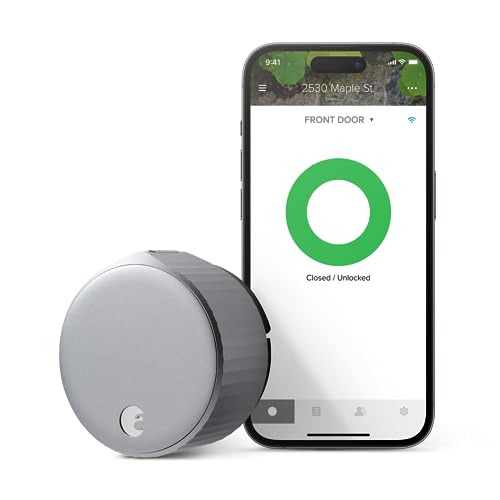
August Wi-Fi Smart Lock (4th Gen)
Best for seamless smart home integration and easy retrofit installation.
| Feature | Yale Assure Lock 2 | August Wi-Fi Smart Lock (4th Gen) |
|---|---|---|
| Best For | Keypad users, key backup | Smart home integration, retrofit |
| Connectivity | Z-Wave / Wi-Fi (module) | Wi-Fi + Bluetooth |
| Installation | Replaces entire deadbolt | Fits over existing deadbolt |
| Keypad | Built-in touchscreen | Optional separate keypad |
| Physical Key | Yes (key override) | No (uses existing key) |
| Battery Life | 6-12 months (4 AA) | 3-6 months (4 AA) |
| Voice Assistants | Alexa, Google, Siri | Alexa, Google, Siri |
| Rating (Amazon) | 4.2 / 5 | 4.4 / 5 |
Yale vs August: Which Smart Lock Should You Buy?
Both Yale and August are top contenders in the smart lock market, but they cater to slightly different needs. Yale brings over a century of lock-making experience, offering robust hardware and a keypad-first approach. August, now part of the same parent company as Yale (ASSA ABLOY), focuses on software and seamless integration with existing deadbolts. This guide breaks down their key differences to help you decide.
Yale Assure Lock 2: The Traditionalist's Smart Lock
The Yale Assure Lock 2 is a complete deadbolt replacement that puts a keypad front and center. It offers a physical key backup, which many homeowners prefer for peace of mind. The lock is available in multiple finishes and supports various smart home protocols via swappable modules (Z-Wave, Zigbee, or Wi-Fi).
Owner reviews on Amazon and Home Depot highlight its solid build quality and easy-to-use touchscreen keypad. The battery life is excellent, often lasting over six months with normal use. However, the Wi-Fi module is sold separately, and the lock requires a full installation, which may be more involved than a retrofit.
August Wi-Fi Smart Lock (4th Gen): The Retrofit Champion
The August Wi-Fi Smart Lock is designed to work with your existing deadbolt, making installation a 15-minute job. It connects directly to Wi-Fi, eliminating the need for a separate hub. The lock features DoorSense technology, which tells you if your door is open, closed, or locked.
Aggregated owner reviews praise its easy installation and reliable auto-unlock feature, which uses your phone's location. The main drawback is the lack of a built-in keypad; you'll need to buy the separate August Keypad for code entry. Battery life is shorter than Yale's, typically lasting 3-6 months.
Key Differences: Installation and Ecosystem
The biggest difference is installation. The August lock fits over your existing deadbolt, so you don't need to remove your current lock. The Yale Assure Lock 2 replaces the entire deadbolt, which is more work but gives you a fresh, integrated unit.
Ecosystem-wise, August is more consumer-friendly with native Wi-Fi and seamless integration with Airbnb, Alexa, Google, and Siri. Yale is more versatile for professional smart home setups, offering Z-Wave and Zigbee modules for use with hubs like SmartThings or Ring Alarm.
Security and Build Quality
Both locks are built by ASSA ABLOY, the world's largest lock manufacturer. Yale's hardware is typically heavier and more robust, with a solid metal construction. August's lock is plastic-bodied but still durable, and it uses your existing high-security deadbolt, which can be an advantage if you already have a Grade 1 lock.
Neither lock has been subject to major security vulnerabilities in recent years. Both use encrypted Bluetooth and Wi-Fi communications. Yale offers a physical key backup, which is a security plus for some, but a potential vulnerability for others.
What to Check Before Buying a Keyless Door Lock
Before purchasing, verify your door's thickness and backset (the distance from the edge of the door to the center of the deadbolt). Most smart locks fit standard doors, but some older or custom doors may require adjustments. Also, check if your door is pre-drilled for a deadbolt.
Consider your smart home ecosystem. If you use Alexa or Google Home, both locks work well. If you use Apple HomeKit, the August lock has native support, while Yale requires the HomeKit-compatible module. For Z-Wave hubs like Ring or SmartThings, Yale is the better choice.
Mistakes to Avoid When Buying a Smart Lock
Don't assume all smart locks are easy to install. Retrofit locks like August are simpler, but full replacement locks like Yale require more DIY skill. Also, don't overlook battery life; smart locks with frequent auto-unlock features drain batteries faster. Always keep spare batteries nearby.
Another common mistake is ignoring the need for a stable Wi-Fi connection. If your door is far from your router, consider a lock with Bluetooth or Z-Wave instead. Finally, don't forget about guest access; both locks offer temporary codes, but August's integration with Airbnb is more seamless for rental properties.
Yale vs August: Pros and Cons Summary
Yale's strengths are its built-in keypad, physical key backup, and longer battery life. Its weaknesses are the need for a separate Wi-Fi module and more complex installation. August's strengths are its easy retrofit installation, native Wi-Fi, and excellent app experience. Its weaknesses are the lack of a built-in keypad and shorter battery life.
For renters, the August lock is ideal because you can keep your landlord's deadbolt. For homeowners who want a complete security upgrade, the Yale Assure Lock 2 is a more integrated solution.
FAQs
Can I use my existing deadbolt with an August lock?
Yes, the August Wi-Fi Smart Lock is designed to fit over your existing deadbolt, so you keep your current key and hardware.
Does the Yale Assure Lock 2 work without Wi-Fi?
Yes, it works via Bluetooth or Z-Wave without Wi-Fi, but you need the Wi-Fi module for remote access and voice control.
Which lock has better battery life?
Yale typically offers longer battery life, lasting 6-12 months compared to August's 3-6 months.
Can I use a keypad with the August lock?
Yes, you can buy the August Keypad separately for code entry without a smartphone.
Are Yale and August made by the same company?
Yes, both are owned by ASSA ABLOY, but they operate as separate brands with different product philosophies.
Which lock is easier to install?
The August lock is easier to install because it fits over your existing deadbolt, usually taking about 15 minutes.
Do both locks work with Alexa?
Yes, both the Yale Assure Lock 2 and August Wi-Fi Smart Lock work with Amazon Alexa for voice control.
Can I give temporary access codes with these locks?
Yes, both locks allow you to create temporary or scheduled access codes for guests.
Which lock is better for Airbnb rentals?
The August lock is better for Airbnb due to its direct integration with the platform for automatic code generation.
Do these locks have a physical key backup?
Yale has a built-in key override. August does not have its own keyhole but uses your existing deadbolt's key.
Our verdict
For most users, the August Wi-Fi Smart Lock (4th Gen) is the best overall pick due to its effortless retrofit installation and superior smart home integration. If you want a built-in keypad and physical key backup, the Yale Assure Lock 2 is the better choice for traditional security with modern smarts.