Best Cable Cutter for Heavy Duty Use
Heavy duty cable cutters are essential for electricians and DIYers tackling thick gauge wire, armored cable, and multi-strand conductors. We have analyzed specifications, aggregated owner feedback, and compared build quality to find the most reliable tools for the job.
Quick answer
For most heavy duty applications, the Klein Tools 63050 offers the best balance of cutting capacity, leverage, and durability. If you need a ratcheting mechanism for large-diameter cable, the Milwaukee 48-22-3203 is the top pick for reducing hand fatigue.
Why trust ToolBuyerHub
- Flagged CAT rating and safe-use guidance wherever a tool is used near live circuits
- Battery & ecosystem compared for powered models
- Aggregated owner reviews from major retailers
- Build quality & warranty checked
- Brand reliability
- No fake hands-on claims
Research updated June 2026.
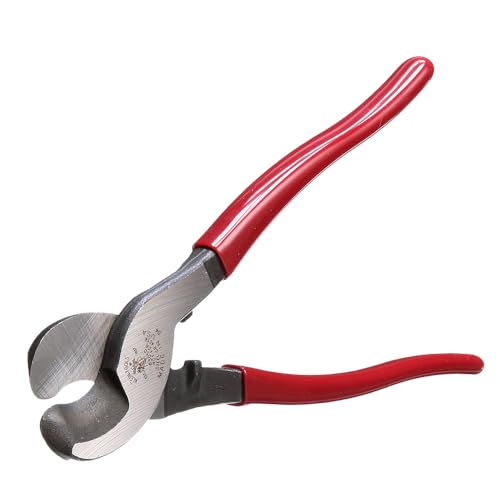
Klein Tools 63050
Legendary build quality with a clean shear cut on copper and aluminum cable.
| Product | Best for | Key Spec | Rating | Price |
|---|---|---|---|---|
| Klein Tools 63050 | Overall / General Use | 2/0 AWG, 10 in | 4.8/5 | $$ |
| Milwaukee 48-22-3203 | Ratcheting / Large Cable | 750 MCM, 14 in | 4.7/5 | $$$ |
| Greenlee 706 | Professional / Frequent Use | 4/0 AWG, 14 in | 4.6/5 | $$$ |
| Channellock 909 | Budget / Homeowner | 1/0 AWG, 9.5 in | 4.5/5 | $ |
| Knipex 95 11 200 | Compact / Precision | 1/0 AWG, 8 in | 4.7/5 | $$ |
Klein Tools 63050
Best OverallPros
- Clean, shear-type cut on copper and aluminum
- Forged steel jaws for long-term durability
- Comfortable di-electric grips
Cons
- Not suitable for steel wire
- Limited to 2/0 AWG max
The Klein Tools 63050 is a classic heavy duty cable cutter that has earned its reputation through decades of reliable service. It uses a shear-style cutting action that produces a clean, flat cut on copper and aluminum cable up to 2/0 AWG. Owner reviews consistently praise the sharpness of the blades and the leverage provided by the 10-inch handles.
This tool is built for daily use on job sites. The forged steel jaws resist dulling, and the di-electric handles provide a layer of safety. While it cannot cut steel wire or very large service cable, for 90% of electrical work this is the most dependable choice.
Milwaukee 48-22-3203
Best Ratcheting CutterPros
- Ratcheting mechanism reduces hand effort
- Can cut up to 750 MCM cable
- Replaceable cutting blades
Cons
- Heavier and bulkier than manual cutters
- Ratcheting action can be slow
The Milwaukee 48-22-3203 is the go-to tool when you need to cut large diameter cable without exhausting your hands. Its ratcheting mechanism allows you to make multiple squeezes to cut through cables up to 750 MCM, which is far beyond the capacity of standard manual cutters. Owner reviews highlight how much easier it makes cutting 4/0 and larger cable.
The tool features high-carbon steel jaws that stay sharp, and the blades are replaceable, extending the life of the cutter. The main trade-off is its size and weight, making it less convenient for overhead work or tight spaces. For service entrance cable and heavy feeder lines, this is the most practical choice.
Greenlee 706
Best for ProfessionalsPros
- Longer handles for maximum leverage
- Cuts up to 4/0 AWG cleanly
- Very durable drop forged steel
Cons
- Heavier than shorter cutters
- Grips can be slippery when oily
The Greenlee 706 is a heavy duty cable cutter designed for professional electricians who need to cut large cable all day. Its 14-inch length provides excellent leverage, making it easier to cut through 4/0 AWG copper and aluminum cable. The drop-forged steel jaws are built to withstand years of abuse on commercial job sites.
Owner reviews frequently mention the clean, burr-free cuts this tool produces. The main drawbacks are its weight and the plastic-dipped handles, which some users find less comfortable than rubberized grips. For a dedicated pro-level cutter that can handle the largest common cable sizes, the Greenlee 706 is a top contender.
Channellock 909
Best Budget PickPros
- Very affordable price point
- Good cutting capacity for the size
- Made in the USA
Cons
- Not as durable as premium brands
- Shorter handles reduce leverage
The Channellock 909 is a solid, no-frills cable cutter that offers excellent value for homeowners and DIYers. It can handle up to 1/0 AWG copper and aluminum cable, which covers most residential electrical work. The forged steel jaws are decent, and the 9.5-inch length makes it easy to carry in a tool bag.
Owner reviews note that while it is not as refined as a Klein or Greenlee, it performs well for occasional use. Some users report that the cutting edges can dull faster with frequent use on heavy cable. For the price, it is a reliable tool for basic heavy duty cutting tasks.
Knipex 95 11 200
Best Compact CutterPros
- Compact size fits in tight spaces
- Excellent chrome vanadium steel
- Very sharp, precise cutting edges
Cons
- Lower cutting capacity than larger models
- Higher price for a compact tool
The Knipex 95 11 200 is a high-end compact cable cutter that excels in precision and portability. Its 8-inch length makes it ideal for working in tight spaces like junction boxes and panels. Despite its small size, it can cut up to 1/0 AWG copper cable with a clean, flush cut. The chrome vanadium steel jaws are heat-treated for long-lasting sharpness.
Owner reviews are extremely positive about the build quality and cutting performance. The multi-component handles provide a secure grip. The main limitation is the lower cutting capacity compared to 10-inch or 14-inch models, but for electricians who need a precise, pocket-friendly cutter, this is a top choice.
What to check before buying a heavy duty cable cutter
Cutting capacity is the most important specification. It is usually listed in AWG (American Wire Gauge) or MCM (thousand circular mils). For most residential work, a cutter that handles 2/0 AWG is sufficient. For commercial work with large feeder cables, look for 4/0 AWG or 750 MCM capacity.
Jaw material and design matter for longevity. Forged steel jaws are more durable than cast steel. Shear-cut jaws produce a cleaner cut than compression-style jaws. Ratcheting mechanisms add weight but reduce the hand force needed for large cables.
Handle length affects leverage. Longer handles (14 inches) provide more mechanical advantage but are heavier and less portable. Shorter handles (8-10 inches) are more compact but require more force. Consider your typical working environment and how much cable you cut daily.
Mistakes to avoid when choosing a cable cutter
Do not use a cable cutter on steel wire or ACSR (aluminum conductor steel reinforced) cable unless the tool is specifically rated for it. Doing so can chip or dull the blades permanently. Always check the manufacturer's specifications for approved materials.
Avoid buying a cutter with too low a cutting capacity for your needs. If you frequently work with 4/0 cable, a cutter rated for 1/0 AWG will struggle and wear out quickly. It is better to buy a tool with some headroom in capacity.
Do not overlook handle comfort. If you cut many cables in a day, ergonomic grips with good cushioning can reduce hand fatigue. Plastic-dipped handles are less comfortable than rubber or multi-component grips for extended use.
FAQs
What is the difference between a cable cutter and a bolt cutter?
A cable cutter uses a shear or guillotine action for a clean cut on soft metals, while a bolt cutter uses a compound leverage mechanism to cut harder materials like steel bolts and rebar.
Can I use a heavy duty cable cutter on live wires?
No. Always de-energize and verify the circuit is dead before cutting any wire. Even cutters with insulated handles are not designed for cutting live conductors.
How do I maintain my cable cutter?
Keep the blades clean and dry. Apply a light machine oil to the pivot point periodically. Store in a dry place to prevent rust.
What does AWG mean in cable cutter specs?
AWG stands for American Wire Gauge. A lower number indicates a thicker wire. For example, 2/0 AWG is thicker than 10 AWG.
Are ratcheting cable cutters worth the extra cost?
Yes, if you regularly cut large cable (4/0 AWG or larger). The ratcheting mechanism reduces hand strain significantly, making the job faster and less tiring.
Can I cut armored cable (BX) with a standard cable cutter?
Some heavy duty cutters can handle BX, but it is best to use a tool specifically designed for armored cable to avoid damaging the blades.
How long should a good cable cutter last?
With proper care, a high-quality forged steel cable cutter can last a professional electrician 10-20 years or more before needing replacement.
What is the best cable cutter for copper wire?
The Klein Tools 63050 is widely considered the best for copper wire due to its sharp shear cut and durable forged steel jaws.
Do I need a special cutter for aluminum wire?
No, most heavy duty cable cutters that work on copper also work on aluminum. Ensure the blades are sharp to avoid deforming the softer metal.
What size cable cutter do I need for home use?
For most home electrical projects, a 9.5-inch to 10-inch cutter with a capacity of 1/0 AWG to 2/0 AWG is sufficient.
Our verdict
For the best overall heavy duty cable cutter, the Klein Tools 63050 offers unbeatable build quality and cutting performance for most electrical work. If you need a budget-friendly option for occasional use, the Channellock 909 provides solid value. For large cable, the Milwaukee 48-22-3203 ratcheting cutter is the best choice to save your hands.