Best Cable Detector for Home Use
Hitting a live wire during a DIY project is dangerous. We've reviewed the top cable detectors to help you find a reliable model that accurately finds buried wires and metal pipes before you drill.
Quick answer
The Bosch GMS 120 is the best all-round cable detector for home use, offering reliable multi-scan modes and deep detection. For a budget-friendly alternative that still performs well on live wires, the Stanley S100 is a solid second choice.
Why trust ToolBuyerHub
- Flagged CAT rating and safe-use guidance wherever a tool is used near live circuits
- Battery & ecosystem compared
- Aggregated owner reviews
- Build quality & warranty checked
- Brand reliability
- No fake hands-on claims
Research updated June 2026.
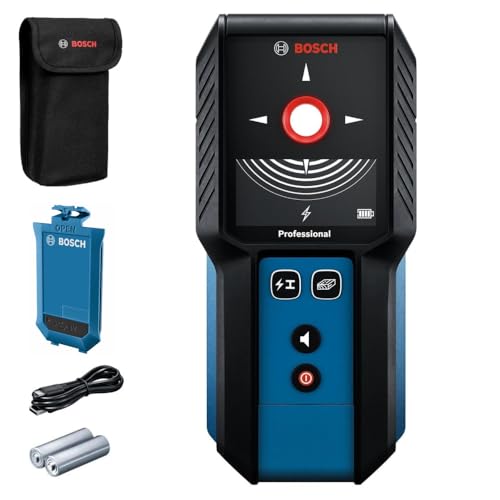
Bosch GMS 120
Accurate detection of live wires, metal, and wood in one tool.
| Product | Best For | Max Depth (Metal) | Rating | Price |
|---|---|---|---|---|
| Bosch GMS 120 | Overall Home Use | 120 mm | 4.7 / 5 | Mid |
| Stanley S100 | Budget Buy | 100 mm | 4.3 / 5 | Low |
| Bosch Truvo | Basic Live Wire | 70 mm | 4.4 / 5 | Low |
| Milwaukee 2235-20 | Deep Scan | 150 mm | 4.5 / 5 | High |
| Draper 42544 | Metal & Studs | 80 mm | 4.0 / 5 | Budget |
Bosch GMS 120
Best OverallPros
- Accurate live wire detection
- Clear LED and audible alerts
- Auto calibration reduces false positives
Cons
- Higher price than basic models
- 9V battery not included
The Bosch GMS 120 is the most trusted cable detector for home renovators. It offers four distinct scanning modes, including a dedicated live wire setting that helps you avoid drilling into hidden electrical cables. Owner reviews consistently praise its accuracy on standard plasterboard and brick walls, with the auto calibration feature helping to reduce annoying false signals.
The build quality is typical Bosch: solid and reliable. The detection depth of 120 mm for metal is sufficient for most domestic walls. While it is more expensive than a basic stud finder, the added safety of reliable live wire detection makes it a worthwhile investment for anyone planning to hang shelves or chase walls.
Stanley S100
Best BudgetPros
- Very affordable price
- Reliable live wire detection
- Simple one-button operation
Cons
- Plastic build feels less durable
- Depth detection limited on non-metal
The Stanley S100 is a fantastic entry-level cable detector that offers excellent value for money. It provides three essential modes: live cable, metal, and stud detection. User reviews highlight that it accurately finds live AC wires in standard walls, making it a safe choice for basic DIY tasks like hanging pictures or installing shelves.
The build is lightweight and the interface is very simple, with a single button to cycle through modes. It does not have the depth range of the Bosch GMS 120, and the plastic casing feels less premium. However, for the price, it is a reliable tool that performs its core function well, making it the best budget pick.
Bosch Truvo
Best Basic Live WirePros
- Extremely simple to use
- Compact and pocket-sized
- Very affordable for a Bosch tool
Cons
- Only detects live wires, not metal or studs
- Shallow detection depth
The Bosch Truvo is designed for one job only: finding live electrical cables. It is a dedicated live wire detector that is incredibly simple to use. You just press the button and slide it across the wall; it beeps and lights up when it detects a live AC current. Owner reviews love its simplicity and the peace of mind it provides for quick drilling jobs.
It is very compact and runs on AAA batteries, making it easy to keep in a tool bag. The limitation is that it cannot detect metal pipes or wooden studs. If you only need to avoid live wires when hanging a picture, the Truvo is perfect. For any deeper or more complex wall scanning, you will need a multi-mode detector.
Milwaukee 2235-20
Best Deep ScanPros
- Deepest detection range
- Rugged, job-site build
- Clear digital display
Cons
- Higher price point
- Larger and heavier than competitors
The Milwaukee 2235-20 is a professional-grade cable and stud detector designed for deeper scanning. It offers a maximum detection depth of 150 mm for metal, which is significantly more than most home-use models. This makes it suitable for locating pipes and cables in thicker walls or ceilings. Owner reviews note its robust build quality and the clear digital display that shows the centre of the object.
It is heavier and bulkier than the Bosch GMS 120, and the price is higher. For a typical home user, the extra depth may not be necessary. However, if you are working on a renovation with thicker plaster or need to be certain of deep obstructions, the Milwaukee 2235-20 provides the most confidence. It is built to withstand drops on a construction site.
Draper 42544
Best for Metal & StudsPros
- Very low price
- Good for finding metal pipes
- Simple stud finder function
Cons
- No live wire detection mode
- Manual calibration required
The Draper 42544 is a basic but effective detector for finding metal pipes and wooden studs. It is a good choice if you are primarily concerned with avoiding plumbing pipes or finding a solid fixing point for a heavy shelf. User reviews find it works well on standard stud walls and for locating metal conduit in plaster.
The key limitation is that it does not have a dedicated live wire detection mode. You can sometimes detect live cables if they are in metal conduit, but it is not reliable for this purpose. It requires manual calibration against the wall surface before each use. For the price, it is a capable metal and stud finder, but you should not rely on it solely for electrical safety.
What to Check Before Buying a Cable Detector
Choosing the right cable detector depends on the tasks you plan to do. The most important feature is live wire detection, which identifies the electromagnetic field around a live AC cable. Without this, you are drilling blind and at risk of electric shock. Ensure the model you choose has a dedicated live wire mode.
Consider the detection depth. Standard home walls are around 12-15 mm thick for plasterboard, but cables can be buried deeper. A detector with a 70-100 mm range for metal is usually sufficient for domestic use. If you have thick walls or are working on a renovation, look for a model with a deeper scan range.
Look for auto calibration. Many modern detectors calibrate automatically when you press the button against the wall. This reduces false positives and makes the tool easier to use. Manual calibration is fine but requires an extra step and can be less consistent. Also, check the power source; most use a standard 9V battery.
Mistakes to Avoid When Using a Cable Detector
One common mistake is not calibrating the detector on the actual wall surface you intend to scan. Calibrating on a different surface or in the air will lead to inaccurate readings. Always follow the manufacturer's instructions for calibration on the specific wall type, whether it is plasterboard, brick, or tile.
Another error is assuming a detector can find all types of cables. Standard detectors find live wires, but they may not detect a dead or switched-off cable. Also, cables in metal conduit can be harder to detect. Always use the detector in multiple modes and scan the area slowly. Mark the location of any detected object with a pencil before drilling.
Finally, do not rely solely on a budget detector for safety-critical work. A basic model like the Draper 42544 is good for studs but should not be your only tool for electrical safety. For any drilling near potential wiring, use a detector with a proven live wire mode, such as the Bosch GMS 120 or the Stanley S100.
FAQs
What is a cable detector and how does it work?
A cable detector is a handheld tool that uses sensors to find live electrical wires, metal pipes, and wooden studs hidden behind walls. It works by detecting the electromagnetic field around a live AC cable or the density change of a stud.
Can a cable detector find wires in concrete?
Yes, many cable detectors can find metal conduit and wires in concrete, but the detection depth is often reduced. Models like the Bosch GMS 120 have specific modes for scanning in concrete and brick.
What is the difference between a stud finder and a cable detector?
A basic stud finder only locates wooden or metal studs behind drywall. A cable detector, or multi-scanner, adds the ability to detect live AC wires and metal pipes, making it a safer tool for general DIY drilling.
Do budget cable detectors work reliably?
Budget models like the Stanley S100 can work reliably for live wire detection on standard walls. However, they may have a shorter depth range and less build quality compared to premium models like the Bosch GMS 120.
How deep can a home-use cable detector scan?
Most home-use cable detectors scan to a depth of 70 mm to 120 mm for metal. The Bosch GMS 120 offers 120 mm, while the Milwaukee 2235-20 offers a deeper 150 mm range for thicker walls.
Why does my cable detector keep beeping falsely?
False beeping is often caused by not calibrating the detector on the correct wall surface. It can also be triggered by moisture, metal foil insulation, or uneven wall surfaces. Recalibrate the tool on a different spot to clear the false reading.
Can a cable detector find plastic pipes?
Standard cable detectors cannot find plastic pipes as they rely on detecting metal or electromagnetic fields. You need a specialised pipe detector or a thermal camera to locate plastic plumbing behind walls.
Is it safe to drill if my detector shows no wires?
No detector is 100% foolproof. Always drill with caution, especially in older homes where wiring may be non-standard. Use a detector with a live wire mode and drill slowly to reduce risk.
Do I need a professional cable detector for home use?
For most home DIY tasks, a good quality consumer model like the Bosch GMS 120 or Stanley S100 is sufficient. Professional models like the Milwaukee 2235-20 are better for job sites and deeper scans but are not necessary for standard picture hanging or shelf installation.
How do I maintain my cable detector?
Keep the sensor area clean and free of dust. Store the detector in a dry place and remove the battery if not used for a long time. Check the calibration before each use to ensure accuracy.
Our verdict
For most home users, the Bosch GMS 120 is the best overall cable detector due to its reliable multi-mode scanning and accurate live wire detection. If you are on a tight budget, the Stanley S100 offers solid live wire detection at a lower price. For deep scanning needs, the Milwaukee 2235-20 is the top choice.