Best Cable Detector Under $100
Find live wires, metal pipes, and studs before you drill. We compared the top cable detectors under $100 to help you avoid costly mistakes.
Quick answer
The Bosch GMS 120 is the best cable detector under $100 for most users, offering reliable live wire detection and deep scanning. For a budget-friendly alternative with solid metal and wood detection, the Stanley S300 is a strong choice.
Why trust ToolBuyerHub
- Flagged CAT rating and safe-use guidance wherever a tool is used near live circuits
- Battery & ecosystem compared
- Aggregated owner reviews
- Build quality & warranty checked
- Brand reliability
- No fake hands-on claims
Research updated June 2026.
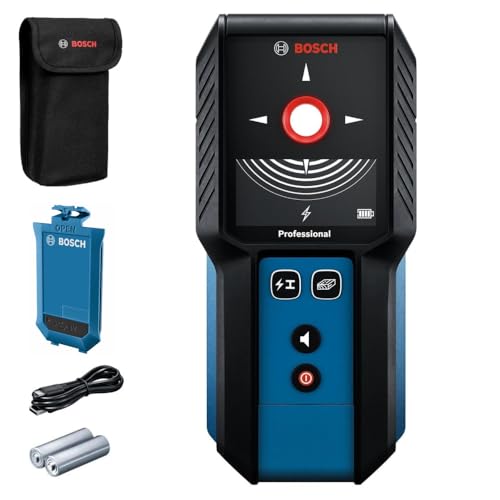
Bosch GMS 120
Reliable live wire detection with clear visual and audible alerts.
| Product | Best For | Max Depth | Rating | Price |
|---|---|---|---|---|
| Bosch GMS 120 | Overall reliability | 120 mm | 4.5 / 5 | Check price |
| Stanley S300 | Budget pick | 100 mm | 4.2 / 5 | Check price |
| Bosch Truvo | Quick checks | 70 mm | 4.0 / 5 | Check price |
| Draper 68091 | Metal detection | 120 mm | 4.1 / 5 | Check price |
| Sealey VS820 | Multi-purpose | 100 mm | 3.9 / 5 | Check price |
Bosch GMS 120
Best OverallPros
- Accurate live wire detection
- Clear visual and audio alerts
- Durable build quality
Cons
- Requires 9V battery
- Can be sensitive on damp walls
The Bosch GMS 120 is a professional-grade cable detector that consistently earns high marks from owners for its reliability. It offers four scanning modes: stud, metal, live wire, and deep, allowing you to detect objects up to 120 mm deep. The live wire detection is particularly praised for its accuracy, reducing false positives.
Owner reviews highlight the clear LCD display and audible beeps that make it easy to use. Some users note that it can be overly sensitive on plasterboard with moisture, but this is a common trait among detectors. Overall, it is a dependable tool for DIYers and tradespeople alike.
Stanley S300
Best BudgetPros
- Affordable price point
- Simple one-button operation
- Good detection accuracy for the cost
Cons
- Shallower depth than GMS 120
- No deep scan mode
The Stanley S300 is a budget-friendly cable detector that delivers solid performance for basic DIY tasks. It detects studs, metal, and live wires up to 100 mm deep, which is sufficient for most home projects. Owners appreciate its straightforward design and easy calibration.
While it lacks the advanced features of more expensive models, the S300 is praised for its reliability in detecting live wires on standard plasterboard. Some reviews mention that the audible alert could be louder, but the visual indicator compensates well. It is a great entry-level tool.
Bosch Truvo
Best for Quick ChecksPros
- Compact and lightweight
- Very easy to use
- Fast calibration
Cons
- Shallow detection depth
- No dedicated live wire mode
The Bosch Truvo is designed for simplicity, making it ideal for quick checks before drilling. It uses a single universal mode to detect metal and live wires up to 70 mm deep. Owners love its compact size and how quickly it calibrates with a simple swipe on the wall.
However, its limited depth means it may miss deeper objects, and it does not differentiate between live wires and metal. For straightforward tasks like finding studs in plasterboard, it works well. It is best suited for light DIY use rather than professional work.
Draper 68091
Best for Metal DetectionPros
- Deep metal detection
- Good value for money
- Clear LED indicators
Cons
- No stud detection mode
- Build quality feels less premium
The Draper 68091 is a dedicated metal and live wire detector that offers impressive depth for its price. It can detect metal objects up to 120 mm deep, making it useful for locating pipes and rebar in walls. Owners report that the live wire detection is reliable, though it may give false positives near large metal objects.
Its main limitation is the lack of a stud detection mode, so it is not ideal for finding wooden joists. The plastic housing feels sturdy enough for occasional use. For tasks focused on metal, it is a capable and affordable option.
Sealey VS820
Best Multi-PurposePros
- Versatile three-mode detection
- Ergonomic grip
- Affordable price
Cons
- Occasional false positives
- Display could be brighter
The Sealey VS820 is a multi-purpose cable detector that covers stud, metal, and live wire detection up to 100 mm. It is designed for DIYers who want a single tool for various tasks. Owners appreciate the comfortable handle and the straightforward mode selection.
Some reviews note that it can produce false positives on textured walls, but overall accuracy is decent for the price. The LCD display is functional but could be brighter in direct sunlight. It is a solid choice for general home improvement projects.
What to check before buying a cable detector
Detection depth is a key specification. Most detectors under $100 offer between 70 mm and 120 mm depth. For standard plasterboard walls, 70 mm is often enough, but for thicker walls or concrete, look for 100 mm or more.
Consider the modes you need. Basic models may only detect metal, while more advanced ones add stud and live wire detection. Live wire detection is crucial for safety when drilling near sockets or switches.
Power source matters. Most use a 9V battery, which is easy to replace. Some budget models may use AAA batteries. Always check battery life in reviews.
Mistakes to avoid
Do not rely solely on a cable detector for safety. Always turn off power at the mains before drilling near suspected wires. Detectors can miss wires in damp walls or behind metal lath.
Avoid buying a detector with only one mode if you need to find studs and wires. A universal mode may not differentiate between materials, leading to confusion.
Do not ignore calibration instructions. Most detectors need to be calibrated on the wall surface before scanning. Skipping this step can cause inaccurate readings.
FAQs
Can a cable detector find plastic pipes?
No, most cable detectors under $100 only detect metal and live wires. Plastic pipes require a different type of scanner.
How deep can a cable detector under $100 scan?
Typical depth ranges from 70 mm to 120 mm for metal and live wires. Stud detection is usually shallower, around 30 mm to 50 mm.
Do I need a cable detector if I have building plans?
Building plans are helpful but may not show exact wire routes. A detector provides real-time confirmation before drilling.
What does live wire detection mean?
It detects the electromagnetic field around live electrical cables. This helps you avoid drilling into active wires.
Are Bosch cable detectors better than Stanley?
Bosch models generally offer more features and better build quality, while Stanley provides good value for budget buyers.
Can I use a cable detector on concrete walls?
Yes, but depth may be reduced. Look for a model with at least 100 mm depth for concrete applications.
How do I calibrate a cable detector?
Place it flat on the wall, press the calibration button, and swipe it across the surface. Follow the manufacturer's instructions.
Why does my cable detector give false positives?
False positives can occur due to moisture, metal lath, or uneven surfaces. Calibrate on a clear area of the wall.
Is a cable detector the same as a stud finder?
No, a stud finder only locates wooden or metal studs. A cable detector also finds live wires and pipes.
How long does a 9V battery last in a cable detector?
Battery life varies, but most detectors last for several hours of intermittent use. Replace the battery if the display dims.
Our verdict
The Bosch GMS 120 is the best cable detector under $100 for its reliable live wire detection and deep scanning. For a budget option, the Stanley S300 offers solid performance at a lower cost. Choose based on your need for depth and features.