Best Electrical Crimping Tools
A crimping tool is one of those purchases where the difference between a good one and a cheap one shows up months later, usually as a loose terminal or a wire that pulls free. This guide compares real, currently sold crimpers across the main styles, from ratcheting ferrule tools to insulated terminal crimpers and the classic multi-tool, so you can match the tool to the connectors you actually use.
Quick answer
For most home and prosumer electrical work, the Klein Tools 3005CR Ratcheting Crimper is the best overall pick thanks to its consistent ratchet action and comfortable molded handles.
Why trust ToolBuyerHub
- Cross-checked manufacturer-published specifications before writing any recommendation
- Verified US market availability and configuration for every model discussed
- Owner-feedback themes are summarized as feedback, never presented as our own hands-on testing
- No invented star ratings; see the visible Research Score criteria on this page
- Flagged CAT rating and safe-use guidance wherever a tool is used near live circuits
- Crimping tools are judged on terminal retention and cycle consistency, so this guide weighs ratchet mechanism quality, die availability, and handle ergonomics over marketing claims.
Research updated September 2026.
What Matters Most for This Category
The single biggest factor is connector type, not brand. Insulated butt splices, non-insulated terminals, heat shrink connectors, and wire ferrules each need a different die profile, and using the wrong one produces a crimp that looks fine but fails a pull test. After connector type, look at whether the tool is ratcheting (it will not release until full compression, which prevents under-crimping) or a simple plier-style squeeze, then check handle comfort for repetitive work and whether replacement dies or jaws are available. For occasional household repairs a basic multi-tool is fine, but anyone doing panel work, automotive wiring, or repeated terminations will get better results and less hand fatigue from a ratcheting frame with interchangeable dies.
| Model | Best for | Key specs | Research Score |
|---|---|---|---|
| Klein Tools 3005CR Ratcheting Crimper | Best Overall | Ratcheting insulated terminal crimper, Insulated and non-insulated terminals | 94/100 |
| IWISS Ratchet Crimping Tool Kit with Interchangeable Dies | Best for Versatility | Ratcheting frame with interchangeable dies, Multiple terminal and ferrule styles | 91/100 |
| Astro Pneumatic Tool 9477 Ratcheting Wire Terminal Crimper | Best Value | Ratcheting terminal crimper, Insulated and non-insulated terminals | 89/100 |
| Klein Tools 1005 Multi-Tool Stripper and Crimper | Best Budget | Plier-style multi-tool, Cuts, strips, and crimps | 86/100 |
| Greenlee PA1363 Crimp Tool for Insulated Terminals | Best for Insulated Terminals | Ratcheting insulated terminal crimper, Insulated terminals | 88/100 |
| TEMCo TH0006 Hydraulic Lug Crimper | Best for Large Gauge Lugs | Hydraulic crimping tool, Large gauge lugs and splices | 87/100 |
| Gardner Bender GS-388 Crimping Tool | Best for Light Duty | Plier-style crimper and cutter, Insulated and non-insulated terminals | 82/100 |

Klein Tools 3005CR Ratcheting Crimper
Editor's PickPros
- Ratchet will not release until the crimp is fully compressed, which reduces under-crimped terminals
- Comfortable molded handles cut fatigue during long wiring sessions
- Well known brand with widely available replacement and support
Cons
- Dedicated to terminal crimping, so it will not handle ferrules or coax
- Not the cheapest option for someone doing one repair
This is the crimper most people should buy first. The ratcheting mechanism forces a complete cycle before it opens, which is the single best safeguard against a loose terminal. It handles both insulated and non-insulated terminals and feels solid in the hand.
IWISS Ratchet Crimping Tool Kit with Interchangeable Dies
Most FlexiblePros
- Interchangeable dies let one frame cover several connector families
- Comes as a kit, so you are not buying dies separately
- Good option if you work on both automotive and panel wiring
Cons
- Die changes add a step and small parts can be misplaced
- Kit quality varies by die set, so check the specific set you order
A multi-die kit is the practical answer for anyone who crimps more than one connector style. The ratcheting frame does the heavy lifting while the dies adapt it to insulated terminals, non-insulated terminals, and wire ferrules.
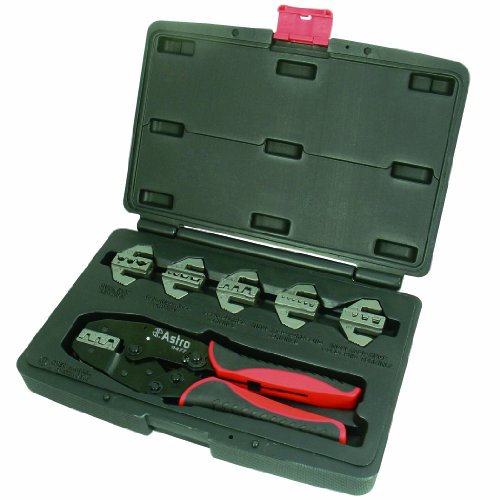
Astro Pneumatic Tool 9477 Ratcheting Wire Terminal Crimper
Strong ValuePros
- Ratcheting action with an adjustable force setting for different terminal sizes
- Priced below many comparable ratcheting crimpers
- Solid choice for a home shop doing regular 12V and household work
Cons
- Adjustment takes a little trial and error to dial in
- Not designed for ferrule or coax connectors
Astro Pneumatic has a good reputation in the automotive trade, and this crimper brings ratcheting consistency at a value price. The adjustable force setting helps when you move between thin and thick terminals.

Klein Tools 1005 Multi-Tool Stripper and Crimper
Simple and CheapPros
- Very inexpensive and widely available
- Combines cutting, stripping, and crimping in one hand tool
- Fine for occasional repairs and light gauge wire
Cons
- No ratchet, so crimp quality depends on your hand pressure
- Not ideal for repetitive or production work
For a drawer tool that handles the occasional lamp cord or low-voltage splice, a plier-style multi-tool is hard to beat on price. It will not match a ratcheting crimper for consistency, but it covers several jobs at once.
Greenlee PA1363 Crimp Tool for Insulated Terminals
Trade GradePros
- Purpose-built for insulated terminals, so the die profile matches the connector
- Ratcheting action supports consistent, repeatable crimps
- Greenlee is a familiar name in the electrical trade
Cons
- Focused on one connector family, so less versatile
- Costs more than a general purpose multi-tool
Greenlee tools are common on electrical job sites, and this crimper is aimed squarely at insulated terminals. If that is the connector you use most, a dedicated tool gives a cleaner, more consistent result than a universal crimper.
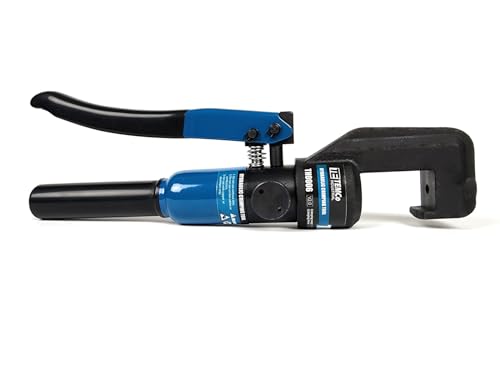
TEMCo TH0006 Hydraulic Lug Crimper
Heavy DutyPros
- Hydraulic force handles large gauge cable that hand crimpers cannot
- Produces a firm, repeatable compression on heavy lugs
- Useful for battery banks, solar, and service entrance work
Cons
- Bulky and heavy compared to a hand crimper
- Overkill and expensive for small gauge wiring
Once you move into large gauge battery and service cable, hand crimpers stop being practical. A hydraulic tool applies far more force and gives a solid mechanical connection on heavy lugs.

Gardner Bender GS-388 Crimping Tool
Budget StarterPros
- Very low cost and easy to find at hardware stores
- Handles basic crimping and cutting for small jobs
- Light and simple to use for beginners
Cons
- No ratchet, so results vary with hand strength
- Not built for frequent or heavy use
Gardner Bender is a familiar name in consumer electrical supplies, and this is a basic starter crimper for small repairs. It is best treated as a light duty tool for occasional use rather than a long term workhorse.
Who Should Avoid the Top Pick
Skip any crimper that is sold only as a generic no-name listing with no clear die specification, since you cannot verify what connector it is actually designed for. Also avoid buying a heavy hydraulic tool for small gauge work, or a tiny plier-style crimper for large lugs, because the mismatch is where bad connections come from.
Before You Buy
Before ordering, confirm the exact connector family you will crimp most, insulated terminals, non-insulated terminals, heat shrink connectors, or wire ferrules, and check that the tool lists that type. Look for a ratcheting mechanism if you will make more than a handful of crimps, and check whether replacement dies or jaws are available so the tool stays useful. Finally, match the tool size to your wire gauge range, since a crimper rated for 22 to 10 AWG will not do service cable work.
FAQs
What is the difference between a ratcheting and a plier-style crimper?
A ratcheting crimper locks until you complete the full compression cycle, which produces a consistent crimp every time. A plier-style crimper relies on your hand pressure, so results vary more between users and between crimps.
Can one crimping tool handle all connector types?
Not usually. Insulated terminals, non-insulated terminals, heat shrink connectors, and wire ferrules each need a different die profile. A kit with interchangeable dies is the closest thing to a universal solution.
Do I need a hydraulic crimper?
Only for large gauge cable such as battery, solar, or service entrance work. For typical household and automotive wiring, a hand or ratcheting crimper is lighter, cheaper, and easier to use.
What wire gauge range should I look for?
Match the tool to the wire you actually use. Many general purpose crimpers cover roughly 22 to 10 AWG, while larger lugs and service cable need a dedicated heavy duty or hydraulic tool.
Is a more expensive crimper worth it?
For occasional repairs, a budget tool is often fine. If you crimp regularly or need every connection to pass a pull test, a ratcheting tool with a matched die is worth the extra cost.
How do I know if a crimp is good?
A proper crimp is tight, does not pull off under moderate tugging, and shows even compression on the terminal barrel. If the terminal slides or the wire pulls free, the crimp or the die profile was wrong.
Our verdict
For most people, the Klein Tools 3005CR is the best balance of consistent ratcheting action, comfort, and price. If you work with several connector types, step up to a multi-die kit like the IWISS set, and only reach for a hydraulic tool if large gauge cable is part of your regular work.