Best Fish Tapes for Pulling Electrical Wires
Pulling wire through finished walls, conduit, and attic runs is one of those jobs where the right fish tape turns a frustrating afternoon into a quick task. The best choice depends on whether you are working in conduit, behind drywall, or through insulated exterior walls, and whether you need stiffness for long pushes or flexibility for tight bends.
Quick answer
The Klein Tools 56009 Steel Fish Tape is the best overall pick for most residential electrical pulls thanks to its durable steel construction and smooth payout.
Why trust ToolBuyerHub
- Cross-checked manufacturer-published specifications before writing any recommendation
- Verified US market availability and configuration for every model discussed
- Owner-feedback themes are summarized as feedback, never presented as our own hands-on testing
- No invented star ratings; see the visible Research Score criteria on this page
- Flagged CAT rating and safe-use guidance wherever a tool is used near live circuits
- We compare manufacturer specifications such as tape material, length, width, case design, and eyelet type, then cross-reference owner feedback themes on Amazon to flag real-world issues like kinking, rust, and reel binding.
Research updated September 2026.
What Matters Most for This Category
The most important factors are tape material (steel for stiffness and long conduit runs, nylon or fiberglass for tight bends and non-conductive safety), length (most residential jobs need 50 to 100 feet, while commercial runs may need 200 feet or more), and case design (a good reel with a winding knob and a rotating eyelet saves significant time). Width and stiffness matter too: stiffer tape pushes through crowded conduit better, but flexible tape navigates sharp bends and existing wire bundles more easily.
| Model | Best for | Key specs | Research Score |
|---|---|---|---|
| Klein Tools 56009 Steel Fish Tape | Best Overall | Steel, 100 ft | 94/100 |
| Ideal 31-056 Fiberglass Fish Tape | Best for Tight Bends | Fiberglass, 100 ft | 91/100 |
| Klein Tools 56331 Nylon Fish Tape | Best for Retrofit Work | Nylon, 50 ft | 89/100 |
| Southwire FTSP100 Steel Fish Tape | Best Value | Steel, 100 ft | 87/100 |
| Greenlee 438-10 Steel Fish Tape | Best for Heavy Duty | Steel, 100 ft | 90/100 |
| Klein Tools 56014 Steel Fish Tape | Best for Long Runs | Steel, 200 ft | 88/100 |
| Rack-A-Tiers 44050 Fiberglass Fish Tape | Best Budget Fiberglass | Fiberglass, 50 ft | 85/100 |
Klein Tools 56009 Steel Fish Tape
Top PickPros
- Stiff steel tape pushes through long conduit runs without buckling
- Smooth winding reel with a comfortable handle reduces hand fatigue
- Durable construction holds up to repeated jobsite use
Cons
- Steel tape can kink if forced through sharp bends
- Not ideal for live electrical work since steel conducts
Klein Tools is a trusted name in electrical work, and this 100-foot steel fish tape is a solid choice for conduit runs and wall pulls. The impact-resistant case and smooth reel make payout and rewinding manageable on longer jobs. Based on manufacturer specifications, it is designed for durability and consistent performance.

Ideal 31-056 Fiberglass Fish Tape
Flexible FavoritePros
- Non-conductive fiberglass is safer around live circuits
- Flexible enough to navigate tight bends and crowded conduit
- Smooth surface slides past existing wires with less friction
Cons
- Less stiffness than steel for very long pushes
- Can be more expensive than basic steel tapes
Fiberglass fish tape is the go-to choice when you need flexibility and non-conductive safety. The Ideal 31-056 offers a 100-foot length with a smooth surface that slides through bends and past existing wires. Owner feedback often highlights its ease of use in retrofit situations.

Klein Tools 56331 Nylon Fish Tape
Smooth OperatorPros
- Nylon tape is non-conductive and safe for live circuits
- Smooth surface glides through insulation and tight spaces
- Lightweight design reduces fatigue on overhead pulls
Cons
- Shorter length limits long conduit runs
- Nylon can be less stiff than steel for pushing
For retrofit jobs where you are fishing behind drywall or through insulation, nylon tape offers a good balance of flexibility and smoothness. The Klein Tools 56331 is a 50-foot nylon tape that is non-conductive and easy to handle. It is a practical choice for short to medium pulls in finished spaces.
Southwire FTSP100 Steel Fish Tape
Budget FriendlyPros
- Affordable price for a 100-foot steel tape
- Stiff enough for most conduit runs
- Widely available at US retailers
Cons
- Reel may feel less sturdy than premium options
- Steel tape can rust if stored in damp conditions
Southwire is a common name in electrical supplies, and this 100-foot steel fish tape delivers solid performance at a budget-friendly price. It is stiff enough for typical conduit pulls and comes on a basic reel. For occasional DIY use, it offers good value.

Greenlee 438-10 Steel Fish Tape
Pro GradePros
- Rugged construction built for daily jobsite use
- Smooth winding mechanism with a sturdy handle
- Stiff tape handles long, crowded conduit runs
Cons
- Higher price than basic steel tapes
- Steel tape is conductive and not for live work
Greenlee is a professional-grade brand, and this steel fish tape is built to withstand heavy use. The 100-foot tape is stiff enough for long conduit runs, and the reel is designed for smooth winding. It is a solid investment for electricians who use a fish tape regularly.
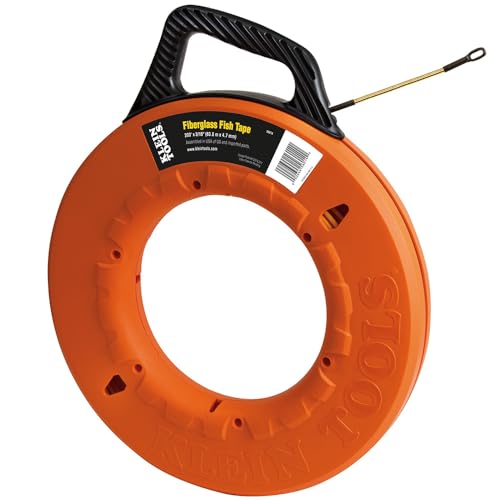
Klein Tools 56014 Steel Fish Tape
Extended ReachPros
- 200-foot length handles long commercial runs
- Steel construction provides good pushing stiffness
- Klein Tools quality and warranty support
Cons
- Bulkier reel is heavier to carry
- Longer tape can be more prone to kinking if mishandled
When you need to pull wire through long conduit runs, a 200-foot tape like the Klein Tools 56014 saves you from coupling shorter tapes together. The steel tape is stiff enough for long pushes, and the large reel manages the extra length. It is a practical choice for commercial or long residential runs.
Rack-A-Tiers 44050 Fiberglass Fish Tape
Affordable FlexibilityPros
- Non-conductive fiberglass at a lower price point
- Flexible enough for tight bends
- Lightweight and easy to carry
Cons
- Shorter length may not suit long runs
- Less stiff than steel for pushing through crowded conduit
If you want the safety and flexibility of fiberglass without paying premium prices, the Rack-A-Tiers 44050 is a solid option. This 50-foot fiberglass tape is non-conductive and flexible, making it suitable for short pulls in tight spaces. It is a good entry-level choice for DIYers.
Who Should Avoid the Top Pick
Avoid buying a fish tape if you only need to pull wire through a short, easily accessible conduit that you can reach by hand or with a simple wire puller. Also skip steel tapes if you will be working around live circuits, since steel conducts electricity and creates a shock hazard.
Before You Buy
Before buying, measure the longest run you need to cover and add at least 20 percent extra length to allow for maneuvering. Check the conduit size and existing wire fill to ensure the tape width will fit. Consider whether you need a non-conductive tape for safety, and look for a reel with a smooth winding mechanism and a sturdy handle to reduce frustration.
FAQs
What is a fish tape used for?
A fish tape is used to pull electrical wires through conduit, walls, and other enclosed spaces. It is a flexible or stiff tape that you push through a run, attach wires to the end, and then pull back through.
Steel or fiberglass fish tape, which is better?
Steel is stiffer and better for long, straight conduit runs, while fiberglass is more flexible, non-conductive, and better for tight bends and live circuits. The best choice depends on your specific job.
How long of a fish tape do I need?
For most residential work, a 50 to 100 foot tape is sufficient. For commercial runs or long conduit, a 200 foot tape may be necessary. Always add extra length for maneuvering.
Can I use a fish tape for live electrical work?
Only use a non-conductive fish tape, such as fiberglass or nylon, for live electrical work. Steel tapes conduct electricity and should never be used near live circuits.
How do I keep my fish tape from kinking?
Avoid forcing the tape through sharp bends or crowded conduit. Use a steady, gentle push and let the tape find its way. Storing the tape on its reel properly also helps prevent kinks.
What is the best fish tape for pulling wire through insulation?
A nylon or fiberglass tape with a smooth surface works best for pulling through insulation because it slides easily and is non-conductive. The Klein Tools 56331 Nylon Fish Tape is a good example.
Our verdict
For most residential electrical pulls, the Klein Tools 56009 Steel Fish Tape offers the best combination of stiffness, durability, and smooth operation. If you need non-conductive flexibility for tight bends or live circuits, the Ideal 31-056 Fiberglass Fish Tape is an excellent alternative. Budget-conscious buyers can still get reliable performance from the Southwire FTSP100.