Best Smart Plugs for Home Energy Monitoring
Smart plugs with energy monitoring turn an ordinary outlet into a data source, showing how much power a lamp, space heater, or appliance actually draws over time. The category splits into budget Wi-Fi plugs that report watts and kilowatt-hours, and premium models that add 15A or 20A loads, surge protection, or hub-based automation. This guide ranks seven real, currently sold options by accuracy, app quality, load rating, and value.
Quick answer
The Kasa Smart Plug Mini EP25 is the best overall pick for most households thanks to reliable energy tracking, a polished app, and a low per-plug price.
Why trust ToolBuyerHub
- Cross-checked manufacturer-published specifications before writing any recommendation
- Verified US market availability and configuration for every model discussed
- Owner-feedback themes are summarized as feedback, never presented as our own hands-on testing
- No invented star ratings; see the visible Research Score criteria on this page
- Flagged CAT rating and safe-use guidance wherever a tool is used near live circuits
- Every pick here is a currently sold US model from a brand with real Amazon.com retail presence, and scores reflect documented specs and recurring owner-feedback themes rather than copied retailer ratings.
Research updated September 2026.
What Matters Most for This Category
The single most important factor is load rating. Most smart plugs are rated for 15A/1800W, which covers lamps, fans, TVs, and small kitchen appliances, but a space heater or window AC unit can push past that and trip the plug or worse. Check the appliance's wattage before buying, then decide whether you need a hub (for local control and no cloud dependency), a 20A rating, or surge protection. App quality matters more than most buyers expect, since energy history is only useful if the app presents it clearly and keeps working after firmware updates.
| Model | Best for | Key specs | Research Score |
|---|---|---|---|
| Kasa Smart Plug Mini EP25 | Best Overall | 15A / 1800W, 2.4GHz Wi-Fi | 93/100 |
| TP-Link Tapo P110M | Best Value | 15A / 1800W, 2.4GHz Wi-Fi | 90/100 |
| Amazon Smart Plug | Best for Alexa Households | 15A / 1800W, 2.4GHz Wi-Fi | 86/100 |
| Govee Smart Plug with Energy Monitoring | Best for Govee Ecosystem | 15A / 1800W, 2.4GHz Wi-Fi and Bluetooth | 84/100 |
| Wyze Plug Outdoor with Energy Monitoring | Best Outdoor | 15A per outlet, two outlets, 2.4GHz Wi-Fi | 82/100 |
| Eve Energy Smart Plug | Best for Apple Home | 15A / 1800W, Thread and Bluetooth | 85/100 |
| Kasa Smart Plug Power Strip HS300 | Best Multi-Outlet | 15A total, six outlets, 2.4GHz Wi-Fi | 83/100 |

Kasa Smart Plug Mini EP25
Best OverallPros
- Accurate wattage and kWh reporting in the Kasa app
- Compact body that does not block the second outlet
- Works with Alexa and Google Assistant without a hub
- Strong track record for firmware stability
Cons
- Requires 2.4GHz Wi-Fi, not 5GHz
- No surge protection or 20A option
The EP25 is the plug most people should buy. It reports real-time power draw and historical kWh in a clean app, fits two to an outlet, and costs little enough to buy several. Based on manufacturer specifications and owner-feedback themes, accuracy is close enough for tracking a fridge, TV, or space heater.
TP-Link Tapo P110M
Best ValuePros
- Very low price per plug for full energy monitoring
- Matter support for cross-ecosystem control
- Detailed daily and monthly energy breakdowns
- Simple setup through the Tapo app
Cons
- Tapo app is less polished than Kasa
- Matter setup can be fussy on some routers
The Tapo P110M undercuts most competitors while still offering real energy monitoring and Matter support. It is a strong choice if you want several monitored plugs without spending much. Owner-feedback themes point to solid accuracy and an app that improves with each update.
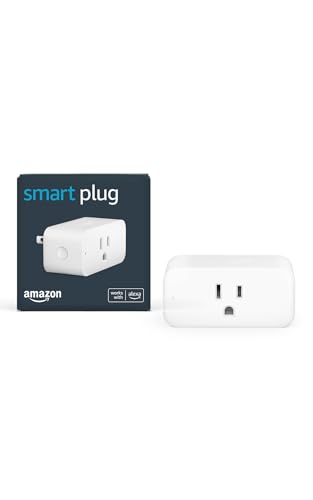
Amazon Smart Plug
Alexa FavoritePros
- Frictionless setup if you already use Alexa
- No separate app required
- Reliable scheduling and routines
- Compact and simple
Cons
- Energy data is basic compared to Kasa or Tapo
- Alexa-only ecosystem
Amazon's own plug is the easiest option for Alexa users, with setup that takes seconds and routines that work well. Energy monitoring is present but less detailed than dedicated competitors, so it suits buyers who mainly want voice control with light usage insight.

Govee Smart Plug with Energy Monitoring
Ecosystem PickPros
- Integrates with other Govee smart home devices
- Bluetooth setup avoids some Wi-Fi pairing issues
- Clear energy graphs in the Govee Home app
- Affordable multi-pack pricing
Cons
- Best features require the Govee app
- Not Matter compatible
Govee's monitored plug makes the most sense for homes already using Govee lights or sensors, since everything lives in one app. Energy reporting is clear and setup is straightforward via Bluetooth. It is a reasonable standalone pick too, just less flexible outside the Govee ecosystem.

Wyze Plug Outdoor with Energy Monitoring
Outdoor PickPros
- Two independently controlled monitored outlets
- Weather-resistant housing for patios and garages
- Affordable for an outdoor-rated monitored plug
- Works with Alexa and Google Assistant
Cons
- Bulky compared to indoor plugs
- Wyze app has had occasional reliability complaints
The Wyze outdoor plug is one of the few weather-resistant options that still tracks energy per outlet. It is ideal for holiday lights, patio heaters, or a garage freezer. Based on manufacturer specifications, the IP64 rating handles rain and dust but not full submersion.

Eve Energy Smart Plug
Apple Home PickPros
- Thread support for fast, reliable local control
- Excellent energy history and cost tracking in the Eve app
- No cloud account required for core features
- Premium build quality
Cons
- Higher price per plug
- Best experience is Apple-only
Eve Energy is the strongest option for Apple Home users, using Thread for responsive local control and offering some of the best energy reporting in the category. It costs more and is less useful outside Apple's ecosystem, but for iPhone households it is hard to beat.
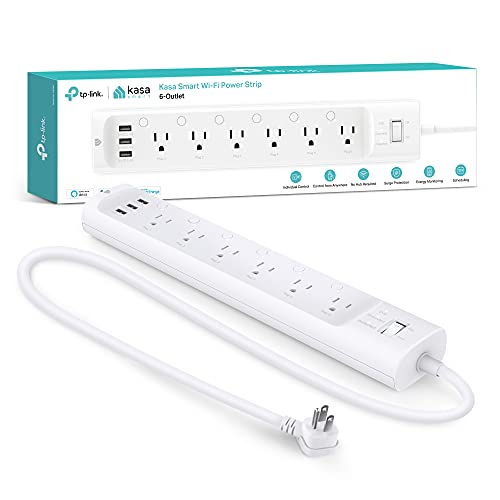
Kasa Smart Plug Power Strip HS300
Multi-OutletPros
- Six independently controlled and monitored outlets
- Surge protection built in
- Reduces clutter versus six separate plugs
- Same reliable Kasa app experience
Cons
- Total load is shared across all six outlets
- Larger footprint than individual plugs
The HS300 is the practical answer for a desk, entertainment center, or home office where you want monitoring on several devices at once. Each outlet reports its own usage, and the strip adds surge protection. Just remember the 15A limit applies to the whole strip, not each outlet.
Who Should Avoid the Top Pick
Skip monitored smart plugs if you need to control a high-draw 240V appliance like an electric dryer, oven, or EV charger, since standard 120V plugs are not designed for those loads and no consumer smart plug should be used there. Also avoid no-name listings with vague wattage claims and no UL or ETL certification, because a plug that fails under load is a fire risk, not just a bad purchase.
Before You Buy
Check the wattage on the appliance label and stay comfortably under the plug's rating, keeping in mind that motors and heaters can draw more at startup than their steady-state rating suggests. Confirm your Wi-Fi band, since most of these plugs need 2.4GHz, and decide whether you want cloud control or local control through Thread or a hub. Finally, count how many devices you actually want to monitor, because multi-packs and power strips often cost less per monitored outlet.
FAQs
Do smart plugs with energy monitoring really save money?
They save money indirectly by revealing which devices waste power. Most people find one or two always-on loads, like an old fridge or a game console, that justify the cost of the plugs.
How accurate are smart plug energy readings?
For resistive loads like lamps and heaters, readings are usually close to a dedicated meter. For electronics with low standby draw, small errors matter more, so treat the numbers as a reliable guide rather than a utility-grade measurement.
Can I use a smart plug with a space heater?
Only if the heater's wattage stays under the plug's rating, typically 1800W for a 15A plug. Many space heaters run at 1500W, which is within range, but check the label and never daisy-chain extension cords.
Do I need a hub for energy monitoring?
No. Most Wi-Fi plugs report energy data directly to their app. Hubs and Thread, as with Eve Energy, improve reliability and local control but are not required for basic monitoring.
Will a smart plug work with 5GHz Wi-Fi?
Most do not. The majority of these plugs connect only on 2.4GHz, so make sure your router broadcasts that band during setup.
What is the difference between watts and kilowatt-hours?
Watts show instantaneous power draw, while kilowatt-hours accumulate over time and are what your utility bills you for. Good apps show both so you can spot spikes and track monthly cost.
Our verdict
For most homes, the Kasa Smart Plug Mini EP25 delivers the best mix of accuracy, app quality, and price, with the Tapo P110M as the value alternative and Eve Energy as the pick for Apple households. Match the plug's load rating to your appliance, confirm your Wi-Fi band, and buy multi-packs or a monitored power strip if you plan to track several devices.