Stanley Crimping Tools: What to Buy in 2026
Shoppers search for a "Stanley crimping tool" expecting a lineup of dedicated crimpers. In reality, Stanley covers crimping through its combination wire stripper, cutter and crimper pliers rather than a range of purpose-built crimping tools. This guide explains what Stanley actually offers, and which dedicated crimpers to buy if you crimp terminals often.
Quick answer
If you want a Stanley, buy its wire stripper/crimper/cutter pliers: one tool that strips, cuts and puts a usable crimp on insulated terminals for occasional jobs. If crimping is a regular part of your work, a dedicated ratcheting crimper such as the Klein Tools 3005CR gives far more consistent results than any combination plier, Stanley included.
Why trust ToolBuyerHub
- Specs checked against manufacturer listings
- Only products we can verify actually exist
- Common owner complaints noted, not invented scores
- Build quality & warranty checked
- Brand reliability
- No fake hands-on claims
Research updated August 2026.
Klein Tools 3005CR Ratcheting Insulated Terminal Crimper
A true ratcheting crimper that will not release until the crimp is complete, so every insulated terminal comes out the same.
| Product | Best For | Key Spec | Type | Price |
|---|---|---|---|---|
| Klein Tools 3005CR | Overall Best | 22-10 AWG insulated | Ratcheting | $$ |
| Stanley Wire Stripper/Crimper Pliers | Best Stanley Option | Strip, cut & crimp in one | Combination plier | $ |
| Klein Tools 1005 | Mixed Terminal Types | 22-10 AWG + bolt cutter | Compression plier | $$ |
| IWISS SN-48B | Open-Barrel Connectors | 26-16 AWG | Ratcheting | $$ |
| Klein Tools 1010 | Everyday Electrical | 10-20 AWG solid | Combination plier | $ |

Klein Tools 3005CR Ratcheting Insulated Terminal Crimper
Best OverallPros
- Ratchet will not release until the crimp cycle finishes
- Color-matched nests for red, blue and yellow terminals
- Repeatable results even when you are tired or rushing
Cons
- Insulated terminals only, no bare-terminal nests
- Bulkier than a combination plier
The 3005CR is a dedicated crimper for insulated terminals in the 22-10 AWG range, and it solves the single biggest problem with plier-style crimping: inconsistency. The ratchet holds the jaws closed until the full cycle completes, so a rushed squeeze cannot leave you with a loose barrel that pulls off six months later.
The nests are sized for the standard color code, so a red terminal goes in the red nest and comes out with the correct compression. Owners who wire trailers, car audio or control panels tend to say the same thing: it is the tool that stopped their terminals failing. If you only crimp twice a year it is more tool than you need, but for anything regular it is the honest recommendation over any Stanley plier.
Stanley Wire Stripper, Cutter and Crimper Pliers
Best Stanley OptionPros
- One tool covers stripping, cutting and light crimping
- Widely stocked and inexpensive
- Backed by Stanley's limited lifetime hand tool warranty
Cons
- Crimp quality depends entirely on your squeeze
- Crimp section is a secondary feature, not the main design
This is the honest answer to "what is the best Stanley crimping tool". Stanley does not market a range of dedicated crimpers in the US; its crimping capability lives in combination stripper, cutter and crimper pliers. Model designations vary by region and retailer, so buy by the product name and check the listing photo shows the crimp nests near the pivot.
Used sensibly it is a fine tool. Strip to the length marked on the terminal, seat the barrel fully in the nest, and squeeze until the handles bottom out. What it cannot do is guarantee the crimp, because nothing stops you from releasing early. For a homeowner adding a spade terminal to a lamp cord or a mower switch, that is an acceptable trade for the price and the toolbox space saved.

Klein Tools 1005 Wire Crimper and Cutter
Best for Mixed Terminal TypesPros
- Handles insulated, non-insulated and ignition terminals
- Built-in bolt cutter for 6-32 and 8-32 screws
- Curved Klein-Kurve handles are comfortable in the palm
Cons
- No ratchet, so technique still matters
- Heavier than a basic stripper
The 1005 is the tool to reach for when your connector drawer is a mix of types. It has separate nests for insulated and non-insulated terminals plus ignition terminals, covering 22-10 AWG, which is most of what a homeowner or automotive DIYer touches. The bolt cutter for 6-32 and 8-32 machine screws sounds like a gimmick until the first time you shorten a device screw in a crowded box.
Because it is a plier and not a ratchet, the same caveat applies as with the Stanley: the crimp is only as good as your squeeze. Klein's advantage is nest geometry and jaw hardness, which produce a cleaner barrel compression for the same effort.
IWISS SN-48B Ratcheting Crimper
Best for Open-Barrel ConnectorsPros
- Correct jaw profile for open-barrel pins
- Crimps conductor and insulation wings in one action
- Adjustable ratchet tension
Cons
- Wrong tool for ring and spade terminals
- Small pins take practice to hold square in the jaw
Open-barrel pins are where general-purpose crimpers fail badly. A JST, Dupont or Molex pin needs its wings rolled inward around the conductor, and a flat plier nest simply flattens them. The SN-48B has the correct B-crimp profile across 26-16 AWG and folds the conductor and insulation wings in a single squeeze.
If you build wiring harnesses, repair drone or 3D printer looms, or replace connectors on small appliances, this covers a job the other four tools here cannot do properly. For ring and spade terminals, use the 3005CR instead.
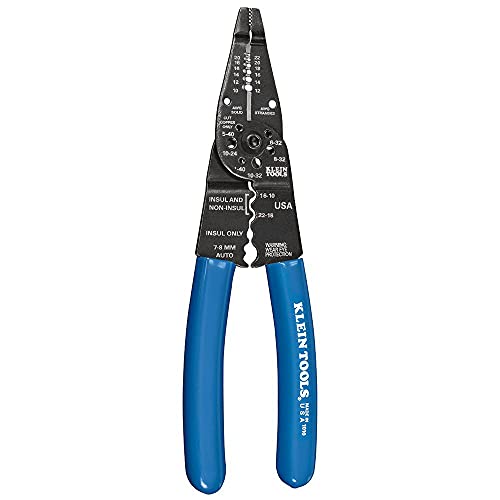
Klein Tools 1010 Wire Stripper, Cutter and Crimper
Best for Everyday ElectricalPros
- Accurate stripping holes for both solid and stranded wire
- Crimp nest handles insulated and non-insulated terminals
- Compact enough to live in a pouch
Cons
- Crimp is secondary to the stripping function
- Not suitable for heavy lug work
The 1010 is the plier most electricians actually carry, and the reason it belongs on this list is that most people searching for a crimper really want one tool that strips, cuts and crimps. It covers 10-20 AWG solid and 12-22 AWG stranded, which spans household branch wiring down to low-voltage runs.
Treat the crimp nest as a convenience feature rather than the main event. It will hold a spade terminal on a thermostat wire without complaint. For anything carrying real current or subject to vibration, step up to the ratcheting 3005CR.
Does Stanley make a dedicated crimping tool?
Not in the way most searches assume. Stanley's US hand tool catalogue covers crimping through combination wire stripper, cutter and crimper pliers rather than a family of purpose-built crimpers. You will also see listings that mix regional part numbers, and some third-party sellers attach Stanley storage or screwdriver part numbers to crimping listings, so always match the product photo to what you actually want before ordering.
That is not a criticism of the brand. A Stanley combination plier is a reasonable tool at a reasonable price and carries Stanley's limited lifetime warranty against defects in material and workmanship. It simply is not the same class of tool as a ratcheting terminal crimper, and it is worth knowing that before you buy.
What to check before buying a crimping tool
Start with the terminals you actually use. Closed-barrel insulated terminals, bare non-insulated terminals and open-barrel pins each need a different nest profile, and a tool that is excellent at one will mangle another. Match the tool to your connector drawer, not the other way around.
Then check the wire gauge range. Most general-purpose crimpers cover roughly 22-10 AWG, which handles automotive and low-voltage household work. Anything heavier, such as battery lugs or service cable, needs a hydraulic or hex-die lug crimper instead. Finally, decide whether you need a ratchet: it costs more and adds bulk, but it removes your own inconsistency from the result, which is the single biggest cause of failed crimps.
Mistakes to avoid when using a crimping tool
Using the wrong nest for the connector is the most common error. Match the color-coded or marked die to the terminal, not to how the wire looks. Another mistake is stripping to the wrong length: strip too little and the conductor never reaches the barrel, strip too much and bare copper sits outside the terminal.
Releasing a non-ratcheting plier early leaves a crimp that feels fine and pulls apart later. Squeeze until the handles bottom out, then tug-test the joint before you insulate it. And do not use a crimper as a plier or a hammer, as that misaligns the jaws and ruins the nest geometry the tool depends on.
FAQs
What is the best Stanley crimping tool?
Stanley's crimping is handled by its wire stripper, cutter and crimper pliers rather than a dedicated crimper range, so that combination plier is the Stanley to buy. For consistent terminal crimps, a dedicated ratcheting crimper is the better tool.
Are Stanley crimping tools covered by a warranty?
Yes. Stanley hand tools generally carry a limited lifetime warranty against defects in material and workmanship. Warranty terms do not cover wear from misuse, such as using the jaws as a hammer.
Can I use a combination plier for automotive wiring?
Yes for light work such as spade and ring terminals on accessories. For anything subject to constant vibration or carrying significant current, a ratcheting crimper produces a far more reliable joint.
What is the difference between a ratchet and non-ratchet crimper?
A ratchet crimper locks the jaws through a full cycle and releases only when the crimp is complete, so every result is the same. A non-ratchet plier relies entirely on how hard and how far you squeeze.
Which crimper is best for insulated terminals?
The Klein Tools 3005CR is built specifically for insulated terminals from 22 to 10 AWG, with nests matched to the standard red, blue and yellow color code.
Do crimping pliers include a wire cutter?
Combination tools such as the Klein 1010 and Stanley's stripper/crimper pliers include cutting jaws. Dedicated ratcheting crimpers such as the 3005CR do not, since they only carry crimp nests.
What wire sizes do most crimpers support?
Most general-purpose crimpers cover about 22 to 10 AWG. Open-barrel crimpers such as the IWISS SN-48B work smaller, around 26 to 16 AWG, and battery lugs need a separate hex-die or hydraulic crimper.
Are Stanley hand tools made in the USA?
Stanley manufactures globally. Some lines are US-made and many hand tools are produced overseas, so check the individual listing if country of origin matters to you.
Can I crimp open-barrel connectors with a normal crimper?
No. Open-barrel pins such as JST and Dupont need a B-crimp profile that folds the wings inward. A standard nest flattens them and the pin will not seat in its housing.
How do I maintain a crimping tool?
Keep the nests clean, wipe off flux or corrosion, and put a drop of light oil on the pivot occasionally. On ratcheting tools, avoid forcing the release lever, as that is the part most likely to fail.
Our verdict
If you specifically want a Stanley, buy its wire stripper, cutter and crimper pliers and use it within its limits: a competent all-rounder for occasional terminals. If the crimp itself is what matters, the Klein Tools 3005CR ratcheting crimper is the better buy at a similar shelf price, because it guarantees the compression rather than leaving it to your grip.