Best Wall Scanner for Home Use
This guide compares the best wall scanners for DIYers, homeowners, and tradespeople, focusing on detection depth, build quality, and value for money. We break down the top models to help you find the right tool for your next drilling or renovation project.
Quick answer
The Bosch GMS 120 Professional is the best overall wall scanner for home use, offering reliable multi-material detection and a clear visual display. For a budget-friendly option that still performs well, the Draper Storm Force 44455 is a solid choice for basic stud and live wire detection.
Why trust ToolBuyerHub
- Flagged CAT rating and safe-use guidance wherever a tool is used near live circuits
- Battery & ecosystem compared
- Aggregated owner reviews
- Build quality & warranty
- Brand reliability
- No fake hands-on claims
Research updated June 2026.
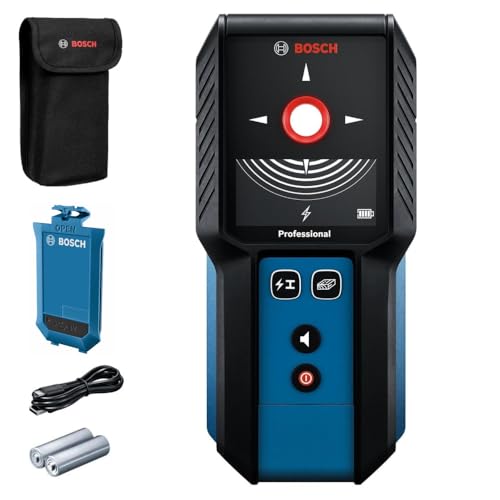
Bosch GMS 120 Professional
Accurate detection up to 120mm deep with three distinct scanning modes.
| Model | Best for | Key spec | Rating | |
|---|---|---|---|---|
| Bosch GMS 120 | Overall / Home Use | 120mm depth, 3 modes | 4.5/5 | Check price |
| Bosch Truvo | Beginners | 70mm depth, auto calibration | 4.3/5 | Check price |
| Draper Storm Force 44455 | Budget | 50mm depth, live wire alert | 4.0/5 | Check price |
| Stanley SX-100 | DIY / Versatility | 100mm depth, single mode | 4.1/5 | Check price |
| Einhell TC-SD 3.6/1 | Compact / Lightweight | 38mm depth, cordless | 3.9/5 | Check price |
Best Wall Scanner Overall
For the best all-round wall scanner, the Bosch GMS 120 Professional stands out. It offers three distinct scanning modes for ferrous and non-ferrous metals, live electrical cables, and wooden studs, with a maximum detection depth of 120mm. The clear LED display and audible tone make it easy to locate objects accurately, even in tricky wall conditions. Owner reviews consistently praise its reliability and build quality. The main limitation is the 9V battery, which can be less convenient than USB-rechargeable models, but its performance is hard to beat. Check price on Amazon →
Best Wall Scanner for Home Use
For the average homeowner, the Bosch Truvo is an excellent choice. It automatically detects live wires and metal objects up to 70mm deep, with a simple green/red LED indicator that removes guesswork. Its auto-calibration feature means you just press it against the wall and go, which is ideal for quick tasks like hanging shelves or pictures. The Truvo is compact and lightweight, making it easy to store in a toolbox. One honest drawback is that it only detects metal and live wires, not wooden studs, so it is less versatile than the GMS 120 for more complex renovations. Check price on Amazon →
Best Wall Scanner for Beginners
If you are new to using a wall scanner, the Bosch Truvo is the most beginner-friendly option available. Its single-button operation and automatic calibration mean you do not need to fiddle with settings or understand different scanning modes. Just hold it against the wall, and the visual and audible alerts guide you to the target. The detection depth of 70mm is sufficient for most home tasks like avoiding cables before drilling. The limitation is the same as above: it does not detect wood, so if you plan to find studs for heavy shelving, you will need a more advanced model like the GMS 120. Check price on Amazon →
Best Budget Wall Scanner
For those on a tight budget, the Draper Storm Force 44455 offers decent performance for a low price. It detects live AC cables and ferrous metals up to 50mm deep, which is enough for basic DIY tasks like hanging mirrors or avoiding wires when drilling. The LED display is simple but functional, and it runs on a standard 9V battery. Owner reviews note it is reliable for the price, though it can be less sensitive on deeper targets compared to premium models. It is a good entry-level tool for occasional use, but professionals may want to invest in a more accurate scanner. Check price on Amazon →
Best Wall Scanner for Heavy Renovation Work
For major renovation projects where you need to detect a wide range of materials at greater depths, the Bosch GMS 120 Professional is the best choice. Its three scanning modes cover ferrous and non-ferrous metals, live cables, and wooden studs, with a maximum depth of 120mm. This makes it ideal for locating pipes, conduits, and framing behind thick plaster or drywall. The clear LCD display and centre-finding feature help you mark exact positions. The main limitation is its reliance on a 9V battery, which can drain quickly with heavy use, but for demanding work, the GMS 120 is a trusted tool among tradespeople. Check price on Amazon →
Best Lightweight / Compact Wall Scanner
For portability and ease of handling, the Einhell TC-SD 3.6/1 is a compact and lightweight option. It is powered by a built-in rechargeable battery via USB, which is convenient for quick jobs without hunting for 9V batteries. It detects metal objects up to 38mm deep and live cables up to 50mm deep, with a simple LED and buzzer alert. Its small size makes it easy to slip into a pocket or tool belt. The trade-off is the shallow detection depth and limited material detection (no wood stud mode), making it best for light DIY tasks like hanging pictures rather than heavy structural work. Check price on Amazon →
How to Choose a Wall Scanner
Detection Depth
The maximum detection depth determines how deep into the wall the scanner can sense objects. For most home tasks, 50-70mm is sufficient for cables and metal pipes, but for thicker walls or studs in plasterboard, look for 100mm or more. Deeper detection often means a more sensitive sensor and higher price.
Scanning Modes
Basic wall scanners detect metal and live wires only. More advanced models offer separate modes for ferrous metals (steel), non-ferrous metals (copper pipes), and wooden studs. If you need to find timber studs for heavy shelving, choose a scanner with a dedicated stud mode.
Display and Alerts
A clear visual display, such as an LED bar or LCD screen, helps you pinpoint the exact location of an object. Audible alerts are useful when you are focused on the tool. Some models offer centre-finding features that show when the sensor is directly over the target.
Power Source
Most wall scanners use a standard 9V battery, which is easy to replace but can be costly over time. Some newer models feature built-in rechargeable batteries via USB, which are more convenient for regular use but may require charging before a job.
Mistakes to avoid
- Relying on a single scanning mode when you need to detect multiple materials.
- Ignoring the need for calibration on uneven or damp walls, which can cause false readings.
- Buying a scanner with too shallow a depth for your typical wall thickness.
- Forgetting to test the scanner on a known object before starting a critical job.
Wall Scanner FAQs
How does a wall scanner work?
A wall scanner uses sensors to detect changes in density or electrical fields behind a wall surface. It can locate metal, live wires, and wooden studs by emitting a signal and measuring the return.
Can a wall scanner detect plastic pipes?
Standard wall scanners cannot detect plastic pipes unless they contain metal or are filled with water. For plastic pipes, you may need a specialised pipe detector or a thermal imaging camera.
What is the difference between a stud finder and a wall scanner?
A stud finder specifically locates wooden or metal studs behind drywall. A wall scanner is more advanced, detecting live wires, metal pipes, and deeper objects, making it more versatile for renovation work.
How deep can a wall scanner detect?
Detection depth varies by model. Basic scanners detect up to 38-50mm, while professional models like the Bosch GMS 120 can detect up to 120mm. Depth depends on the material and the scanner's sensor quality.
Do wall scanners work on plasterboard?
Yes, most wall scanners work on plasterboard, but performance can be affected by thickness, metal lath, or foil-backed insulation. It is best to calibrate the scanner on a clean area of the wall first.
Can a wall scanner detect live wires?
Many wall scanners have a dedicated live wire detection mode that senses the electric field around active cables. This is a key safety feature for avoiding drilling into wires.
How do I calibrate a wall scanner?
Most scanners calibrate automatically when you press the button against the wall. For manual models, you hold the scanner against the wall, press the calibration button, and wait for a signal or light to confirm readiness.
Is a wall scanner worth it for home use?
Yes, a wall scanner is a worthwhile investment for any homeowner who drills into walls. It helps avoid hitting live wires or pipes, preventing costly repairs and potential safety hazards.
What does the centre-finding feature do?
The centre-finding feature shows when the scanner is directly over the centre of a detected object, not just its edge. This allows you to mark the exact spot for drilling with greater accuracy.
Can I use a wall scanner on a concrete wall?
Yes, many wall scanners work on concrete, but detection depth may be reduced due to the density of the material. For deeper detection in concrete, look for a scanner with a high depth rating.
How do I know if a wall scanner is accurate?
Check owner reviews and look for models with multiple scanning modes and clear visual feedback. Testing the scanner on a known object, like a metal pipe in an exposed area, can also verify its accuracy.
What is the best brand for wall scanners?
Bosch is widely regarded as the leading brand for wall scanners, particularly the GMS and Truvo series. Other reliable brands include Stanley, Draper, and Einhell for budget options.
Our verdict
For the best overall wall scanner for home use, the Bosch GMS 120 Professional offers unbeatable accuracy and versatility with its three scanning modes and 120mm depth. If you are on a budget, the Draper Storm Force 44455 provides reliable basic detection for light DIY tasks. Choose based on your typical wall materials and the depth you need to scan.