Best Wire Strippers for Home Wiring
Stripping wire is one of those jobs that looks simple until you nick the copper and have to cut the run back and start over. A good stripper removes insulation cleanly, holds the conductor without crushing it, and matches the wire gauges you actually find in a house. Home wiring in the US mostly means 14 AWG and 12 AWG solid copper for branch circuits, plus 10 AWG for heavier loads and 18 to 22 AWG for low voltage work like thermostats and doorbells. The tool you pick should cover the gauges you use most, not every gauge on the market.
Quick answer
The Klein Tools 11061 Self-Adjusting Wire Stripper is the best overall pick for most home wiring because it handles 10 to 20 AWG solid and stranded wire without gauge guessing.
Why trust ToolBuyerHub
- Cross-checked manufacturer-published specifications before writing any recommendation
- Verified US market availability and configuration for every model discussed
- Owner-feedback themes are summarized as feedback, never presented as our own hands-on testing
- No invented star ratings; see the visible Research Score criteria on this page
- Flagged CAT rating and safe-use guidance wherever a tool is used near live circuits
- We compare published manufacturer specifications, gauge ranges, and owner-feedback themes from US retail listings rather than relying on a single review source.
Research updated September 2026.
What Matters Most for This Category
The single biggest factor is whether you want a self-adjusting tool or a traditional gauged stripper. Self-adjusting models grip and strip in one motion and are forgiving for beginners, but they can struggle with very fine stranded wire and some tight jacket materials. Traditional gauged strippers with labeled holes give you precise control and cost less, but you have to match the hole to the wire every time. Also check the jaw material and whether the tool includes a built-in cutter and crimper, since those extras reduce how often you swap tools mid-job.
| Model | Best for | Key specs | Research Score |
|---|---|---|---|
| Klein Tools 11061 Self-Adjusting Wire Stripper | Best Overall | 10 to 20 AWG, Self-adjusting | 94/100 |
| Klein Tools 1010 Long-Nose Wire Stripper | Best Value | 10 to 18 AWG, Gauged holes | 91/100 |
| Klein Tools 11063W Wire Stripper and Cutter | Best for Solid Wire | 8 to 20 AWG, Self-adjusting | 90/100 |
| IRWIN VISE-GRIP Self-Adjusting Wire Stripper | Best Budget | 10 to 24 AWG, Self-adjusting | 87/100 |
| Klein Tools 11055 Klein-Kurve Wire Stripper | Best Ergonomic | 10 to 18 AWG, Gauged holes | 89/100 |
| Klein Tools 11057 Wire Stripper and Cutter | Best for Tight Spaces | 10 to 18 AWG, Gauged holes | 88/100 |
| Southwire Automatic Wire Stripper | Best for Stranded Wire | 10 to 24 AWG, Automatic | 85/100 |
Klein Tools 11061 Self-Adjusting Wire Stripper
Top pickPros
- Strips solid and stranded wire without changing settings
- Comfortable handles for repeated use
- Includes cutter and crimper in the same tool
Cons
- Bulkier than a simple gauged stripper
- Not ideal for very fine stranded wire
This is the model most electricians and DIYers reach for when they want one tool that covers common household gauges. The self-adjusting mechanism grips the insulation and pulls it free in a single squeeze, which cuts down on nicked conductors. It also has a built-in cutter and crimper so you can handle most of a wiring task without setting it down.
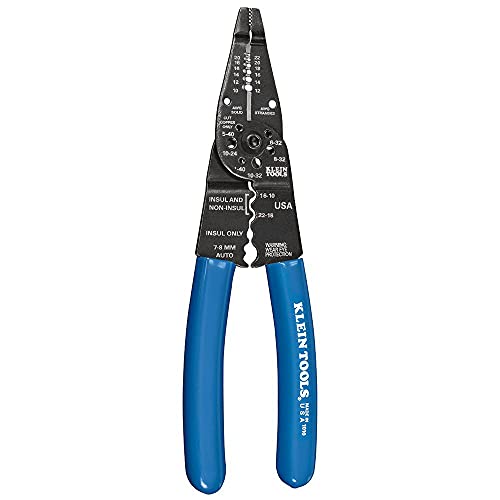
Klein Tools 1010 Long-Nose Wire Stripper
Great valuePros
- Low cost for a name-brand tool
- Long nose reaches into tight boxes
- Simple and reliable mechanism
Cons
- You must match the hole to the gauge
- No self-adjusting convenience
A traditional gauged stripper that does the basics well and costs noticeably less than self-adjusting models. The long nose helps when you are working inside a crowded electrical box, and the labeled holes cover the solid wire sizes used in most branch circuits. It is a good second tool or a first tool if you prefer manual control.

Klein Tools 11063W Wire Stripper and Cutter
Solid wire specialistPros
- Handles larger 8 and 10 AWG wire
- Shears-style cutter cleanly trims conductors
- Wide handles reduce hand fatigue
Cons
- Larger frame is harder to fit in tight spaces
- Overkill if you only work with 12 and 14 AWG
This model extends the self-adjusting range down to 8 AWG, which matters if you are running heavier circuits for a range, dryer, or subpanel. The shears-style cutter is a step up from a basic notch cutter and leaves cleaner ends. It is a strong choice for projects that mix branch circuits with heavier feeds.

IRWIN VISE-GRIP Self-Adjusting Wire Stripper
Budget friendlyPros
- Very affordable for a self-adjusting tool
- Wide gauge range covers low voltage too
- Cushioned handles are comfortable
Cons
- Build feel is lighter than premium brands
- Less durable under heavy daily use
A budget-friendly self-adjusting stripper that covers a wider gauge range than most competitors, including small low-voltage wire. It is a reasonable choice for occasional DIY work where you do not want to spend much. The tradeoff is a lighter build that may not hold up to professional daily use.

Klein Tools 11055 Klein-Kurve Wire Stripper
Comfort pickPros
- Curved handles reduce wrist strain
- Clean stripping on solid wire
- Compact enough for tight boxes
Cons
- Manual gauge matching required
- Not self-adjusting
The curved handle design is the standout feature here, and it makes a real difference if you are stripping dozens of wires in one session. The gauged holes cover standard branch circuit sizes and the tool includes a crimper and cutter. It is a comfortable middle ground between price and ergonomics.
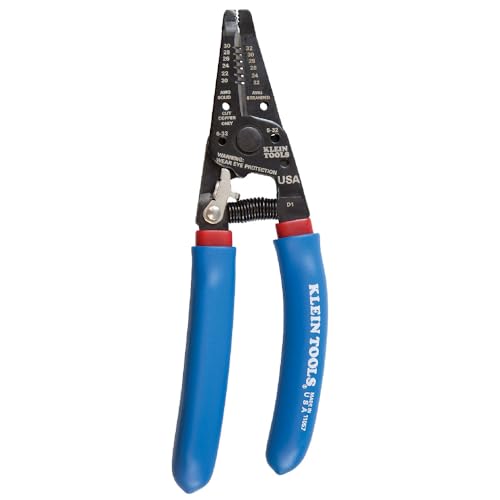
Klein Tools 11057 Wire Stripper and Cutter
CompactPros
- Small frame fits into crowded boxes
- Lightweight and easy to carry
- Reliable stripping on common gauges
Cons
- Limited gauge range
- No self-adjusting feature
A compact stripper built for working inside tight electrical boxes where a full-size tool will not fit. It covers the gauges most homeowners actually use and includes a cutter and crimper. If you have ever fought to strip a wire in a packed switch box, this design makes sense.

Southwire Automatic Wire Stripper
Stranded wire optionPros
- Handles stranded wire more cleanly than many self-adjusting tools
- Wide gauge range
- Rubberized handles grip well
Cons
- Less common in stores than Klein models
- Automatic mechanism can be finicky on some jacket types
Southwire is a familiar name in US electrical work, and this automatic stripper is aimed at mixed solid and stranded jobs. It covers a wide gauge range and the rubberized handles stay put in your hand. It is a solid alternative if you frequently work with stranded wire for fixtures or appliances.
Who Should Avoid the Top Pick
Skip this category if you only need to strip one or two wires once, since a basic utility knife or the stripper on a multi-tool can handle that. Also avoid buying a stripper that does not list its gauge range, because unlabeled tools are a gamble on whether they match US wire sizes.
Before You Buy
Confirm the wire gauges you will actually be working with before you buy. Most home branch circuits use 14 or 12 AWG solid copper, heavier appliance circuits use 10 or 8 AWG, and low-voltage work uses smaller stranded wire. Check whether the tool includes a cutter and crimper, since those extras save time. Finally, think about access: a compact frame matters more than a wide gauge range if you are working in crowded boxes.
FAQs
What gauge wire is used in most home wiring?
Most branch circuits in US homes use 14 AWG for 15 amp circuits and 12 AWG for 20 amp circuits, both solid copper. Heavier appliances may use 10 or 8 AWG.
Is a self-adjusting wire stripper better than a gauged one?
Self-adjusting tools are faster and more forgiving for beginners, while gauged strippers give more precise control and usually cost less. Either works well if you match the tool to your wire sizes.
Can I use wire strippers on stranded wire?
Yes, but check the tool's gauge range and whether it is rated for stranded wire. Some self-adjusting models handle stranded wire less cleanly than solid.
Do I need a separate cutter if my stripper has one?
Not usually. Most strippers with a built-in cutter handle common branch circuit wire, though a dedicated pair of lineman's pliers is still useful for cutting and twisting.
What is the difference between 11061 and 11063W?
The 11063W covers a wider gauge range including 8 AWG and uses a shears-style cutter, while the 11061 is a more compact self-adjusting model aimed at common branch circuit sizes.
Are expensive wire strippers worth it for occasional DIY work?
For occasional work, a mid-range or budget model is usually enough. Premium tools make more sense if you strip wire regularly or want better ergonomics and durability.
Our verdict
For most home wiring projects, the Klein Tools 11061 Self-Adjusting Wire Stripper offers the best balance of speed, gauge coverage, and build quality. If you want to spend less or prefer manual control, the Klein Tools 1010 is a proven alternative. Match the tool to your actual wire gauges and you will avoid most stripping problems.