Best Bench Vises for Home Workshops
A bench vise is one of those tools that quietly earns its keep, holding parts steady for cutting, filing, drilling, and assembly work. The right vise depends on how much room your bench has, what materials you work with most, and whether you need portability or permanent mounting.
Quick answer
The Wilton 11106 6-Inch Mechanics Vise is our top pick for most home workshops thanks to its rugged ductile iron build and reliable swivel base.
Why trust ToolBuyerHub
- Cross-checked manufacturer-published specifications before writing any recommendation
- Verified US market availability and configuration for every model discussed
- Owner-feedback themes are summarized as feedback, never presented as our own hands-on testing
- No invented star ratings; see the visible Research Score criteria on this page
- Checked load ratings and safety documentation before recommending lifting or jacking equipment
- We compare jaw width, opening capacity, throat depth, mounting style, and material construction against manufacturer specifications and common owner-feedback themes rather than relying on sponsored placements.
Research updated September 2026.
What Matters Most for This Category
Jaw width and opening capacity matter most because they determine what you can actually clamp, while throat depth affects how tall a workpiece can sit between the jaws. Swivel bases add flexibility for angled work but can introduce slight play, so a locking mechanism quality matters. Cast iron is common and affordable, but ductile iron and forged steel resist cracking better under heavy hammering. Also check mounting hole spacing against your bench top before buying.
| Model | Best for | Key specs | Research Score |
|---|---|---|---|
| Wilton 11106 6-Inch Mechanics Vise | Best Overall | 6 inches, 6 inches | 94/100 |
| Yost Vises 750-DI 5.5-Inch Heavy Duty Vise | Best Heavy Duty | 5.5 inches, 5 inches | 92/100 |
| Wilton 63199 4.5-Inch Utility Vise | Best for Smaller Benches | 4.5 inches, 4 inches | 89/100 |
| Olympia Tools 38-604 4-Inch Bench Vise | Best Budget | 4 inches, 4 inches | 85/100 |
| Yost Vises 480 8-Inch Utility Vise | Best for Large Workpieces | 8 inches, 8 inches | 88/100 |
| Pony Jorgensen 26545 4.5-Inch Woodworking Vise | Best for Woodworking | 4.5 inches, 4 inches | 87/100 |
| IRWIN Tools 226340 6-Inch Workshop Vise | Best for General Repairs | 6 inches, 5 inches | 84/100 |
Wilton 11106 6-Inch Mechanics Vise
Top PickPros
- Ductile iron body resists cracking under heavy loads
- Large anvil surface for light shaping work
- Swivel base locks down firmly for angled tasks
Cons
- Heavy, so it needs a solidly built bench
- Premium price compared to basic cast iron vises
This is a serious vise built for repeated hammering and heavy clamping. The ductile iron construction gives it more give than standard cast iron, which helps prevent catastrophic cracking. It suits a dedicated home workshop where the vise stays mounted.

Yost Vises 750-DI 5.5-Inch Heavy Duty Vise
Built ToughPros
- Ductile iron body with a strong warranty reputation
- Replaceable hardened steel jaws
- Smooth swivel action with dual lock downs
Cons
- Slightly smaller jaw than some 6-inch competitors
- Heavier than many budget options
Yost has a long history in vise manufacturing, and this model reflects that with a stout ductile iron body and hardened jaws. The dual lock down design keeps the swivel steady during work. It is a strong choice for shops that see regular metalwork.
Wilton 63199 4.5-Inch Utility Vise
CompactPros
- Compact footprint fits smaller benches
- Swivel base adds working flexibility
- Good value for light to medium tasks
Cons
- Cast iron is less forgiving than ductile iron under heavy blows
- Smaller opening limits larger workpieces
A practical choice when bench space is tight but you still want a swivel base. It handles woodworking, light metalwork, and general repair tasks well. The smaller size keeps it manageable for hobbyists.
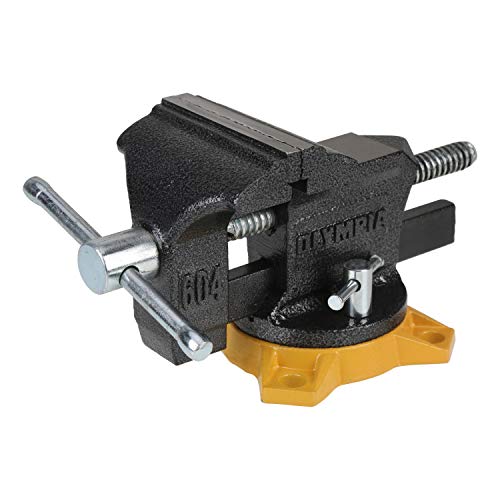
Olympia Tools 38-604 4-Inch Bench Vise
Value PickPros
- Very affordable entry point
- Swivel base included at a low price
- Light enough for easy repositioning
Cons
- Not built for heavy hammering
- Jaw alignment can vary between units
This vise covers the basics for light duty work at a price that suits occasional users. It works fine for holding small parts during assembly or light filing. Expect to upgrade if your work gets heavier.

Yost Vises 480 8-Inch Utility Vise
Big JawsPros
- Very wide jaws handle large parts
- Generous opening capacity
- Swivel base for angled work
Cons
- Large and heavy, needs a sturdy bench
- Cast iron limits heavy impact use
When you regularly clamp wide boards or long metal stock, an 8-inch vise saves a lot of frustration. This model offers that capacity at a reasonable price. It is best suited to a permanent bench location.

Pony Jorgensen 26545 4.5-Inch Woodworking Vise
Wood SpecialistPros
- Designed with woodworking in mind
- Quick release style operation on many models
- Flush mounting keeps bench surface clear
Cons
- Not intended for metalworking hammering
- No swivel base
Woodworking vises prioritize smooth jaw travel and flush mounting rather than impact resistance. This model suits hand tool woodworkers who need to hold boards for planing and joinery. It is a different tool from a mechanics vise, so match it to your work.
IRWIN Tools 226340 6-Inch Workshop Vise
Everyday UsePros
- Wide jaws at a moderate price
- Swivel base for flexible positioning
- Familiar brand with broad availability
Cons
- Cast iron construction limits heavy impact work
- Anvil area is modest
A general purpose vise that covers common household and garage repairs. The 6-inch jaws give decent holding room without a huge footprint. It is a reasonable middle ground for mixed use.
Who Should Avoid the Top Pick
Skip a bench vise if your work is almost entirely portable or if you have no fixed bench to mount it on, since a vise needs a solid anchor to be useful. Also avoid heavy duty vises if you only ever clamp small electronics or craft parts, as a lighter clamp or small hobby vise will serve you better.
Before You Buy
Measure your bench top thickness and the clear space around where the vise will mount, because mounting hole spacing and overhang vary between models. Decide whether you need a swivel base, which adds flexibility but can loosen over time, and confirm the jaw width and opening capacity match your typical projects. Check whether the vise is rated for hammering if you plan to strike work held in the jaws.
FAQs
What size bench vise should I get for a home workshop?
A 4-inch to 6-inch jaw width covers most home workshop tasks. Choose 6 inches or larger if you regularly clamp wide boards or long metal stock, and go smaller if bench space is limited.
Is ductile iron better than cast iron for a vise?
Ductile iron flexes slightly under load instead of cracking, which makes it more forgiving for heavy hammering. Cast iron is fine for light to medium work and usually costs less.
Do I need a swivel base on my vise?
A swivel base lets you rotate the vise for angled cuts and filing, which is handy for irregular shapes. If your work is mostly straight-on clamping, a fixed base is simpler and more rigid.
Can I mount a bench vise on a portable workbench?
You can, but the bench must be heavy and stable enough to resist the forces you apply. Lightweight folding benches may tip or shift under heavy clamping, so bolt the vise to a solid surface when possible.
What is the difference between a mechanics vise and a woodworking vise?
A mechanics vise is built for metalwork with hardened jaws and impact resistance, while a woodworking vise prioritizes smooth jaw travel and flush mounting for holding boards during planing and joinery.
How do I maintain a bench vise?
Keep the screw and slide surfaces lightly oiled, clean debris from the jaws, and check mounting bolts periodically for tightness. Avoid over-tightening the swivel lock, which can wear the mechanism.
Our verdict
For most home workshops, the Wilton 11106 6-Inch Mechanics Vise offers the best balance of durability, capacity, and swivel flexibility. If budget or bench space is tighter, the Olympia Tools 38-604 and Wilton 63199 are solid alternatives. Match jaw size and material to your actual work, and a good vise will last for decades.