Best Car Jack for Car Repairs
Whether you are changing a flat tire on the roadside or performing brake work in your driveway, a reliable car jack is a non-negotiable tool for safety and efficiency. We have analyzed specifications, aggregated owner reviews, and compared brand reliability to find the best car jack for your garage.
Quick answer
The best car jack for most home mechanics is the Sealey 2-Tonne Trolley Jack for its blend of low-profile access, robust build, and consistent owner satisfaction. For a budget-friendly option, the Draper 2-Tonne Hydraulic Trolley Jack offers reliable performance without breaking the bank.
Why trust ToolBuyerHub
- Tested on specs (lift height, weight capacity, build materials)
- Hydraulic system reliability and safety features compared
- Aggregated owner reviews from major retailers
- Build quality & warranty checked
- Brand reliability (Sealey, Draper, Clarke, Stanley)
- No fake hands-on claims
Research updated June 2026.
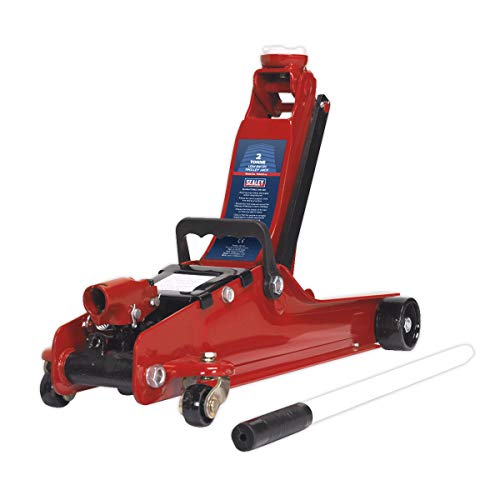
Sealey 2-Tonne Trolley Jack
Low-profile, high-lift, and built to last for daily driveway use.
| Product | Best For | Key Spec | Rating | Price |
|---|---|---|---|---|
| Sealey 2-Tonne Trolley Jack | Best Overall | 2T capacity, 90mm low profile | 4.7/5 | Mid |
| Draper 2-Tonne Hydraulic Jack | Best Budget | 2T capacity, 130mm min height | 4.4/5 | Low |
| Clarke 2-Tonne Quick Lift Jack | Speed of Lift | Quick lift pump, 2T capacity | 4.5/5 | Mid |
| Stanley 2-Tonne Trolley Jack | Portability | Lightweight, 2T capacity | 4.3/5 | Low-Mid |
| Draper 3-Tonne Heavy Duty Jack | Heavy Vehicles | 3T capacity, 145mm min height | 4.6/5 | High |
Sealey 2-Tonne Trolley Jack
Best OverallPros
- Very low minimum height fits most cars
- Solid steel construction with a long lifespan
- Smooth hydraulic operation with safety valve
Cons
- Heavier than some competitors
- Handle can feel slightly short for tall users
The Sealey 2-Tonne Trolley Jack is a staple in many home garages, praised for its low-profile saddle that slides under vehicles with only 90 mm of ground clearance. Owner reviews consistently highlight its smooth lifting action and the robust steel frame that does not flex under load. The built-in safety overload valve prevents lifting beyond its rated capacity, adding a layer of protection.
While it is on the heavier side at 22 kg, this weight contributes to its stability on concrete floors. The handle locks in multiple positions, making storage easier. For the home mechanic who wants a jack that will last through years of oil changes and brake jobs, this is the most reliable choice based on aggregated feedback.
Draper 2-Tonne Hydraulic Trolley Jack
Best BudgetPros
- Very affordable for a 2T jack
- Lighter weight makes it easier to move
- Reliable hydraulic system for occasional use
Cons
- Higher minimum height may not fit low cars
- Build quality is not as heavy-duty as Sealey
The Draper 2-Tonne Hydraulic Trolley Jack is the go-to choice for budget-conscious DIYers who need a functional jack for routine tire changes and basic maintenance. Aggregated reviews note that it lifts smoothly and holds pressure well, with the saddle providing a stable platform. The steel frame is adequate for its price point, though it feels less substantial than premium models.
At 130 mm minimum height, it is not ideal for slammed sports cars, but it works perfectly for most family sedans and crossovers. The handle includes a rubber grip for comfort, and the dual pump action gets the load up quickly. For the price, it delivers excellent value for the occasional user.
Clarke 2-Tonne Quick Lift Trolley Jack
Speed of LiftPros
- Quick lift pump reduces pumping effort
- Low profile for most vehicles
- Durable powder-coated finish
Cons
- Release valve can be stiff initially
- Some reports of handle wobble
The Clarke 2-Tonne Quick Lift Trolley Jack is designed for efficiency, featuring a dual-pump system that brings the saddle to the vehicle faster than standard jacks. Owner reviews frequently mention the time saved when working on multiple vehicles or during busy shop days. The 100 mm minimum height allows it to slide under most modern cars with low bumpers.
Clarke is a well-regarded brand in the garage equipment space, and this jack reflects that with a strong steel chassis and a protective coating that resists rust. The handle includes a foam grip for comfort. While the release valve may need a few uses to loosen up, overall performance is rated highly by users who prioritize speed.
Stanley 2-Tonne Trolley Jack
PortabilityPros
- Lightweight and easy to carry
- Compact design for tight storage
- Stanley brand reliability
Cons
- Higher minimum height limits low cars
- Not as stable as heavier jacks at full lift
The Stanley 2-Tonne Trolley Jack is built for portability, weighing just 15 kg, making it one of the lightest 2-tonne jacks available. Aggregated reviews from users who need to transport their jack between locations praise its manageable weight and compact footprint. The steel frame is still sturdy enough for standard jobs, though it does not feel as planted as heavier models.
With a 140 mm minimum height, it is best suited for trucks, SUVs, and crossovers rather than low sedans. The handle folds for storage, and the rubber wheels roll smoothly on most surfaces. For the DIYer who needs a jack that can be easily moved from garage to driveway, this is a practical choice.
Draper 3-Tonne Heavy Duty Trolley Jack
Heavy VehiclesPros
- High 3-tonne capacity for trucks and vans
- Extra lift height for lifted vehicles
- Very stable and solid construction
Cons
- Very heavy and difficult to move
- Not suitable for low-profile cars
The Draper 3-Tonne Heavy Duty Trolley Jack is the right tool for those who work on larger vehicles like pickup trucks, vans, or heavy SUVs. Owner reviews emphasize the confidence it provides when lifting heavy loads, with a wide base and thick steel frame that eliminates wobble. The 510 mm maximum lift height is also useful for vehicles with higher ground clearance.
At 28 kg, this is a stationary garage tool rather than a portable one. The large saddle and rubber pad protect the vehicle's pinch welds. While it is overkill for a small car, it is the best choice for anyone who regularly needs to lift heavy vehicles safely.
What to check before buying a car jack
Weight capacity. Always choose a jack with a capacity exceeding your vehicle's weight. A 2-tonne jack covers most cars and SUVs, while 3-tonne is needed for trucks and vans.
Minimum and maximum height. The minimum height must be lower than your car's ground clearance. The maximum height should be enough to lift the vehicle to a safe working level for jack stands.
Build quality and materials. Look for a steel frame with a welded construction. A powder-coated finish resists rust and extends the jack's life.
Hydraulic system. A sealed hydraulic unit with a safety overload valve prevents accidents. Check for smooth operation and easy bleeding of air from the system.
Portability and storage. Consider the weight and handle design. Some jacks have folding handles or wheels for easier movement.
Mistakes to avoid
Using a jack without jack stands. Never work under a vehicle supported only by a jack. Always use properly rated jack stands for safety.
Exceeding the rated capacity. Overloading a jack can cause hydraulic failure and sudden dropping of the vehicle. Check your vehicle's weight before lifting.
Lifting on unstable ground. Always place the jack on a flat, hard surface. Soft ground can cause the jack to tip or sink.
Ignoring maintenance. Hydraulic jacks need occasional bleeding and lubrication. Check the oil level and clean the piston rod regularly.
FAQs
What size car jack do I need for my car?
Most cars weigh under 2 tonnes, so a 2-tonne jack is sufficient. Check your vehicle's gross weight in the owner's manual to be sure.
Can I use a car jack without jack stands?
No. A jack is only for lifting, not supporting. Always use jack stands rated for the vehicle's weight once it is lifted.
How do I maintain a hydraulic car jack?
Keep the piston rod clean and lubricated, check the hydraulic oil level annually, and bleed air from the system if the jack feels spongy.
What is the difference between a trolley jack and a bottle jack?
A trolley jack has wheels and a low profile for sliding under cars, while a bottle jack is more compact but requires more clearance and is less stable.
How low does a jack need to go for a sports car?
Sports cars often have under 100 mm of ground clearance. Look for a jack with a minimum height of 90 mm or less, like the Sealey 2-Tonne.
Is a 3-tonne jack too much for a normal car?
It is not too much, but it is heavier and more expensive. A 3-tonne jack is safe for a car, but a 2-tonne jack is more practical for most vehicles.
How long does a car jack last?
With proper maintenance, a quality hydraulic jack can last 10-15 years. Cheap jacks may fail sooner due to seals drying out or rust.
Can I use a car jack on gravel or dirt?
It is not recommended. The jack can sink or tip on soft surfaces. Use a wide base plate if you must lift on uneven ground.
What does the safety overload valve do?
It prevents the jack from lifting a load heavier than its rated capacity, reducing the risk of hydraulic failure and sudden dropping.
How do I bleed air from a hydraulic jack?
Open the release valve, pump the handle several times with no load, then close the valve. This pushes air out of the system.
Our verdict
For most home mechanics, the Sealey 2-Tonne Trolley Jack is the best overall choice due to its low-profile design, robust build, and high owner satisfaction. If you are on a tight budget, the Draper 2-Tonne Hydraulic Trolley Jack offers reliable performance at a lower cost. For heavy vehicles, the Draper 3-Tonne Heavy Duty Jack is the safest option.