Best Vacuums for Car Cleaning in 2026 (Cordless Wet/Dry Picks)
Cleaning a car interior is a small-vacuum job: footwells, seat rails, cup holders and the gap between the seat and the console. The tools that do it best are compact wet/dry vacuums, most of them running on the same battery packs as your drill. This guide compares published manufacturer specs so you can pick the right one for your battery platform and your mess.
Quick answer
The DEWALT DCV580 is our top pick: a 2-gallon 20V MAX wet/dry vac with a 5 ft hose, so it handles soaked floor mats as well as dry crumbs. The Makita XCV04Z is the smallest and lightest cordless option at half a gallon with a HEPA filter. If you want a corded vac made specifically for cars, the Armor All AA255 is the cheapest way in.
Why trust ToolBuyerHub
- Compared on published manufacturer specs
- Battery platform and ecosystem checked
- Wet/dry capability confirmed per model
- Filtration and tank capacity compared
- Warranty and parts availability
- No fake hands-on claims, no invented ratings
Research updated June 2026.

DEWALT DCV580
A true 2-gallon wet/dry vacuum that runs on DEWALT 20V MAX packs, with a 5 ft hose that reaches under seats.
| Product | Best for | Capacity | Power | Price |
|---|---|---|---|---|
| DEWALT DCV580 | Overall | 2 gal wet/dry | 20V MAX battery | Check Amazon |
| Makita XCV04Z | Smallest cordless | 0.5 gal wet/dry | 18V LXT battery | Check Amazon |
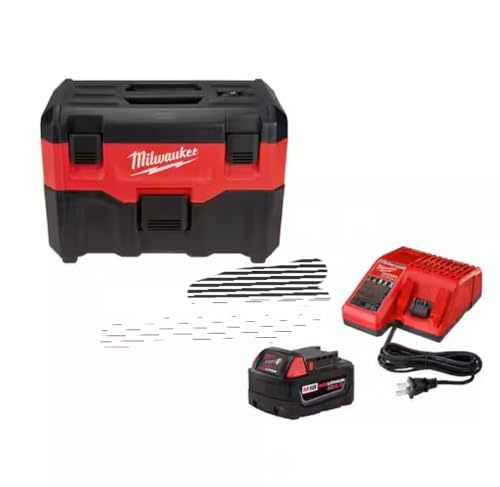
| Milwaukee 0880-20 | Job site durability | 2 gal wet/dry | M18 battery | Check Amazon |
| RYOBI ONE+ hand vacuum | Budget dry pickup | Small dust cup | 18V ONE+ battery | Check Amazon |
| Armor All AA255 | Corded value | 2.5 gal wet/dry | Corded 120V | Check Amazon |
DEWALT DCV580
Best OverallPros
- Picks up wet spills as well as dry debris
- 2-gallon tank means very little emptying during a car detail
- Runs on both DEWALT 20V MAX and older 18V packs
Cons
- Battery and charger sold separately on the bare tool
- Bulkier than a handheld, so it sits on the driveway while you work
The DCV580 is a portable shop vac rather than a handheld car vac, and that is exactly why it works so well on cars. The 5 ft hose lets you leave the body on the ground and take just the nozzle into the footwell, and the 2-gallon tank swallows a whole car's worth of grit, leaves and sand without a single stop to empty it. Because it is a wet/dry unit, a spilled drink or a rained-on floor mat is not a problem.
It ships with a crevice tool and a utility nozzle, which covers most interior work. If you want fine-dust filtration for pollen and dander, look for the DCV580H version, which is the same vacuum supplied with a HEPA filter. One genuinely useful detail: it accepts both DEWALT 20V MAX lithium packs and the older 18V DEWALT batteries, so an old drill battery still has a job.
Makita XCV04Z
Smallest CordlessPros
- Genuinely compact and easy to carry around the car
- HEPA filtration for fine dust
- Wet or dry pickup despite the small size
Cons
- Half-gallon tank fills fast on a dirty car
- Bare tool, so battery and charger are extra
The XCV04Z is Makita's half-gallon portable wet/dry dust extractor, and it runs on a single 18V LXT battery rather than the twin-battery setup used by Makita's larger 36V vacuums. That keeps it light enough to hold in one hand while you work the nozzle with the other, which matters when you are leaning across a back seat.
The HEPA filter is the standout feature at this size, so it is a sensible choice if allergies are the reason you are vacuuming in the first place. The trade-off is capacity: half a gallon is fine for a weekly tidy-up but you will empty it once or twice during a proper clean-out.
Milwaukee 0880-20
Most DurablePros
- Built for job site abuse, not just garages
- 2-gallon tank handles wet and dry
- Fits the M18 platform you may already own
Cons
- Heavier and bulkier than the Makita
- Battery sold separately unless you buy a kit
The 0880-20 is Milwaukee's 2-gallon M18 wet/dry vacuum, and it is the one to buy if the vacuum lives in a work van and gets dropped occasionally. The housing and the tank latches are noticeably tougher than the consumer-grade competition, and the filter is designed to be pulled, knocked out and refitted quickly.
For car work the appeal is the same as the DEWALT: enough tank capacity that you clean the whole car in one pass, plus wet pickup for spills. Choose it over the DCV580 mainly if M18 is already your battery platform, because paying into a new platform for one vacuum rarely makes sense.
RYOBI ONE+ 18V Hand Vacuum
Best Budget CordlessPros
- Cheapest way in if you already own ONE+ batteries
- Handheld, so no hose to drag around the cabin
- Light enough for one-handed use in tight footwells
Cons
- Dry debris only, no wet pickup
- Small dust cup needs emptying often
- Not enough suction for embedded grit or heavy pet hair
RYOBI's ONE+ handheld vacuum is the light-duty option here: crumbs, dust, loose dirt and the odd leaf. It is dry pickup only, so keep it away from spilled drinks and damp mats. The dust cup is small by design, because the whole point is a tool you grab for five minutes rather than set up for a full detail.
The case for it is entirely about the battery platform. If you already have ONE+ packs from a drill or a string trimmer, the bare tool costs very little and lives in the trunk. If you do not own ONE+, one of the wet/dry vacs above is a better long-term buy.
Armor All AA255
Best Corded ValuePros
- No battery platform to buy into
- Unlimited runtime from an outlet
- Ships with car-focused detail attachments
Cons
- Needs an outlet or an extension cord in the driveway
- Corded hose management is fiddly around a car
If you have no cordless tool batteries and no wish to start, the Armor All AA255 is the sensible answer. It is a 2.5-gallon corded wet/dry utility vac with a manufacturer-published 2 peak HP rating, sold specifically for car cleaning, and it comes with the narrow detail nozzles that the pro-grade cordless vacs charge extra for.
Running from an outlet removes the one real weakness of every cordless vac in this roundup, which is that suction fades as the pack drains. The cost is convenience: you are managing a power cord and a hose at the same time, in and out of car doors. Many owners also use the blower port to clear footwells before vacuuming.
What to check before buying a car vacuum
Start with wet or dry. A dry-only handheld is fine for crumbs but useless the first time a drink goes over. Next, check tank capacity honestly against your car: half a gallon is a tidy-up, two gallons is a full clean-out without emptying. Then check the battery platform, because the pack and charger often cost more than the bare tool, and buying into a second platform for one vacuum is rarely worth it. Look at hose length too, since a 5 ft hose lets you leave the body outside the car instead of wrestling it across the seats. Filtration matters if allergies are the reason you are vacuuming, in which case look for a HEPA filter such as the one on the Makita XCV04Z or the DEWALT DCV580H. Finally, check which nozzles are included, because a crevice tool is what actually gets between the seat and the console.
Mistakes to avoid
Do not shop on peak horsepower. It is a marketing figure used mainly on corded shop vacs, it is not comparable between brands, and most cordless vacuums are not rated that way at all. Airflow, hose diameter and filter condition decide real pickup. Do not buy a dry-only handheld if you ever deal with wet mats or spills. Do not ignore the battery platform you already own, since a bare tool on your existing packs is usually half the price of a kit on a new one. Do not run any of these with a clogged filter, because a dirty filter kills suction faster than a low battery. And do not assume a bigger tank is always better for a car, because tank size is also body size, and the vacuum still has to fit where you are working.
FAQs
What is the best car vacuum for pet hair?
A wet/dry vac with strong airflow and a brush nozzle does best. The DEWALT DCV580 is the strongest pick here, and the DCV580H version adds a HEPA filter that holds onto dander instead of blowing it back out.
Are cordless car vacuums as powerful as corded ones?
A good cordless wet/dry vac is close, but a corded unit holds full suction indefinitely while a battery vac tapers as the pack drains. For one car, cordless is usually enough. For back-to-back cleaning, corded wins.
How long does a car vacuum battery last?
Roughly 10 to 20 minutes of continuous suction on most 18V and 20V vacuums, and it scales with amp-hours. A 5.0Ah pack runs far longer than a 2.0Ah pack on the same tool.
Can I use a car vacuum for wet messes?
Only if it is a wet/dry model. The DEWALT DCV580, Makita XCV04Z, Milwaukee 0880-20 and Armor All AA255 all handle wet pickup. Handheld dry-only vacuums such as the RYOBI ONE+ hand vac do not, and water will damage the filter and motor.
What accessories come with car vacuums?
Typically a crevice tool and a wide utility nozzle, plus a hose on the canister models. Car-specific vacs such as the Armor All tend to include more narrow detail nozzles out of the box.
Is a HEPA filter necessary for car vacuums?
Not necessary, but worth it if you are vacuuming because of allergies. HEPA filters trap fine pollen and dust rather than passing it back through the exhaust into the cabin.
How do I clean a car vacuum filter?
Tap out the loose dust first, then rinse washable filters with water and let them dry completely before refitting. Never run a wet/dry vac with a damp filter, and never wet a filter that the manual says is dry-clean only.
Which of these is the lightest?
The RYOBI ONE+ handheld, since it has no tank or hose. Among the wet/dry vacs, the half-gallon Makita XCV04Z is the smallest and easiest to carry.
Can I use a shop vac for my car?
Yes, and most of the picks here are exactly that. The trick is hose length and nozzle size: a 5 ft hose with a crevice tool means the vacuum body stays outside the car while you work inside it.
Do car vacuums work on upholstery?
Yes. Use a brush attachment on fabric seats so the bristles lift the dirt free, and go slowly. Bare crevice tools on upholstery mostly just push debris deeper into the weave.
What battery system is best for car vacuums?
The one you already own. DEWALT 20V MAX, Makita 18V LXT, Milwaukee M18 and RYOBI ONE+ all have a capable vacuum, so the deciding factor should be which packs are already on your charger.
How often should I replace the filter?
Replace it when suction stays low after a proper clean, or when the pleats are torn or permanently clogged. Washing extends its life but does not restore a damaged filter.
Our verdict
For most people the DEWALT DCV580 is the best vacuum for car cleaning in 2026: a 2-gallon wet/dry tank and a 5 ft hose mean you clean the whole interior, spills included, in one pass. Choose the Makita XCV04Z if you want the smallest cordless wet/dry vac with HEPA filtration, the Milwaukee 0880-20 if you are already on M18, and the corded Armor All AA255 if you own no tool batteries at all.