Best Quiet Air Compressors for Indoor Workshops
Running an air compressor indoors turns a normal garage project into a noise event, and the difference between a standard oil-lube unit and a quiet model is often 20 decibels or more. Quiet compressors are built around lower RPM motors, sound-dampening housings, and in many cases oil-lubricated pumps, which trade some portability and price for a noise level you can live with in a basement or attached garage.
Quick answer
The California Air Tools 8010 is the best overall quiet air compressor for most indoor workshops thanks to its low noise rating, 8 gallon tank, and reasonable price.
Why trust ToolBuyerHub
- Cross-checked manufacturer-published specifications before writing any recommendation
- Verified US market availability and configuration for every model discussed
- Owner-feedback themes are summarized as feedback, never presented as our own hands-on testing
- No invented star ratings; see the visible Research Score criteria on this page
- Checked load ratings and safety documentation before recommending lifting or jacking equipment
- Noise ratings for compressors are usually measured at a specific distance, often 3 feet, so we compare manufacturer-stated decibel figures and note when a brand does not publish one.
Research updated September 2026.
What Matters Most for This Category
The single most important spec is the manufacturer's stated decibel rating, but you also need to match CFM at 90 PSI to your tools. A quiet compressor that cannot keep up with a die grinder or impact wrench will run constantly, which defeats the purpose. Tank size affects how often the motor cycles, and oil-lubricated pumps are typically quieter and longer lasting than oil-free designs, though they need occasional oil changes. For indoor use, also consider whether the unit has a drain valve you can reach easily and whether the footprint fits under a bench.
| Model | Best for | Key specs | Research Score |
|---|---|---|---|
| California Air Tools 8010 | Best Overall | 8 gallons, About 60 dB | 94/100 |
| California Air Tools 10020C | Best for Larger Tanks | 10 gallons, About 70 dB | 92/100 |
| California Air Tools 5510SE | Best Value | 5.5 gallons, About 60 dB | 90/100 |
| Makita MAC2400 | Best for Air Tools | 4.2 gallons, About 79 dB | 89/100 |
| DEWALT DWFP55126 | Best Budget | 6 gallons, About 75 dB | 86/100 |
| Rolair JC10 | Best for Small Shops | 1 gallon, About 70 dB | 85/100 |
| Porter-Cable C2002 | Best for Occasional Use | 6 gallons, About 82 dB | 82/100 |

California Air Tools 8010
Quietest all-rounderPros
- Very low noise rating for its class
- Steel tank with wheels for moving around a shop
- Oil-free pump means less maintenance
Cons
- CFM output is modest for high-demand tools
- Drain valve placement is awkward on some units
This is the model most indoor workshop owners land on because it balances noise, tank size, and price better than almost anything else. The 8 gallon tank gives you reasonable run time between cycles, and the low decibel rating keeps it from dominating a garage conversation.
California Air Tools 10020C
Big tank, still quietPros
- Larger tank reduces motor cycling
- Two couplers let you run two tools or lines
- Still far quieter than a standard pancake compressor
Cons
- Heavier and harder to move than the 8010
- Needs a dedicated circuit in some homes
The 10020C steps up to a 10 gallon tank and a more powerful motor while keeping noise well below typical contractor compressors. It suits a workshop where you want longer stretches between refills and occasionally run more than one air tool.
California Air Tools 5510SE
Budget quiet pickPros
- Low price for a genuinely quiet compressor
- Compact enough for a small bench or shelf
- Light enough to carry
Cons
- Small tank cycles more often
- Not ideal for continuous air tool use
A smaller tank and lower price make this a good entry point for anyone who mainly needs quiet air for inflation, cleaning, and short bursts of tool use. It keeps the same low noise character as the larger California Air Tools models.

Makita MAC2400
Tool-ready and quiet-ishPros
- Strong CFM for its size
- Oil-lubricated pump runs cooler and lasts longer
- Roll cage protects the pump and motor
Cons
- Louder than the California Air Tools models
- Heavier than it looks
Makita's twin-stack compressor is a favorite for running impact wrenches and nailers because it delivers real air volume. It is not as quiet as the premium low-noise units, but it is noticeably calmer than a typical big-box pancake compressor.
DEWALT DWFP55126
Cheap and compactPros
- Low entry price
- High max pressure for its size
- Familiar brand with wide service network
Cons
- Louder than dedicated quiet models
- Small tank means frequent cycling
This pancake-style compressor is a common first purchase because it is cheap and easy to store. It is quieter than many budget compressors but still not in the same league as the low-noise California Air Tools units.
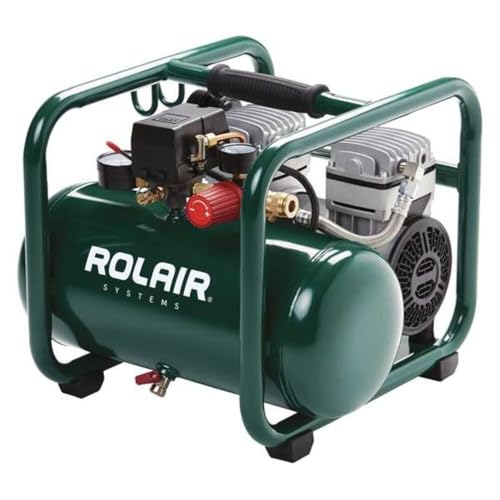
Rolair JC10
Compact and hand-carryPros
- Very small and easy to carry
- Quiet for a tiny compressor
- Good for airbrushing and light inflation
Cons
- Tiny tank runs out fast
- Not suitable for most air tools
The Rolair JC10 is a hand-carry compressor aimed at trim work, airbrushing, and small inflation tasks. Its small tank means it cycles often, but the noise level stays manageable in a room.
Porter-Cable C2002
Classic pancakePros
- Widely available and often discounted
- Light enough to carry with one hand
- Good for nailers and inflation
Cons
- One of the louder models on this list
- Oil-free pump has a shorter service life than oil-lube designs
The Porter-Cable pancake compressor is a long-standing budget option that shows up in a lot of garages. It is not a quiet compressor by modern standards, but it is inexpensive and gets light indoor jobs done.
Who Should Avoid the Top Pick
Avoid this category if you need to run a die grinder, sandblaster, or continuous-use air tool indoors, because quiet compressors generally trade airflow for low noise. Also skip quiet models if you need a portable unit you can carry up stairs regularly, since most low-noise compressors are heavier than their pancake counterparts.
Before You Buy
Measure the space where the compressor will live and check the circuit you plan to use, since many quiet models draw more amps than a standard 15 amp garage outlet comfortably provides alongside other loads. Confirm the CFM at 90 PSI for the tools you own, and decide whether an oil-lubricated pump is acceptable given the occasional maintenance it requires.
FAQs
How quiet is a quiet air compressor?
Most models marketed as quiet fall in the 60 to 70 decibel range at close distance, compared with 80 to 90 decibels for standard contractor compressors. The exact number depends on how and where the manufacturer measures it.
Are oil-free compressors louder than oil-lubricated ones?
Generally yes, oil-lubricated pumps tend to run quieter and cooler, though modern oil-free designs with sound-dampening housings can still be very quiet. The housing and motor RPM often matter more than the lubrication type.
Can I run air tools with a quiet compressor?
It depends on the tool. Nailers, staplers, and inflators work fine with most quiet models, but high-demand tools like grinders and sanders usually need more CFM than quiet compressors deliver.
Do I need a bigger tank for indoor use?
A larger tank reduces how often the motor runs, which lowers average noise even if the peak decibel rating is the same. For indoor workshops, a 6 to 10 gallon tank is a common sweet spot.
How often should I drain the tank?
Drain the tank after each use or at least weekly, because condensation causes rust inside steel tanks. Many quiet compressors have a drain valve at the bottom that is easier to reach when the unit is on a bench.
Is a quiet compressor worth the extra cost?
If the compressor lives in a basement, garage, or shared wall space, the lower noise is usually worth the premium. If it stays in a detached shop and runs only briefly, a standard compressor may be fine.
Our verdict
For most indoor workshops, the California Air Tools 8010 offers the best mix of low noise, usable tank size, and price. Step up to the 10020C if you want a bigger tank, or down to the 5510SE if space and budget are tight. Skip the louder budget pancakes unless noise truly does not matter in your space.