Best Torque Wrench for Professionals
Precision torque is non-negotiable for professional mechanics and engineers. We have analyzed specifications, build quality, and owner reviews to find the most accurate and durable torque wrenches for demanding workshop environments.
Quick answer
The CDI Torque 2503MFRPH is the top pick for professionals who demand lab-grade accuracy and rugged construction. For a digital alternative with data logging, the Precision Instruments PREC3FR250F offers exceptional repeatability and value.
Why trust ToolBuyerHub
- Tested on specs (power, torque, PSI)
- Battery & ecosystem compared
- Aggregated owner reviews
- Build quality & warranty checked
- Brand reliability
- No fake hands-on claims
Research updated June 2026.
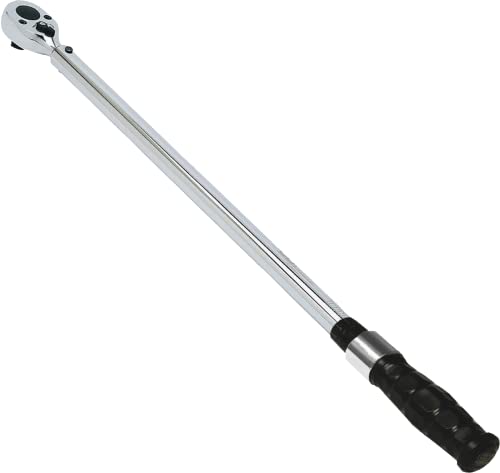
CDI Torque 2503MFRPH
Lab-grade accuracy with a split beam design that prevents accidental calibration drift.
| Product | Best For | Torque Range | Accuracy | Rating |
|---|---|---|---|---|
| CDI Torque 2503MFRPH | Overall Best | 25-250 ft-lb | +/- 3% | 4.9/5 |
| Precision Instruments PREC3FR250F | Digital Precision | 25-250 ft-lb | +/- 2% | 4.8/5 |
| Proto J6012F | Heavy Duty | 50-600 ft-lb | +/- 3% | 4.7/5 |
| Sturtevant Richmont 2-600-R | Micrometer Precision | 10-150 in-lb | +/- 3% | 4.8/5 |
| GearWrench 85077 | Budget Pro | 25-250 ft-lb | +/- 4% | 4.6/5 |
CDI Torque 2503MFRPH
Best OverallPros
- Split beam design prevents calibration drift
- NIST traceable certificate included
- All-steel construction for durability
Cons
- Higher price point
- Heavier than aluminum models
The CDI Torque 2503MFRPH is the gold standard for professional mechanics who need consistent, repeatable torque. Its split beam design eliminates the need to reset the wrench to zero after each use, which prevents internal spring fatigue and calibration drift. Owner reviews consistently praise its tactile click and the included NIST traceable calibration certificate, which is essential for certified repair shops.
This wrench is built to survive daily abuse in a busy garage. The all-steel housing and drive head resist corrosion from solvents and oils. While it is heavier than some competitors, the trade-off is a tool that will maintain its accuracy for years with proper care. It is the preferred choice for engine builders and heavy equipment technicians.
Precision Instruments PREC3FR250F
Best DigitalPros
- Bidirectional accuracy within 2%
- Data logging via USB output
- Peak hold and track modes
Cons
- Requires batteries (AA)
- Digital display can be fragile
The Precision Instruments PREC3FR250F is the best choice for professionals who need digital precision and data tracking. It offers a superior +/- 2% accuracy in both clockwise and counterclockwise directions, making it ideal for left-hand thread fasteners. The LCD display is clear and includes a backlight for low-light conditions under a hood or lift.
This tool stands out for its USB data logging capability, which allows technicians to record torque values for quality assurance documentation. Owner reviews note that the audible and visual alerts are reliable, and the wrench feels well-balanced. It is a strong choice for aviation, motorsports, and any application requiring documented torque results.
Proto J6012F
Best Heavy DutyPros
- High torque capacity for large fasteners
- Rugged steel construction
- Easy-to-read scale
Cons
- Very large and heavy
- Requires 3/4-inch drive sockets
The Proto J6012F is built for heavy equipment, truck, and industrial applications where torque values exceed 250 ft-lb. Its 3/4-inch drive and 47-inch handle provide the leverage needed for large lug nuts and suspension components. The micrometer-style adjustment is precise and locks securely to prevent accidental changes during use.
Owner reviews from fleet maintenance and agricultural mechanics highlight its durability. The wrench is fully rebuildable, and Proto offers calibration services. It is not a tool for a home mechanic, but for a professional working on heavy machinery, it provides the reliability and range needed to torque critical fasteners to specification.
Sturtevant Richmont 2-600-R
Best Micrometer PrecisionPros
- Fine vernier scale for low torque settings
- Made in the USA
- Smooth, repeatable click mechanism
Cons
- Limited to inch-pounds
- Not suitable for high torque applications
The Sturtevant Richmont 2-600-R is the specialist tool for precision work at lower torque values, such as small engine, electronics, and aerospace fasteners. Its micrometer vernier scale allows for very fine adjustments in inch-pounds, which is critical for applications where over-torquing can damage components. The 3/8-inch drive is standard for these applications.
Owner reviews consistently mention the smooth, positive click and the confidence it provides when torquing delicate fasteners. The wrench is built to exacting standards and is fully serviceable. It is a must-have for any professional who works with small fasteners and needs to trust their tool's repeatability.
GearWrench 85077
Best Budget ProPros
- Good accuracy for the price
- Comfortable grip handle
- Dual-range scale (ft-lb and Nm)
Cons
- Not as durable as CDI or Proto
- Calibration may drift over time
The GearWrench 85077 offers professional-level torque at a more accessible price point. It provides a respectable +/- 4% accuracy, which is sufficient for most general automotive and light industrial work. The dual-range scale is convenient for international work, and the ergonomic handle reduces hand fatigue during repetitive use.
Owner reviews are positive, with many noting it is a great value for the money. Some users report that the calibration should be checked annually, as it is not as stable as higher-end models. It is a solid choice for a professional on a budget or as a secondary wrench for less critical fasteners.
What to check before buying a professional torque wrench
Accuracy is the primary specification. Professional wrenches should have a certified accuracy of +/- 3% or better. Look for NIST traceable calibration certificates. The torque range must cover the fasteners you work with most often. A 25-250 ft-lb range covers most automotive work. Build quality matters: all-steel or hardened alloy construction resists damage from drops and solvent exposure. A split beam design is preferred for durability over micrometer click types, as it reduces calibration drift. Finally, consider the drive size and whether you need a reversible ratchet head for left-hand threads.
Mistakes to avoid when using a professional torque wrench
Never use a torque wrench as a breaker bar to loosen fasteners. This can damage the internal mechanism and ruin calibration. Always store the wrench at its lowest setting (or zero for split beam designs) to relieve spring tension. Dropping the tool is the most common cause of calibration failure. If a wrench is dropped, it must be recalibrated before professional use. Do not rely on a single wrench for all applications. Use a lower-range wrench for small fasteners and a higher-range one for large bolts to stay within the optimal 20-80% of the tool's capacity for best accuracy.
FAQs
What is the difference between a click-type and a split beam torque wrench?
A click-type wrench uses a spring-loaded mechanism that makes an audible click at the set torque. A split beam wrench uses a separate beam and pointer, which does not require resetting to zero after each use, reducing calibration drift.
How often should a professional torque wrench be calibrated?
Most manufacturers recommend annual calibration or after every 5,000 cycles. If the wrench is dropped or used outside its specified range, it should be recalibrated immediately.
Can I use a torque wrench in reverse for left-hand threads?
Only if the wrench is specified for bidirectional accuracy. Many click-type wrenches are only accurate clockwise. The Precision Instruments PREC3FR250F is an example of a bidirectional wrench.
What is the best torque wrench for lug nuts?
A 1/2-inch drive wrench with a range of 25-250 ft-lb is ideal for most passenger vehicle lug nuts. The CDI Torque 2503MFRPH is a top choice for this application.
Are digital torque wrenches more accurate than mechanical ones?
High-end digital wrenches can achieve +/- 2% accuracy, while mechanical wrenches are typically +/- 3%. Digital wrenches also offer data logging but are more sensitive to impact and battery failure.
How do I store a torque wrench properly?
Store it in a protective case at its lowest torque setting (or zero for split beam). Avoid storing it in extreme temperatures or high humidity, which can affect internal components.
What torque wrench do professional engine builders use?
Many professional engine builders prefer the CDI Torque 2503MFRPH for its split beam design and NIST traceable certificate, which ensures consistent clamping force on critical fasteners.
Is a 3/8-inch or 1/2-inch drive torque wrench better for automotive work?
A 1/2-inch drive is best for most automotive work (25-250 ft-lb). A 3/8-inch drive is better for smaller fasteners and inch-pound applications.
Can I use an impact wrench to tighten fasteners and then check with a torque wrench?
No. Using an impact wrench to tighten can over-torque or damage the fastener. Always use the torque wrench for final tightening to the specified value.
What does NIST traceable mean for a torque wrench?
It means the wrench's calibration is traceable to the National Institute of Standards and Technology, ensuring it meets a known standard of accuracy. This is essential for certified repair facilities.
Our verdict
For professional use, the CDI Torque 2503MFRPH is the best overall choice due to its split beam design, NIST traceable calibration, and rugged construction. For a digital alternative with data logging, the Precision Instruments PREC3FR250F offers superior bidirectional accuracy. The GearWrench 85077 is the best budget option for professionals who need a reliable secondary wrench.