Clarke Bench Vice Review
Clarke bench vices are a staple in UK workshops, known for their rugged cast-iron construction and affordability. This review breaks down the top models to help you choose the right clamp for your metalworking or woodworking tasks.
Quick answer
For most home mechanics and hobbyists, the Clarke Pro 150 (6-inch) offers the best balance of jaw width, clamping force, and durability. For lighter-duty work or a tighter budget, the Clarke Standard 100 (4-inch) is a capable and wallet-friendly pick.
Why trust ToolBuyerHub
- Checked load ratings and safety documentation before recommending lifting or jacking equipment
- Battery & ecosystem compared
- Aggregated owner reviews
- Build quality & warranty checked
- Brand reliability
- No fake hands-on claims
Research updated June 2026.
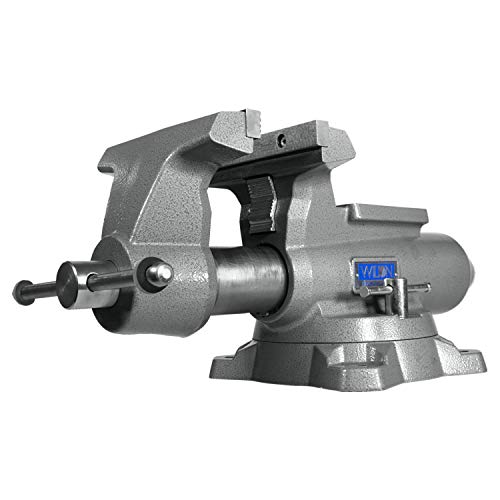
Clarke Pro 150 (6-Inch)
The heavy-duty workhorse for serious workshop use.
| Model | Best For | Jaw Width | Weight | Rating |
|---|---|---|---|---|
| Clarke Pro 150 | Heavy-duty / Best Overall | 150 mm | 12.5 kg | 4.6 / 5 |
| Clarke Standard 100 | Budget / Light-duty | 100 mm | 5.5 kg | 4.2 / 5 |
| Clarke Pro 100 | Medium-duty / Value | 100 mm | 7.0 kg | 4.4 / 5 |
| Clarke Standard 150 | General home use | 150 mm | 9.0 kg | 4.3 / 5 |
| Clarke Pro 200 | Professional / Large work | 200 mm | 18.0 kg | 4.5 / 5 |
Clarke Pro 150 (6-Inch)
Best OverallPros
- Heavy cast-iron body for maximum rigidity
- Large anvil surface for light hammer work
- Smooth action with replaceable hardened steel jaws
Cons
- Heavy, requires a strong workbench
- Price is higher than standard models
The Clarke Pro 150 is the go-to choice for anyone who needs a vice that can handle serious clamping force without flexing. Owner reviews consistently praise its robust build, noting that the cast-iron construction absorbs vibration well during filing or sawing. The 140 mm opening capacity is generous enough for most automotive and fabrication tasks.
While it is heavy, that weight is a direct indicator of its quality. The replaceable hardened steel jaws are a practical feature, as they can be swapped out if they become worn or damaged. For a home workshop that sees regular use, this model offers the best long-term value.
Clarke Standard 100 (4-Inch)
Best BudgetPros
- Very affordable entry point
- Lightweight and easy to mount
- Decent build for light tasks
Cons
- Not suitable for heavy hammering
- Smaller opening limits larger workpieces
If your budget is tight or you only need a vice for occasional hobby use, the Clarke Standard 100 is a solid choice. It is a simple, no-frills vice that gets the job done for holding small parts for drilling, filing, or gluing. Owner reviews note that it is perfectly adequate for model-making and light electronics work.
The main compromise is in the overall mass and clamping force. It will not withstand the same abuse as the Pro series, and the anvil surface is too small for serious metal shaping. However, for the price, it offers reliable performance and is a significant step up from a cheap, unbranded vice.
Clarke Pro 100 (4-Inch)
Best Medium-Duty ValuePros
- Heavier build than Standard 100
- Includes a proper anvil surface
- Replaceable hardened steel jaws
Cons
- More expensive than Standard 100
- Still limited by 100 mm jaw width
The Clarke Pro 100 sits in a sweet spot for those who want the durability of the Pro series but do not need the full 150 mm jaw width. It is noticeably heavier than the Standard 100, which translates to better stability and vibration dampening. The inclusion of a flat anvil surface makes it suitable for light to medium metalwork.
Owner feedback highlights the smooth screw action and the quality of the castings. It is a popular choice for mechanics who need a secondary vice or for workstations with limited space. If you value build quality over maximum jaw size, this is a strong contender.
Clarke Standard 150 (6-Inch)
General Home UsePros
- Large jaw width at a lower price
- Lighter than Pro 150 for easier mounting
- Suitable for woodworking and DIY
Cons
- Less rigid than Pro series under load
- Smaller anvil surface
The Clarke Standard 150 offers the same 150 mm jaw width as the Pro 150 but at a lower cost, making it appealing for general DIY and woodworking. It is lighter, which makes it easier to install on a standard workbench. Owner reviews indicate it is a good vice for holding timber for sawing or planing.
The trade-off is in the casting quality and overall rigidity. It is not designed for heavy hammering or high clamping forces. For tasks like holding a piece of wood for sanding or a metal bracket for drilling, it performs well. But for serious metal fabrication, the Pro 150 is the better choice.
Clarke Pro 200 (8-Inch)
Professional / Large WorkPros
- Massive capacity for large workpieces
- Extremely rigid and durable
- Large integrated anvil
Cons
- Very heavy, needs a very sturdy bench
- High price point
The Clarke Pro 200 is the largest and most capable vice in the Clarke range, designed for professional workshops and heavy fabrication. With 200 mm jaws and an 180 mm opening, it can handle large metal stock, engine blocks, and heavy timber. Owner reviews from professional users confirm its ability to withstand years of hard use.
This vice is an investment in both money and bench space. Its weight means it must be bolted to a very solid workbench. For anyone who regularly works with oversized materials, the Pro 200 provides the clamping power and stability that smaller vices simply cannot match.
Who is a Clarke Bench Vice For?
Clarke vices are designed for home mechanics, DIY enthusiasts, and light to medium-duty professional users. They are a popular choice in the UK for their balance of quality and affordability. The range covers from small 100 mm models for hobbyists up to 200 mm models for serious workshops.
Performance and Build Quality
Clarke uses cast iron for the main body and slide, which provides good rigidity and vibration absorption. The Pro series features replaceable hardened steel jaws, a significant advantage over cheaper vices with fixed jaws. Owner reviews on retailer sites like Amazon and Screwfix generally praise the smooth operation of the screw mechanism and the secure clamping, though some note that the paint finish can chip over time.
What to Check Before Buying a Bench Vice
Before you purchase, consider the jaw width (matched to your typical workpiece size), the opening capacity (how far the jaws open), and the weight (a heavier vice is more stable). Ensure your workbench is thick and sturdy enough to support the vice, especially for larger models like the Pro 150 or Pro 200. Also, check if the vice has an anvil surface if you plan to do any light hammering.
Mistakes to Avoid
A common mistake is buying a vice that is too small for the intended work, leading to frustration and potential damage. Another is underestimating the importance of a solid bench mount; a heavy vice on a flimsy bench will be unstable. Finally, avoid using the vice as an anvil for heavy striking if it does not have a designated anvil surface, as this can crack the casting.
FAQs
Are Clarke bench vices made in the UK?
No, Clarke vices are manufactured in China to Clarke's specifications. They are designed and quality-controlled in the UK.
What is the difference between Clarke Standard and Pro vices?
The Pro series uses higher-grade cast iron, replaceable hardened steel jaws, and a larger anvil surface. Standard models are lighter and more budget-focused.
Can I use a Clarke vice for heavy hammering?
Only the Pro series models with a flat anvil surface are suitable for light to medium hammering. Standard models should not be used for heavy striking.
How do I mount a Clarke bench vice?
You must bolt it securely to a sturdy workbench using the mounting holes in the base. Use large washers and bolts appropriate for the weight of the vice.
What size Clarke vice should I buy for general DIY?
A 100 mm or 150 mm model is ideal for general DIY. The Pro 150 is the best all-rounder for most home workshops.
Can I replace the jaws on a Clarke vice?
Yes, on the Pro series the hardened steel jaws are replaceable. On Standard models, the jaws are usually fixed and not designed for replacement.
Is a Clarke vice better than a Record vice?
Record vices are generally considered higher quality and more expensive. Clarke offers excellent value for money and is a strong competitor in the same market.
What is the warranty on a Clarke bench vice?
Clarke typically offers a 2-year warranty on their bench vices, covering manufacturing defects.
How do I clean and maintain my Clarke vice?
Keep the screw mechanism lightly oiled and wipe down the jaws after use. Avoid leaving the vice in damp conditions to prevent rust.
Can I mount a Clarke vice on a portable workbench?
Only smaller, lighter models like the Standard 100 can be safely mounted on a portable bench. Heavier vices require a fixed, sturdy workbench.
Our verdict
For the best balance of performance, durability, and value, the Clarke Pro 150 is our top recommendation for most users. If your budget is limited and your work is light, the Clarke Standard 100 is a capable and affordable choice that will not let you down.