How to Use a Jump Starter Safely
Jump starting a dead battery is a routine fix, but doing it wrong can damage your vehicle's electronics or cause injury. This guide covers the safe, step-by-step procedure for using a modern lithium jump starter pack.
Quick answer
Connect the red clamp to the dead battery's positive (+) terminal, then the black clamp to an unpainted metal engine ground. Start the jump pack, start the car, and disconnect in reverse order. Always read the jump starter's manual first.
Why trust ToolBuyerHub
- Checked load ratings and safety documentation before recommending lifting or jacking equipment
- Battery & ecosystem compared
- Aggregated owner reviews
- Build quality & warranty checked
- Brand reliability
- No fake hands-on claims
Research updated June 2026.
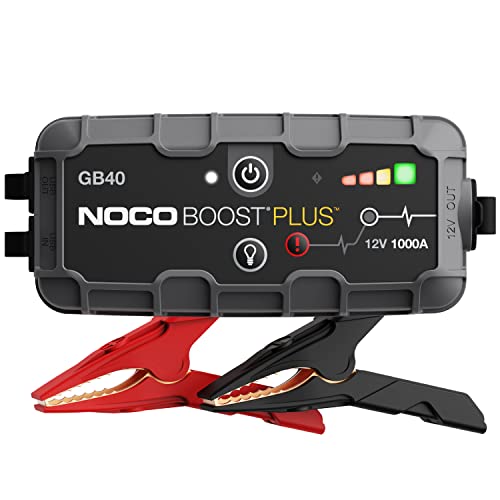
NOCO Boost Plus GB40
Safe, spark-proof, and simple enough for any driver.
What is a Jump Starter and How Does It Work?
A jump starter is a portable battery pack with heavy-duty clamps that delivers a surge of power to a dead car battery, allowing the engine to start. Unlike traditional jumper cables that require a second vehicle, these units are self-contained and often include USB ports for charging phones. Modern lithium-ion models are compact, lightweight, and capable of starting engines up to 8 liters.
The unit works by temporarily bypassing the dead battery to provide the high current needed by the starter motor. Once the engine runs, the alternator takes over. Most quality units include safety features like reverse polarity protection, spark-proof technology, and low-voltage alarms.
Safety Precautions Before You Start
Safety begins with reading the manual for your specific jump starter. Every model has unique instructions and safety warnings. Never use a jump starter in heavy rain or if the battery is visibly cracked or leaking. Wear safety glasses and remove metal jewelry to avoid accidental short circuits.
Check that the jump starter is fully charged. A partially charged unit may not deliver enough current and could be damaged. Ensure the vehicle's ignition is off and all lights and accessories are switched off before connecting clamps. Work in a well-ventilated area to avoid inhaling battery fumes.
Step-by-Step: How to Use a Jump Starter Safely
Follow these steps exactly to avoid damage or injury. The order of connection is critical for safety.
Step 1: Position the Jump Starter
Place the jump starter on a stable, dry surface near the battery. Ensure the clamps are not touching each other or any metal surface. Do not place the unit directly on the engine block where it could vibrate off.
Step 2: Connect the Red (Positive) Clamp
Identify the positive terminal on the dead battery. It is usually marked with a "+" symbol and may have a red plastic cover. Attach the red clamp firmly to this terminal. Ensure the clamp has a good metal-to-metal connection.
Step 3: Connect the Black (Negative) Clamp to Ground
Do not connect the black clamp to the negative terminal of the dead battery. Instead, attach it to an unpainted metal part of the engine block or chassis, away from the battery and fuel lines. This reduces the risk of sparks near the battery, which can ignite hydrogen gas.
Step 4: Power On the Jump Starter
Turn on the jump starter using its power button. Most units have an LED indicator showing it is ready. Some models have a "Boost" button that must be pressed. Wait a few seconds for the unit to analyze the battery.
Step 5: Start the Vehicle
Attempt to start the engine. If it does not start within 5-8 seconds, stop and wait 30 seconds before trying again. Repeated cranking can overheat the jump starter. If the engine still fails, the problem may be more serious than a dead battery.
Step 6: Disconnect in Reverse Order
Once the engine starts, immediately turn off the jump starter. Remove the black clamp from the engine ground first, then remove the red clamp from the battery terminal. Never let the clamps touch each other while the unit is still connected to the battery.
What to Check Before Buying a Jump Starter
Before purchasing, verify the peak amperage rating against your engine size. Gas engines under 6 liters typically need 1000A peak, while larger V8s or diesels require 2000A or more. Check that the unit has reverse polarity protection and spark-proof clamps.
Consider additional features like USB power banks, LED work lights, and air compressors. Read owner reviews to gauge real-world reliability. Brands like NOCO, DeWalt, and Stanley are known for consistent quality. Ensure the unit can be stored in your vehicle's temperature range.
Common Mistakes to Avoid
Connecting the black clamp to the negative battery terminal is the most frequent error. This creates a spark near the battery, which can cause an explosion. Always use a ground point on the engine block.
Another mistake is using a jump starter on a completely dead battery that is frozen. Do not attempt to jump start a frozen battery; it can rupture. Also, avoid leaving the jump starter connected for long periods after the engine starts. Disconnect immediately to prevent overheating.
When Not to Use a Jump Starter
Do not use a jump starter on a battery that is physically damaged, leaking, or bulging. These batteries can short circuit or explode. If the vehicle has a complex electrical system with sensitive electronics, consult the owner's manual first. Some luxury cars require a specific jump start procedure.
Never use a jump starter as a replacement battery. It is designed for short bursts of power, not to run accessories. Using it to power a winch or lights will drain it quickly and may cause permanent damage.
Maintenance and Storage Tips
Recharge the jump starter every 3-6 months, even if not used. Lithium batteries self-discharge over time. Store the unit in a cool, dry place between 32°F and 80°F. Extreme heat or cold can degrade battery life.
Keep the clamps clean and free of corrosion. Wipe them with a dry cloth after each use. Test the unit periodically by connecting it to a known good battery to verify it holds a charge and delivers power.
FAQs
Can I use a jump starter on a diesel engine?
Yes, but you need a unit with higher peak amperage, typically 2000A or more for diesel engines. Check the manufacturer's specifications for engine size compatibility.
Is it safe to jump start a car in the rain?
It is not recommended. Water can cause short circuits or damage the jump starter. Wait for dry conditions or move the vehicle to a covered area.
How long does a jump starter hold its charge?
Most lithium jump starters hold a charge for 6-12 months when stored properly. Recharge every 3-6 months to ensure readiness.
Can I jump start a car with a completely dead battery?
Yes, most modern jump starters can start a car with a battery at 0 volts. However, some units require a minimum voltage to detect the battery.
What does reverse polarity protection mean?
It prevents damage if you accidentally connect the clamps to the wrong terminals. The unit will not send power until the connection is corrected.
Can I use a jump starter on a motorcycle or lawn mower?
Yes, but use a smaller unit with lower amperage to avoid damaging small batteries. Many jump starters have a low-voltage mode for small engines.
Why does my jump starter say it is spark-proof?
Spark-proof technology prevents sparks when the clamps touch each other or when connecting to the battery. This reduces the risk of igniting battery fumes.
How do I know if my jump starter is fully charged?
Most units have LED indicators that show charge level. Some have a built-in display. A full charge typically takes 3-6 hours.
Can I leave a jump starter in my car in winter?
Lithium batteries perform poorly in extreme cold. Store it inside during winter and only bring it to the car when needed.
What is the difference between peak and cranking amps?
Peak amps are the maximum surge for a split second. Cranking amps are sustained over a few seconds. Peak amps are more commonly used for marketing jump starters.
Our verdict
For most drivers, the NOCO Boost Plus GB40 offers the best balance of safety, power, and portability. For budget buyers, the Stanley J5C09 provides reliable performance at a lower cost. Always prioritize safety features like reverse polarity protection and spark-proof clamps.