Best Garden Gloves
Most gardeners do not need one glove. They need a thin pair for seeding and weeding, and a tougher pair for pruning and hauling. The Showa Atlas 370 covers the first job better than anything else at its weight, and a thornproof gauntlet covers the second.
Glove shopping goes wrong in two places: material and cuff. A nitrile palm gives fingertip feel but soaks through in wet clay. A leather gauntlet stops brambles but makes you clumsy with seedlings. Below, each pick is matched to one real job rather than ranked on a single score.
Quick answer
For general garden work, pick the Showa Atlas 370 for its thin nitrile palm and real fingertip feel. For roses and brambles, step up to the Magid extra-long thornproof gauntlet. For hauling, fencing and heavy yard work, the Ironclad Ranchworx RWG2 holds up longest.
Why trust ToolBuyerHub
- Every glove here is a named brand sold on Amazon US, checked against the live listing
- Specifications come from manufacturer and listing data, not from guesswork
- Owner-feedback themes are summarized as feedback, never as our own hands-on testing
- No invented star ratings; the Research Score criteria are visible on each pick
- Picks are matched to distinct garden jobs so the list is not seven versions of one glove
- Cut and thorn protection claims are reported as the maker rates them, not implied as tested
Research updated October 2026.
What Matters Most for Garden Gloves
Material decides almost everything. A nitrile or latex palm coating on a knit shell keeps your fingertips sensitive enough to pull a weed root or place a seed, and it rinses clean under a tap. Leather trades that feel for puncture resistance, which is what you want near roses, blackberries and wire. Cuff length is the second decision and the one most people skip: a knit wrist is fine for bed work, but anything involving brambles or reaching into shrubs needs a gauntlet that covers the forearm. Size last, and size honestly, because a glove that is slightly loose will twist on the hand and cause blisters faster than a stiff one.
| Model | Best for | Key specs | Research Score |
|---|---|---|---|
| Showa Atlas 370 Garden Club Gloves, 4 Pack, Medium | Everyday weeding and planting | Nitrile coating, Seamless nylon knit | 92/100 |
| Wells Lamont Smooth Nitrile Coated Grip Work Gloves, 3 Pack, Medium | Stocking up on a budget | Smooth nitrile coating, Knit | 88/100 |
| Magid Extra-Long Thornproof Pruning and Gardening Gloves, Size 8/M | Roses, brambles and hedge work | Leather palm, Extra-long gauntlet | 90/100 |
| Ironclad Ranchworx RWG2 Leather Work Gloves | Fencing, hauling and heavy yard work | Leather, Reinforced palm and knuckles | 89/100 |
| Bionic ReliefGrip Gardening Leather Gloves, Medium | Reducing grip strain on tool handles | Leather, Anatomical relief pads | 86/100 |
| NoCry Cut Resistant Work Gloves with Reinforced Fingers | Blades, wire and sharp debris | Cut resistant knit, Maker-rated level 5 cut resistance | 85/100 |
| Dotted MUD Nitrile Palm Gardening Gloves, Medium | Smaller hands and fine bed work | Dotted nitrile, Breathable knit | 84/100 |

Showa Atlas 370 Garden Club Gloves, 4 Pack, Medium
Best OverallPros
- Thin nitrile palm keeps enough fingertip feel to handle seeds and pull weed roots
- Seamless knit shell breathes, so hands stay cooler through a long session
- Four pairs means a dry pair is always on hand, and they survive machine washing
Cons
- The knit back wets through quickly in soaked clay or standing water
- No puncture protection on the back of the hand or forearm
This is the glove most gardeners actually reach for. The nitrile palm grips wet stems and tool handles without the bulk of leather, and because the shell is a seamless knit there is no inner seam to rub a blister across the knuckles. Owners mostly report them wearing out at the fingertips after a season of heavy use, which is why the four pack matters more than it looks.

Wells Lamont Smooth Nitrile Coated Grip Work Gloves, 3 Pack, Medium
Best ValuePros
- Smooth nitrile palm sheds mud and rinses clean in seconds
- Three pairs per pack keeps the cost per pair low for gloves that get destroyed anyway
- Grip holds on damp tool handles better than uncoated cotton gloves
Cons
- Smooth coating is less grippy on wet smooth plastic than a dotted or textured palm
- Fit runs closer to a work glove than a garden glove, so dexterity is slightly lower
A plain, honest work glove that happens to suit the garden. The smooth nitrile palm is the right call if your soil is heavy and you spend more time rinsing gloves than wearing them out. Dexterity sits a step below the Atlas 370 because the coating is thicker, but for digging, mulching and general bed maintenance that difference rarely matters.
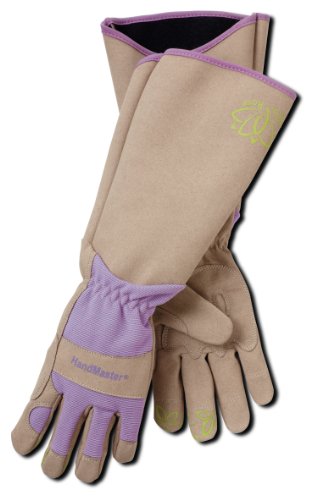
Magid Extra-Long Thornproof Pruning and Gardening Gloves, Size 8/M
Best for ThornsPros
- Gauntlet cuff covers the forearm, which is where rose and bramble scratches actually land
- Leather palm resists punctures that go straight through a coated knit glove
- One pair lasts far longer than knit gloves on thorny work
Cons
- Too stiff and bulky for fine jobs like transplanting seedlings
- Numbered sizing means you need to check the maker's size chart rather than guessing S, M or L
If you have roses, blackberries or an overgrown hedge, this is the pair that stops the job being miserable. The long cuff is the real feature: most thorn injuries happen on the forearm when you reach into a shrub, and a knit-wrist glove leaves that completely exposed. Expect a break-in period, and expect to swap back to a thinner glove for anything delicate.
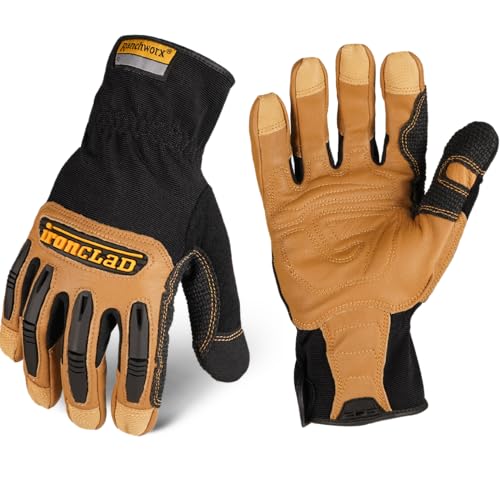
Ironclad Ranchworx RWG2 Leather Work Gloves
Best Heavy DutyPros
- Built for abrasion, so it survives wire, timber, stone and barrow handles
- Adjustable wrist closure stops the glove twisting when you are lifting
- Reinforcement sits where leather gloves usually fail first, across the palm
Cons
- Heavy and warm, which makes it uncomfortable for long summer bed work
- Noticeably less dexterous than any coated knit glove here
This is a work glove that handles garden duty rather than a garden glove. Where it earns its keep is the jobs that eat lighter gloves: shifting fence posts, loading rubble, moving slabs, dragging brush. Owners commonly report getting multiple seasons out of a pair, which is the opposite of the knit gloves higher up this list.

Bionic ReliefGrip Gardening Leather Gloves, Medium
Best for Grip ComfortPros
- Relief padding spreads pressure from tool handles across the palm instead of hot spots
- Pre-curved finger shape means less effort to hold a closed grip on shears or a trowel
- Leather build is still tough enough for pruning and general bed work
Cons
- Padding reduces fine feel, so it is not the glove for seed sowing
- Costs more than several of the multi-packs here combined
A specialist pick for anyone whose hands ache after an hour with pruners. The design goal is to cut the grip force needed to hold a handle closed, and the padding is placed around that rather than spread evenly. If your limiting factor in the garden is hand fatigue rather than glove durability, this is the one worth trying.

NoCry Cut Resistant Work Gloves with Reinforced Fingers
Best Cut ProtectionPros
- Maker rates the knit at level 5 cut resistance, the useful level for blade and wire work
- Thin enough to wear for pruning, unlike a heavy leather glove
- Reinforced fingertips address where cut gloves normally wear through
Cons
- Cut resistance is not puncture resistance, so thorns can still get through
- Uncoated knit offers no grip on wet handles and no waterproofing at all
Worth owning for the specific jobs where a slip means a cut: sharpening a mower blade, cutting back wire-stemmed growth, clearing broken glass or metal debris from a bed. Treat it as task-specific safety gear rather than a general gardening glove, and understand the distinction between a cut rating and thorn protection before relying on it near roses.

Dotted MUD Nitrile Palm Gardening Gloves, Medium
Best for Smaller HandsPros
- Dotted palm texture grips wet stems and smooth handles better than a flat coating
- Cut for smaller hands, so there is less loose material to twist and blister
- Breathable back keeps the glove usable through a warm afternoon
Cons
- Single pair rather than a multi-pack, so cost per pair is higher
- Light build is not meant for abrasive hauling or thorny shrubs
Loose gloves cause more garden blisters than stiff ones, and most unisex mediums are still cut for a wider hand. This pair addresses that directly. The dotted nitrile palm is a genuine functional difference too, holding onto wet stems and plastic pot rims better than the smooth coatings higher up the list.
How to match glove material to the job
Work backwards from the task. Seeding, transplanting and weeding need fingertip feel, so a thin nitrile or latex palm on a knit shell is right. Pruning roses, clearing brambles and reaching into hedges need puncture resistance, which means leather. Hauling, fencing and stone work need abrasion resistance and a wrist closure. Blade sharpening and wire cutting need a cut rating. Trying to buy one glove for all four is how people end up with a glove that is too clumsy for half the garden and too flimsy for the rest.
Why cuff length matters more than people expect
Almost all glove marketing talks about palms, and almost all garden scratches land on the forearm. The moment you reach into a shrub or lift a bramble runner, a knit-wrist glove stops helping. A gauntlet cuff that covers the forearm changes thorny work from something you put off to something you just do. For bed work the opposite is true: a long cuff traps soil and heat, so a knit wrist is the better choice.
Getting fit and dexterity right
A glove that is slightly too big is worse than one that is slightly too stiff. Loose material twists on the hand under load, which is what actually raises blisters, and it costs you the fine control that made you buy a thin glove in the first place. Check the maker's size chart rather than assuming your usual letter size, especially for numbered sizing like 7, 8 and 9. If you are between sizes on a knit glove, size down, because knit stretches; on leather, size up, because leather does not.
Care, washing and when to replace
Rinse coated knit gloves under a tap before the soil dries, then hang them palm-down so water runs out rather than pooling in the fingertips. Most coated knit gloves survive a cool machine wash, and that is worth doing a few times a season because dried soil inside a glove is abrasive. Leather should be brushed off dry and never machine washed or dried on a radiator, both of which stiffen and crack it. Replace any glove once the palm coating splits or a fingertip opens, because a hole in a cut or thorn glove gives you false confidence exactly where you need protection.
FAQs
What are the best all-round garden gloves?
For general bed work, a thin nitrile-coated knit glove like the Showa Atlas 370 is the best all-round choice, because it protects against dirt and minor abrasion while keeping enough fingertip feel for weeding and planting. Most gardeners then add one tougher pair for thorny or heavy jobs rather than looking for a single glove that does everything.
Are leather or nitrile gloves better for gardening?
They solve different problems. Nitrile-coated knit gloves are better for weeding, planting and anything needing fingertip control, and they rinse clean easily. Leather is better for puncture resistance around roses, brambles and wire, and for abrasive work like fencing or hauling stone. If you only buy one, buy the nitrile pair and add leather when the garden demands it.
What gloves protect against rose thorns?
Look for a leather palm and, more importantly, an extra-long gauntlet cuff that covers the forearm, like the Magid thornproof pruning glove. Coated knit gloves stop surface scratches but thorns push straight through them, and a knit wrist leaves the forearm fully exposed, which is where most rose scratches actually happen.
Can you wash garden gloves?
Coated knit gloves usually survive a cool machine wash and should be washed a few times a season, since dried soil trapped inside the glove acts like sandpaper. Hang them palm-down to dry. Leather gloves should not be machine washed or heat dried; brush the dry soil off instead, because washing and heat both stiffen and crack the leather.
What does level 5 cut resistance mean on a glove?
It is a cut resistance rating assigned by the manufacturer under a standard test, indicating the glove resists slicing from a blade edge. It does not mean puncture proof. A level 5 knit glove can still be pierced by a thorn, a nail or a staple, so it is the right choice for blade and wire work and the wrong choice for brambles.
What size garden gloves should I buy?
Measure your hand against the maker's chart rather than assuming your usual size, particularly for numbered sizes like 7, 8 and 9. On knit gloves, size down if you are between sizes because the knit stretches. On leather, size up, because leather will not. A loose glove twists under load and raises blisters faster than a snug one.
Do garden gloves need to be waterproof?
Only if you work in wet soil or handle wet foliage for long stretches. Coated knit gloves resist water on the palm but soak through the knit back quickly, which is fine for an hour in damp beds and unpleasant in standing water. For genuinely wet work, a fully coated glove is the right tool, at the cost of breathability.
How often should garden gloves be replaced?
Replace them when the palm coating splits or a fingertip wears open. On lightweight coated knit gloves, that is often a single heavy season, which is why multi-packs make sense. Leather and reinforced work gloves commonly last several seasons. Replace protective gloves sooner than comfort gloves, because a hole in a cut or thorn glove gives false confidence.
Are expensive gardening gloves worth it?
For consumable bed-work gloves, no: a three or four pair pack of a known brand beats one premium pair, because they wear out at the fingertips regardless. Paying more is worth it when you are buying a capability rather than a glove, such as a thornproof gauntlet, a cut rating, or grip padding that reduces hand strain.
Our verdict
Buy two pairs, not one. The Showa Atlas 370 handles the bulk of garden work and comes four pairs to a pack, so there is always a dry one. Add the Magid thornproof gauntlet if you have roses or brambles, or the Ironclad Ranchworx RWG2 if your yard work runs to fencing and hauling. The NoCry cut gloves and the Bionic ReliefGrip are worth adding only for their specific problems, blades and hand strain respectively.