Best Loppers for Thick Branches
Cutting branches thicker than your thumb with a pair of dull bypass pruners is a fast way to ruin both the tool and your wrist. Loppers solve that problem by trading fine control for leverage, but not all of them are built to handle the two inch wood that a mature oak or maple limb can throw at you. The difference between a lopper that slices cleanly through a three quarter inch branch and one that crushes and stalls comes down to gear ratio, blade geometry, and whether the handles give you enough reach to stay out of the way. We compared current Amazon listings and manufacturer specifications across seven models that owners consistently describe as capable of heavier cuts.
Quick answer
The Fiskars 28 Inch PowerGear2 Lopper is the best overall pick for thick branches thanks to its geared mechanism that multiplies cutting force without adding much handle length.
Why trust ToolBuyerHub
- Cross-checked manufacturer-published specifications before writing any recommendation
- Verified US market availability and configuration for every model discussed
- Owner-feedback themes are summarized as feedback, never presented as our own hands-on testing
- No invented star ratings; see the visible Research Score criteria on this page
- Flagged chemical-compatibility and safe-handling guidance for sprayer and shredder equipment
- We focus on cutting capacity and mechanical advantage rather than cosmetic features, because a lopper that cannot finish a cut is useless no matter how comfortable the grip feels.
Research updated September 2026.
What Matters Most for This Category
The single most important factor is the maximum cutting capacity the manufacturer rates the tool for, usually listed as a diameter in inches. A geared or ratcheting mechanism lets you apply more force with less hand strength, which matters if you have arthritis or smaller hands. Handle length affects reach and leverage, but longer handles also mean more weight and more awkward storage. Finally, consider whether you want bypass blades for clean green cuts or anvil blades for dead wood, since the two designs behave very differently on thick material.
| Model | Best for | Key specs | Research Score |
|---|---|---|---|
| Fiskars 28 Inch PowerGear2 Lopper | Best Overall | Up to 2 inches, Bypass | 94/100 |
| Corona Compound Action Bypass Lopper CL-4300 | Best for Hard Wood | Up to 1.5 inches, Bypass | 92/100 |
| Felco F-2 Classic Manual Hand Pruner | Best for Smaller Branches | Up to 1 inch, Bypass | 88/100 |
| Fiskars 32 Inch Extendable Tree Pruner | Best for Reach | Up to 1.5 inches, Bypass | 87/100 |
| Gonicc 8 Inch Professional Bypass Pruning Shears | Best Budget | Up to 0.75 inch, Bypass | 84/100 |
| Spear and Jackson 8170RS Razorsharp Ratchet Lopper | Best Ratcheting | Up to 1.5 inches, Bypass | 83/100 |
| Tabor Tools Bypass Lopper GL16 | Best Lightweight | Up to 1.25 inches, Bypass | 80/100 |
Fiskars 28 Inch PowerGear2 Lopper
Top PickPros
- Geared mechanism multiplies force so thick cuts need less hand strength
- Blade design grips the branch to reduce slipping
- Lightweight for its size and comfortable for extended pruning
Cons
- Replacement parts can be hard to find locally
- Some owners report the gear housing collects sap over time
Fiskars built its reputation on the PowerGear line, and the 28 inch version is the model most often recommended for branches in the one to two inch range. The geared pivot changes how force is applied through the cut, so you get more leverage without a longer handle. It is a sensible default for homeowners with a mix of live and dead wood.
Corona Compound Action Bypass Lopper CL-4300
Heavy DutyPros
- Compound lever action delivers strong force on dense wood
- Forged steel blades hold an edge well
- Resin coated blade reduces friction and sap buildup
Cons
- Heavier than geared competitors
- Handle grips are less cushioned than some rivals
Corona has a long history in professional orchard and landscape tools, and the CL-4300 reflects that background. The compound lever system is designed for repeated cuts in hard wood rather than occasional light pruning. Owners who maintain fruit trees or clear fence lines tend to rate it highly for durability.

Felco F-2 Classic Manual Hand Pruner
PrecisionPros
- Swiss made with replaceable blades and springs
- Excellent edge retention on green wood
- Ergonomic handles reduce fatigue on long sessions
Cons
- Not designed for branches over one inch
- Premium price compared to basic pruners
The Felco F-2 is technically a hand pruner rather than a lopper, but it earns a place here because many thick branch jobs start with cuts this tool handles better than a lopper. Its blade geometry and build quality are the benchmark for bypass pruners. Use it for the smaller cuts and switch to a lopper for anything over an inch.

Fiskars 32 Inch Extendable Tree Pruner
Long ReachPros
- Extendable handle reaches branches overhead without a ladder
- Rope and pulley system adds cutting force
- Lightweight aluminum construction
Cons
- Rope mechanism can tangle if not stored carefully
- Less precise than a standard lopper for low cuts
This is a pole pruner style tool that extends your reach, which is useful for branches above head height that would otherwise require a ladder. The geared head and rope pull let you apply force from a distance. It is a different category of tool than a standard lopper, but it solves the same thick branch problem in a safer way.
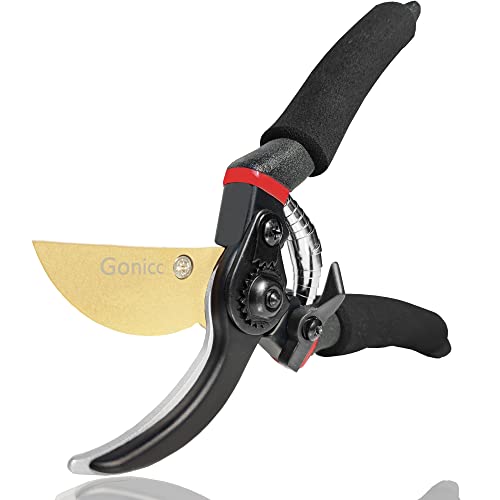
Gonicc 8 Inch Professional Bypass Pruning Shears
Value PickPros
- Very low price for a titanium coated blade
- Comfortable non slip handles
- Good for light garden cleanup and small branches
Cons
- Not suitable for thick or dry wood
- Blade coating wears with heavy use
Gonicc makes affordable garden tools that perform well for light duty work. This pruner is fine for soft green stems and small branches, but it is not a substitute for a real lopper on thick wood. It works best as a companion tool for detail work.
Spear and Jackson 8170RS Razorsharp Ratchet Lopper
Ratchet ActionPros
- Ratchet mechanism lets you cut in stages with less effort
- Blade stays sharp for a reasonable time
- Good for users with limited grip strength
Cons
- Ratchet action is slower than a single squeeze cut
- Availability in US retail can vary
Ratchet loppers use a stepped mechanism that lets you complete a thick cut in several smaller squeezes rather than one hard one. That makes them a good fit for anyone who struggles to apply full force in a single motion. Spear and Jackson is a long established garden tool brand, though US buyers should confirm current availability.

Tabor Tools Bypass Lopper GL16
Easy HandlingPros
- Light and easy to maneuver in tight spaces
- Comfortable grips reduce hand fatigue
- Affordable for occasional use
Cons
- Less leverage than compound or ratchet designs
- Not built for repeated heavy cuts
Tabor Tools targets homeowners who want a capable lopper without spending much. The GL16 is light enough to use one handed in some situations and works well for branches around an inch. It is a fair choice for occasional pruning rather than daily heavy work.
Who Should Avoid the Top Pick
Skip loppers with a rated cutting capacity under one inch if your main problem is genuinely thick branches, since you will end up forcing the tool and damaging the blade. Also avoid no name listings that do not state a cutting capacity or blade material, because those specs are the whole point of the tool. If you have significant hand arthritis, a single pivot lopper without gearing or ratcheting will likely be frustrating.
Before You Buy
Measure the diameter of the branches you cut most often and match that to the tool's rated capacity, leaving a little headroom. Decide whether you need bypass blades for live wood or anvil blades for dead wood, since they are not interchangeable in performance. Check the handle length against your reach and storage space, and confirm that replacement blades or springs are available for the model you choose.
FAQs
What size branch can a lopper cut?
Most quality loppers are rated for branches between one and two inches in diameter, with geared and ratcheting models generally handling the thicker end of that range.
Are bypass or anvil loppers better for thick branches?
Bypass loppers cut like scissors and leave cleaner wounds on live wood, while anvil loppers crush through dead wood with a single blade against a flat surface. For thick live branches, bypass is usually the better choice.
Do I need a geared lopper?
A geared or compound mechanism multiplies your squeezing force, which helps on branches over an inch and is especially useful if you have limited hand strength.
Can loppers cut through dry hardwood?
Dry hardwood is much harder on blades than green wood. A compound lever or ratcheting lopper handles it better, and you should stay within the rated capacity to avoid bending the blade.
How do I maintain loppers for thick branches?
Clean sap off the blades after use, sharpen the cutting edge periodically, and oil the pivot. Dull or sticky blades require more force and can crush rather than cut thick branches.
Is a pole pruner better than a lopper for high branches?
If the branch is above comfortable reach, an extendable pole pruner is safer than a ladder. For branches at chest height or below, a standard lopper gives you more control and force.
Our verdict
For most homeowners dealing with thick branches, the Fiskars 28 Inch PowerGear2 Lopper offers the best balance of cutting force, weight, and price. If your wood is especially hard or dry, the Corona CL-4300 is worth the extra weight, and anyone with limited grip strength should look at a ratcheting model instead. Match the tool to your branch size and hand strength, and you will get clean cuts with far less effort.