Best Manual Pruning Shears for Gardeners
Manual pruning shears are the tool most gardeners reach for dozens of times in a single session, so the difference between a good pair and a frustrating one shows up fast in your hands and your plants. This guide compares real, currently sold bypass and anvil pruners across price points, blade designs, and handle ergonomics so you can match a pair to your grip, your plant sizes, and your budget.
Quick answer
The Felco F-2 Classic Manual Hand Pruner is the best overall pick for most gardeners thanks to its replaceable blade and parts, forged aluminum handles, and decades of proven durability.
Why trust ToolBuyerHub
- Cross-checked manufacturer-published specifications before writing any recommendation
- Verified US market availability and configuration for every model discussed
- Owner-feedback themes are summarized as feedback, never presented as our own hands-on testing
- No invented star ratings; see the visible Research Score criteria on this page
- Flagged chemical-compatibility and safe-handling guidance for sprayer and shredder equipment
- Blade geometry, cutting capacity, and replacement-part availability were weighed heavily, since these determine whether a pruner lasts one season or ten.
Research updated September 2026.
What Matters Most for This Category
The single biggest factor is blade type: bypass pruners cut living stems cleanly with a scissor action and suit almost all garden pruning, while anvil pruners crush through dead wood and are better reserved for dry branches. After that, look at cutting capacity (most garden tasks fall in the half-inch to three-quarter-inch range), handle material, and whether replacement blades and springs are sold separately. Grip size matters more than most shoppers expect, and a pruner that fits your hand will reduce fatigue far more than a marginally sharper blade.
| Model | Best for | Key specs | Research Score |
|---|---|---|---|
| Felco F-2 Classic Manual Hand Pruner | Best Overall | Bypass, Up to 1 inch | 95/100 |
| Felco F-6 Compact Manual Hand Pruner | Best for Small Hands | Bypass, Up to 3/4 inch | 92/100 |
| Corona BP 3180D Forged Classic Bypass Pruner | Best Value | Bypass, Up to 1 inch | 89/100 |
| Fiskars Bypass Pruner with PowerGear Mechanism | Best for Reduced Hand Effort | Bypass, Up to 3/4 inch | 87/100 |
| Fiskars Traditional Bypass Pruner | Best Budget | Bypass, Up to 5/8 inch | 84/100 |
| ARS HP-VS8Z Signature Heavy Duty Pruner | Best Cutting Performance | Bypass, Up to 1 inch | 90/100 |
| Zenport QZ404 Anvil Pruner | Best for Dead Wood | Anvil, Up to 1 inch | 80/100 |

Felco F-2 Classic Manual Hand Pruner
Editor's PickPros
- Every wear part is replaceable, so the tool can be rebuilt rather than replaced
- Forged aluminum handles hold up to years of heavy use
- Clean bypass cut suits both green and lightly woody stems
Cons
- Premium price compared with basic hardware-store pruners
- Closed size runs large for very small hands
The F-2 is the reference point for manual pruners, and it earns that reputation through serviceability as much as cutting performance. Owners commonly report using the same pair for many years with only occasional blade or spring swaps. Based on manufacturer specifications, it handles stems up to roughly one inch in diameter.
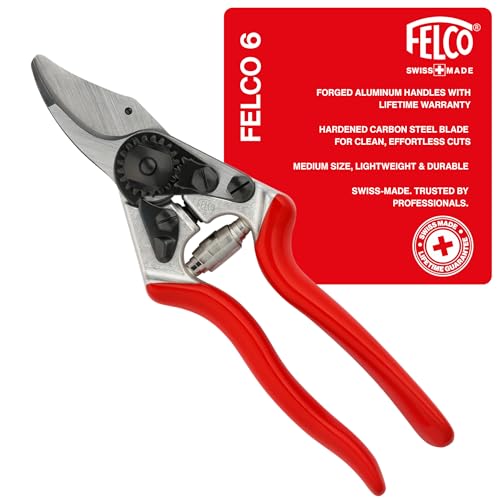
Felco F-6 Compact Manual Hand Pruner
Compact GripPros
- Smaller handle and head suit narrower hands and reduce strain
- Same rebuildable design philosophy as the larger Felco models
- Lighter overall weight for long pruning sessions
Cons
- Lower cutting capacity than full-size pruners
- Costs nearly as much as the larger F-2
The F-6 shares the Felco build approach in a scaled-down frame aimed at gardeners who find full-size pruners unwieldy. It is a sensible choice for container gardeners, rose growers, and anyone doing fine work on thinner stems. Based on manufacturer specifications, it cuts up to about three-quarter inch.

Corona BP 3180D Forged Classic Bypass Pruner
Strong ValuePros
- Forged construction at a mid-range price
- Comfortable grip with a shock bumper that reduces hand fatigue
- Handles a full inch of growth, matching pricier competitors
Cons
- Heavier than aluminum-handled pruners
- Finish can wear with heavy outdoor exposure
Corona's forged bypass pruner delivers much of the durability of premium tools without the premium price tag. The steel handles add weight but also inspire confidence on tougher cuts. Owner feedback themes often highlight the grip comfort during extended use.

Fiskars Bypass Pruner with PowerGear Mechanism
Easy CutPros
- Gear mechanism multiplies cutting force for weaker grips
- Lightweight handles reduce arm fatigue
- Widely available at US retailers and easy to replace
Cons
- Composite handles are less durable than forged metal
- Not designed to be fully rebuilt like premium pruners
Fiskars uses a geared pivot to increase leverage, which makes a noticeable difference for gardeners with limited hand strength or arthritis. The tradeoff is a handle that will not survive decades the way forged metal does. Based on manufacturer specifications, it cuts up to about three-quarter inch.
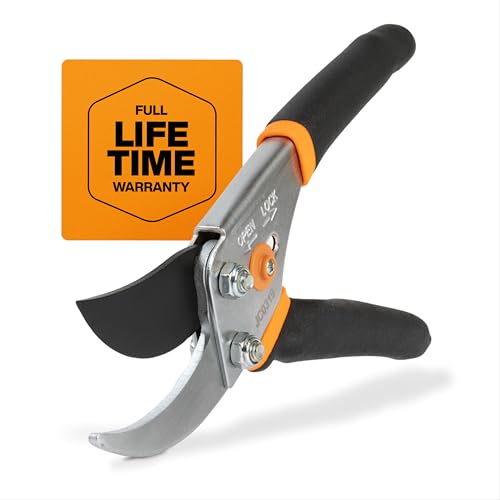
Fiskars Traditional Bypass Pruner
Budget PickPros
- Very low entry price for a functional bypass pruner
- Lightweight and simple to use
- Easy to find at most US garden centers and online
Cons
- Smaller cutting capacity than most competitors here
- Not built for heavy or frequent use
This is the classic inexpensive bypass pruner many gardeners start with, and it does fine work on soft green growth and small stems. It is not a tool you pass down, but it is a reasonable first pair or a spare to keep in a second location. Based on manufacturer specifications, capacity is around five-eighths of an inch.

ARS HP-VS8Z Signature Heavy Duty Pruner
Sharpest CutPros
- Hard chrome-plated blade takes and holds a very keen edge
- Clean cuts on green wood reduce plant damage
- Comfortable grip suited to long sessions
Cons
- Less widely stocked in US stores than Felco or Fiskars
- Replacement parts can be harder to source locally
ARS pruners are well regarded among serious gardeners for blade quality, and the VS8Z is the model most often cited. The chrome-plated blade resists sap and rust while staying sharp through heavy use. Based on manufacturer specifications, it cuts up to roughly one inch.
Zenport QZ404 Anvil Pruner
Anvil SpecialistPros
- Anvil action powers through dry, dead branches
- Aluminum handles keep weight down
- Useful complement to a bypass pruner rather than a replacement
Cons
- Crushing cut is unsuitable for live green growth
- Not a general-purpose garden pruner
Anvil pruners cut against a flat surface instead of a bypass hook, which makes them effective on dead wood but damaging to living stems. This Zenport model is a reasonable dedicated tool for clearing dry branches and cleanup work. Based on manufacturer specifications, it handles up to about one inch.
Who Should Avoid the Top Pick
Skip anvil pruners if your main job is shaping live shrubs, roses, or fruit trees, since the crushing cut damages green tissue and invites disease. Also avoid no-name pruners with no listed replacement parts if you want a tool that lasts beyond a season or two, and be cautious of very cheap sets that bundle several tools, as the steel quality is usually the first thing sacrificed.
Before You Buy
Measure your hand and check the pruner's stated grip size or closed length before ordering, because a poor fit causes blisters and fatigue regardless of blade quality. Confirm the cutting capacity against the thickest stems you actually prune, and check whether replacement blades and springs are sold separately, since that single detail determines whether the tool is repairable or disposable.
FAQs
What is the difference between bypass and anvil pruners?
Bypass pruners use two curved blades that pass each other like scissors, producing a clean cut on living stems. Anvil pruners press a straight blade against a flat plate, which crushes the stem and is best reserved for dead wood.
How do I know what size pruner to buy?
Match the pruner to your hand size and to the stems you cut most often. Gardeners with smaller hands often do better with compact models, while anyone regularly cutting near one inch of growth should choose a full-size pruner rated for that capacity.
Are expensive pruners worth it?
They can be, mainly because premium pruners sell replacement blades, springs, and pivots. That means a higher upfront cost can be spread over many years instead of replacing a cheap pair every season.
How often should I sharpen pruning shears?
For regular garden use, sharpening once or twice a season is typical, and more often if you cut a lot of woody growth. A sharp blade cuts more cleanly and requires less hand force, which reduces fatigue.
Can I use pruning shears on branches thicker than their rating?
It is not recommended. Forcing a pruner beyond its rated capacity stresses the pivot and can bend or chip the blade, and it usually produces a ragged cut that harms the plant.
Do I need more than one pair of pruners?
Many gardeners keep a bypass pruner for live growth and a separate anvil pruner for dead wood and cleanup. A spare inexpensive pair for light tasks is also handy if you garden in more than one spot.
Our verdict
For most gardeners, the Felco F-2 is the pick that balances cutting performance, comfort, and long-term repairability better than anything else here. If budget or hand strength is the deciding factor, the Fiskars PowerGear and the Corona forged model are both solid alternatives. Whichever you choose, prioritize a bypass blade for living plants and confirm that replacement parts exist before you buy.