Best Wheelbarrows for Landscaping
A wheelbarrow is one of those tools you only think about when your back is aching or a tire has gone flat halfway through moving a load of mulch. For landscaping work specifically, the right wheelbarrow balances capacity, stability on uneven ground, and how much effort it takes to dump a heavy load where you actually want it.
Quick answer
The Jackson M6T22 6 Cubic Foot Steel Wheelbarrow is our top pick for most landscaping jobs thanks to its large steel tray, dual-wheel stability, and a reputation for holding up under repeated heavy loads.
Why trust ToolBuyerHub
- Cross-checked manufacturer-published specifications before writing any recommendation
- Verified US market availability and configuration for every model discussed
- Owner-feedback themes are summarized as feedback, never presented as our own hands-on testing
- No invented star ratings; see the visible Research Score criteria on this page
- Flagged chemical-compatibility and safe-handling guidance for sprayer and shredder equipment
- We compare tray material, wheel configuration, load capacity, and handle design against owner feedback themes from Amazon reviews rather than relying on any single rating.
Research updated September 2026.
What Matters Most for This Category
The biggest decision is wheel count and tray material. A single-wheel barrow turns tighter and fits through narrow gates, but it demands more balance on slopes and soft soil. Dual-wheel models stay upright with less effort and are easier for heavy or uneven loads, though they are wider and less nimble. Steel trays resist abrasion from rocks and concrete but can rust if left out, while poly trays shrug off weather and are lighter but can crack in extreme cold or under sharp impacts. Capacity matters too, but a tray that is too large for your soil type just means you fill it halfway and waste the space.
| Model | Best for | Key specs | Research Score |
|---|---|---|---|
| Jackson M6T22 6 Cubic Foot Steel Wheelbarrow | Best Overall | Steel, 6 cu ft | 94/100 |
| True Temper R6STMS 6 Cubic Foot Steel Wheelbarrow | Best Value | Steel, 6 cu ft | 91/100 |
| Ames 6 Cubic Foot Steel Wheelbarrow with Dual Wheels | Best for Heavy Loads | Steel, 6 cu ft | 90/100 |
| Marathon 4 Cubic Foot Poly Wheelbarrow | Best Poly Tray | Poly, 4 cu ft | 88/100 |
| Gorilla Carts GOR4PS Poly Dump Cart | Best Alternative to a Wheelbarrow | Poly, 4 cu ft | 87/100 |
| Jackson M6T22B 6 Cubic Foot Steel Wheelbarrow with Wood Handles | Best Traditional Build | Steel, 6 cu ft | 86/100 |
| Vestil Poly Wheelbarrow with Pneumatic Wheel | Best Budget | Poly, Approx 4 cu ft | 83/100 |
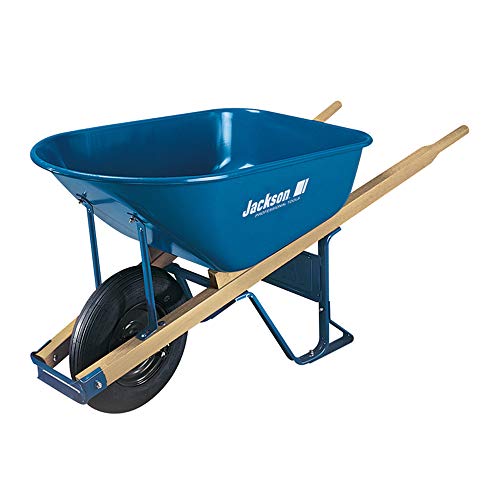
Jackson M6T22 6 Cubic Foot Steel Wheelbarrow
Top PickPros
- Large 6 cubic foot steel tray handles bulky mulch and soil loads
- Dual wheels improve stability on slopes and uneven ground
- Hardwood handles and steel undercarriage are built for repeated heavy use
Cons
- Heavier and wider than single-wheel models, so it is harder to maneuver in tight spaces
- Steel tray can rust if stored outside without cover
Jackson's 6 cubic foot steel wheelbarrow is a common sight on job sites because it balances a big tray with a sturdy frame. The dual-wheel setup reduces the tipping risk that comes with single-wheel barrows on soft or sloped ground. Based on manufacturer specifications, it is aimed at users who move heavy, bulky material regularly rather than occasional light yard work.
True Temper R6STMS 6 Cubic Foot Steel Wheelbarrow
Great ValuePros
- Six cubic foot steel tray at a mid-range price point
- Single wheel makes it easier to turn in tight planting beds
- Steel handles with cushioned grips reduce hand fatigue
Cons
- Single wheel requires more balance on slopes and loose soil
- Steel tray and frame add weight compared to poly options
True Temper's 6 cubic foot steel wheelbarrow is a solid middle-ground option for homeowners who want real capacity without paying premium prices. The single pneumatic wheel rolls over rough ground and pivots easily, which helps in garden beds and around obstacles. Owner feedback themes often mention the tray holding up well for seasonal landscaping projects.
Ames 6 Cubic Foot Steel Wheelbarrow with Dual Wheels
Heavy DutyPros
- Dual wheels keep heavy loads stable on uneven terrain
- Steel tray and frame are designed for dense materials like concrete and gravel
- Pneumatic tires absorb bumps better than solid wheels
Cons
- Wide footprint can be awkward in narrow gates or crowded beds
- Pneumatic tires need occasional air pressure checks
Ames builds this dual-wheel steel barrow for users who regularly haul dense, heavy material. The two pneumatic wheels spread the load and reduce the tipping that plagues single-wheel designs on slopes. It is a practical choice for gravel, concrete, and wet soil where stability matters more than tight turning.
Marathon 4 Cubic Foot Poly Wheelbarrow
Rust ProofPros
- Poly tray will not rust and is easy to rinse clean
- Lighter than comparable steel barrows, which reduces fatigue
- Compact 4 cubic foot size suits smaller yards and garden beds
Cons
- Smaller capacity means more trips for big landscaping jobs
- Poly can crack under sharp impacts or extreme cold
Marathon's poly wheelbarrow trades capacity for weather resistance and lighter weight. The plastic tray handles wet soil, compost, and mulch without rusting, and it cleans up with a hose. It is a sensible pick for homeowners who leave the barrow outside and want low maintenance.
Gorilla Carts GOR4PS Poly Dump Cart
Dump CartPros
- Four wheels provide excellent stability with no balancing required
- Dump mechanism lets you empty loads without lifting
- Poly tray resists rust and is easy to clean
Cons
- Not a true wheelbarrow, so it does not pivot in tight spaces
- Four wheels struggle more in deep mud than a single pneumatic tire
Gorilla Carts' poly dump cart is a different tool that solves many of the same landscaping hauling problems. Four wheels mean you never fight for balance, and the dump lever empties the tray without shoveling out. It suits gardeners who move mulch, soil, and yard waste but dislike the instability of a traditional barrow.
Jackson M6T22B 6 Cubic Foot Steel Wheelbarrow with Wood Handles
Classic DesignPros
- Classic wood-handle design absorbs shock better than steel in cold weather
- Large steel tray handles bulky loads
- Simple, repairable construction with commonly available parts
Cons
- Single wheel demands balance on slopes
- Wood handles need occasional inspection for splinters or cracks
This Jackson model keeps the traditional wood-handle, single-wheel layout that many landscapers still prefer. Wood handles flex slightly under load, which some users find more comfortable than steel on cold days. The steel tray and standard parts make it easy to maintain over time.
Vestil Poly Wheelbarrow with Pneumatic Wheel
Budget PickPros
- Low price point for a poly tray barrow
- Poly tray resists rust and cleans easily
- Light enough for one person to move around the yard
Cons
- Smaller capacity and lighter frame than premium models
- Not built for repeated commercial-grade loads
Vestil's poly wheelbarrow is a budget-friendly option for light landscaping and yard cleanup. The plastic tray will not rust, and the pneumatic wheel rolls over grass and gravel without too much effort. It is best suited to occasional use rather than daily heavy hauling.
Who Should Avoid the Top Pick
Skip a wheelbarrow entirely if you only need to move a few bags of soil a couple of times a year, since a garden cart or even a tarp drag may be cheaper and easier to store. Also avoid very large steel barrows if you have a bad back or narrow gate access, because the weight and width can make them more of a burden than a help.
Before You Buy
Measure your narrowest gate or doorway before choosing a barrow, since dual-wheel and wide steel models may not fit. Think about what you haul most: dense material like gravel and concrete favors a steel tray and dual wheels, while light mulch and compost work fine with poly and a single wheel. Check whether you have space to store it under cover, because steel trays rust faster when left in the rain.
FAQs
Is a single wheel or dual wheel wheelbarrow better for landscaping?
Single wheel barrows turn tighter and fit through narrow gaps, which helps in garden beds. Dual wheel models are more stable on slopes and with heavy loads, so they suit gravel, concrete, and uneven ground better.
Steel or poly tray, which should I choose?
Steel resists abrasion from rocks and shovels and handles dense loads, but it can rust if left outside. Poly will not rust and is lighter and easier to clean, but it can crack under sharp impacts or in extreme cold.
How much capacity do I need?
A 4 cubic foot barrow suits light yard work and smaller properties. A 6 cubic foot model is better for mulch, topsoil, and gravel if you want fewer trips, though it is heavier to push when full.
Do pneumatic tires need maintenance?
Yes, pneumatic tires can lose air over time and may need occasional inflation. They roll more smoothly over rough ground than solid tires, which is why most landscaping barrows use them.
Can I leave my wheelbarrow outside?
You can, but steel trays and frames will rust faster with constant exposure. Storing it under cover or flipping it upside down to drain water will extend its life.
Are wheelbarrows or dump carts better for landscaping?
Wheelbarrows pivot and fit tight spaces, which helps in beds and around plants. Dump carts are more stable and easier to empty, so they work well for hauling mulch and yard waste on open ground.
Our verdict
For most landscaping jobs, the Jackson M6T22 6 Cubic Foot Steel Wheelbarrow offers the best mix of capacity, stability, and durability. If you prefer a lighter, rust-proof tray or need maximum stability over maneuverability, the poly and dump cart options above are worth a look. Match the wheel type and tray material to the material you haul most, and you will get years of use out of whichever barrow you pick.