Best Gardening Gloves for Every Type of Yard Work
Owners consistently point to the Showa Atlas 370 for daily grip, Pine Tree Tools Bamboo gloves for value, and COOLJOB multi-packs for budget yard work. Gardening gloves look interchangeable online but differ sharply in coating, cuff length, and fit once thorns, mud, or heat enter the picture, so we compared specifications and owner feedback across seven widely sold pairs to sort them by task rather than price alone.
Quick answer
Based on specifications and owner feedback, the Showa Atlas 370 leads for all-around grip and durability, Pine Tree Tools Bamboo gloves offer the best value for daily weeding, and COOLJOB Gardening Gloves are the top budget pick for light seasonal tasks. Fit, coating, and cuff length decide the rest.
Why trust ToolBuyerHub
- We compare listed materials, coatings, and sizing rather than marketing copy
- Every pick is a real, currently sold model we could verify on retailer listings
- We separate task-specific picks so a rose grower and a weeder don't get the same recommendation
- No fabricated lab claims, only specifications and patterns in owner feedback
- We flag tradeoffs like reduced dexterity or limited sizing rather than hiding them
- Rankings are updated when a listed product changes or is discontinued
Research updated August 2026.
Showa Atlas 370 Nitrile Coated Gloves
A nylon shell with a textured nitrile palm gives this glove reliable grip on tools and plant stems.
| Model | Best for | Key specs | Rating |
|---|---|---|---|
| Showa Atlas 370 Nitrile Coated Gloves | Best overall for daily grip and durability | Nylon knit, Textured nitrile palm | 4.8/5 |
| Pine Tree Tools Bamboo Gardening Gloves | Best value for everyday weeding and planting | Bamboo viscose blend, Rubber-dotted palm | 4.7/5 |
| COOLJOB Gardening Gloves 3-Pack | Best budget pick for light seasonal tasks | Polyester, Rubber latex palm | 4.6/5 |
| Digz Women's Gauntlet Gardening Gloves | Best for rose pruning and thorny plants | Goatskin leather, Extended forearm gauntlet | 4.5/5 |
| Wells Lamont Women's Suede Cowhide Gloves | Best fit for smaller hands | Suede cowhide leather, None, leather only | 4.4/5 |
| Vgo Rubber Coated Gardening Gloves | Best for wet soil and muddy conditions | Polyester, Full latex rubber coating | 4.3/5 |
| Foxgloves Long Sleeve Gardening Gloves | Best for hot weather and dexterity | Moisture-wicking spandex blend, Silicone grip dots | 4.2/5 |

Showa Atlas 370 Nitrile Coated Gloves
Best OverallPros
- Strong grip on wet and dry tools
- Thin fit preserves finger dexterity
- Sold in bulk multi-packs
Cons
- Coating offers little thorn protection
- No extended cuff for forearm coverage
A nylon shell with a textured nitrile palm gives this glove reliable grip on tools and plant stems. Owners report the coating resists small punctures better than plain cotton gloves. The thin profile keeps dexterity high for detail work like transplanting.

Pine Tree Tools Bamboo Gardening Gloves
Best ValuePros
- Breathable for warm-weather sessions
- Close, stretchy fit reduces bunching
- Machine washable per listing
Cons
- Limited protection against thorns
- Runs small according to some owners
A bamboo viscose blend makes this glove breathable while rubber dots on the palm add grip for handling tools. The stretch-knit back keeps a close fit without bunching at the fingers. It targets everyday tasks rather than heavy thorn work.

COOLJOB Gardening Gloves 3-Pack
Best BudgetPros
- Low cost per pair in the multi-pack
- True-to-size fit for most hands
- Good for quick, light-duty tasks
Cons
- Coating wears faster than nitrile
- Only two sizes offered
This multi-pack pairs a polyester shell with a rubber latex palm for basic grip during weeding or potting. The lower cost per pair makes it easy to keep spares in the shed or garage. Fit runs true to size for most adult hands.

Digz Women's Gauntlet Gardening Gloves
Best for ThornsPros
- Extended cuff shields the forearm
- Leather palm resists thorn punctures
- Fits women's hand sizing closely
Cons
- Less breathable than fabric gloves
- Leather needs drying after wet use
A goatskin leather palm resists thorn punctures better than fabric gloves, and the extended cotton gauntlet cuff protects the forearm while reaching into rose bushes or bramble. Owners note the leather softens with use rather than staying stiff.

Wells Lamont Women's Suede Cowhide Gloves
Best for Women's FitPros
- Sized specifically for smaller hands
- Leather breaks in for a custom feel
- Durable across repeated seasons
Cons
- No coating for wet or muddy work
- Limited size range compared to unisex picks
Suede cowhide leather forms to the hand over time, and the knit wrist keeps debris out during digging. The narrower cut is sized for smaller hands rather than a scaled-down men's pattern. Owners report the leather holds up over repeated seasons.
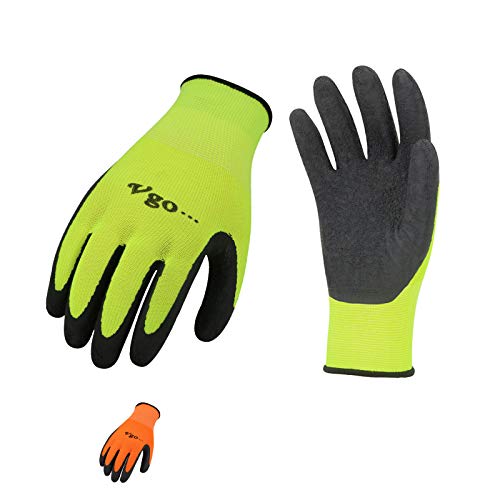
Vgo Rubber Coated Gardening Gloves
Best for Wet WorkPros
- Fully waterproof coating
- Cinched cuff keeps out splashes
- Wide size range available
Cons
- Less breathable in warm weather
- Reduced fine-motor dexterity
A full latex rubber coating over a polyester liner keeps water and mud from soaking through during planting or rainy-day chores. The knit wrist cuff cinches to keep splashes out. The full coating trades some dexterity for water resistance.
Foxgloves Long Sleeve Gardening Gloves
Best for BreathabilityPros
- Breathable in hot, humid climates
- High dexterity for detail tasks
- Long sleeve adds sun and scratch coverage
Cons
- Minimal thorn or puncture protection
- Not designed for wet, muddy conditions
A moisture-wicking spandex blend covers the hand and forearm without the bulk of leather or rubber. Silicone grip dots on the palm and fingers replace a heavier coating. Owners favor it for warm climates and detail work like seed sowing.
How to Choose Gardening Gloves
Start with the task rather than the brand. Light weeding calls for a thin, breathable glove, while thorn removal or rose pruning needs a leather palm and an extended cuff. Wet or muddy conditions favor a rubber coating over fabric. Matching the glove to the job prevents overpaying for protection you won't use.
Materials: Leather, Rubber, and Fabric Blends
Leather resists punctures and lasts multiple seasons but stays stiff until broken in. Rubber and nitrile coatings block water and add grip, though full coverage reduces breathability. Fabric blends like bamboo or spandex prioritize comfort and dexterity over puncture resistance. Each material trades one benefit for another.
Matching Gloves to the Task
Pruning roses or clearing bramble calls for a gauntlet cuff and a leather or thick palm. Weeding and transplanting benefit from a thin, flexible coating like nitrile. Digging in wet soil favors full rubber coverage. Hot-weather tasks go easier in a breathable, lightweight fabric.
Fit, Sizing, and Care
Gloves that run large reduce grip and increase the chance of tool slippage. Check listed size charts rather than assuming true-to-size fit, since cuts vary between brands. Leather gloves should air dry away from direct heat after wet use. Fabric and coated gloves often tolerate a gentle machine wash per the product listing.
FAQs
What are the best gardening gloves for thorns?
Gloves with a leather palm and an extended gauntlet cuff, such as the Digz Women's Gauntlet gloves, hold up best against thorns and bramble.
Are leather or rubber gardening gloves better?
Leather resists punctures and lasts longer in dry conditions, while rubber coatings handle wet soil and mud better. The right choice depends on the task.
How do I know what size gardening gloves to buy?
Check the brand's specific size chart rather than assuming true-to-size fit, since cuts and sizing differ between brands like Wells Lamont and Showa.
Can gardening gloves be washed?
Fabric and coated gloves are often machine washable per the product listing, while leather gloves should be spot cleaned and air dried instead.
Do gardening gloves work for rose pruning?
A glove with a thick or leather palm and an extended cuff, rather than a thin fabric glove, gives better protection when pruning roses.
What gloves are best for wet or muddy soil?
A fully rubber-coated glove like the Vgo Rubber Coated gloves keeps water and mud out better than a partially coated or fabric glove.
Are gauntlet gloves worth it?
Gauntlet gloves add forearm coverage that helps when reaching into thorny bushes, though they add bulk for light everyday tasks.
How long do gardening gloves last?
Durability depends on material and use frequency. Leather palms typically outlast fabric or lightly coated gloves under regular garden use.
Is nitrile or latex coating better for gardening gloves?
Nitrile coatings tend to resist abrasion and oils better, while latex rubber offers stronger waterproofing for wet conditions.
Our verdict
For most gardeners, the Showa Atlas 370 offers the best balance of grip, dexterity, and durability for everyday tasks. Rose growers and anyone clearing bramble should look to the Digz gauntlet gloves instead, while budget-conscious shoppers can rely on the COOLJOB multi-pack for light seasonal work.