Best Caulking Gun for Cabinets: Cordless and Manual Picks
A smooth, flawless caulk line is the difference between a professional cabinet installation and a sloppy one. We compared published manufacturer specs, drive mechanisms and build quality to find the best caulking gun for cabinets, focusing on the two things that actually matter for trim work: bead control and drip prevention.
Quick answer
For cabinet work, the best caulking gun is the Milwaukee M12 Cordless Caulk and Adhesive Gun (2441-20) for its six-setting speed dial and automatic anti-drip rod retraction. For a manual option, the Newborn Model 250 smooth rod caulking gun gives you the steady, jerk-free stroke that tight cabinet joints need.
Why trust ToolBuyerHub
- Manufacturer spec sheets checked (platform, cartridge size, speed control)
- Battery ecosystem compared
- Drive mechanism and anti-drip design compared
- Build quality & warranty checked
- Brand reliability
- No fake hands-on claims, no invented review counts
Research updated August 2026.
Milwaukee M12 Cordless Caulk and Adhesive Gun (2441-20)
Six-setting speed dial plus a compact 12V body gives you repeatable control on delicate cabinet beads.
| Product | Best For | Key Spec | Score | Price |
|---|---|---|---|---|
| Milwaukee M12 2441-20 | Overall & Precision | 6-setting speed dial | 4.8/5 | $$$ |
| Newborn 250 | Manual Control | 10:1 thrust ratio | 4.6/5 | $ |
| Makita XGC01 18V LXT | LXT Battery Owners | Variable speed dial | 4.5/5 | $$$ |
| Ryobi P310 18V ONE+ | Budget Cordless | Variable speed trigger | 4.3/5 | $ |
| DeWalt DCE560 20V MAX | Durability | Trigger + speed dial | 4.4/5 | $$$ |
Why a Dedicated Caulking Gun Matters for Cabinets
Cabinet installation requires a thin, even bead of caulk along backsplashes, crown molding, and panel gaps. Cheap ratchet-rod guns often cause inconsistent flow, drips, and finger fatigue. A good caulking gun for cabinets gives you the leverage and control needed to produce professional results without wasting material. Cordless models hold a steady dispense rate regardless of how hard you pull, while smooth-rod manual guns allow for micro-adjustments on tricky corners.
What to Check Before Buying a Caulking Gun for Cabinets
Before selecting your tool, consider these key factors that directly affect cabinet work quality.
Thrust Ratio (manual guns): Thrust ratio is the spec that actually matters on a manual gun. A 10:1 ratio handles standard paintable latex and acrylic caulk comfortably. Step up to an 18:1 or 26:1 gun only if you regularly push thick polyurethane or construction adhesive, since higher ratios trade some fine control for easier squeezing.
Speed Control (cordless guns): Most manufacturers do not publish a drive-force figure for cordless caulk guns, so judge them by speed control instead. A numbered dial or a genuine variable-speed trigger lets you match bead thickness to gap size. A slow, repeatable setting is essential for the narrow gaps found in cabinet work.
Drip-Free Mechanism: An anti-drip feature retracts the rod slightly when you release the trigger so excess caulk does not ooze onto a finished surface. This is critical for cabinet work where a single drip can ruin a painted panel. On manual guns, look for a thumb-lever pressure release you can hit instantly.
Cartridge Size: Almost every gun here takes a standard 10 oz cartridge, which is the size nearly all paintable cabinet caulks ship in. If you also run 20 oz sausage packs on bigger jobs, you need a dedicated sausage-style gun rather than a cartridge cradle.
Weight and Ergonomics: Cabinet work often involves reaching into tight spaces or working overhead. A heavy gun causes fatigue quickly. A 12V cordless gun is noticeably lighter and shorter than an 18V or 20V one, and a manual gun is lighter still, which is why the compact options win for trim work.
Battery Ecosystem: If you already own tools from Milwaukee, Makita, Ryobi or DeWalt, choosing their cordless caulk gun saves money on batteries and chargers. That is often the deciding factor, because these guns perform far more similarly to each other than their price gaps suggest.
Mistakes to Avoid When Caulking Cabinets
Using Too Much Force: Squeezing too hard on a manual gun produces a thick bead that is hard to tool. Let the gun do the work. For cordless models, start on the lowest speed setting and increase gradually until you see a steady bead.
Skipping the Cut: Always cut the nozzle at a 45-degree angle and only snip off the smallest tip possible. A small hole gives you more control. For cabinet gaps, a 1/8-inch opening is usually sufficient.
Ignoring the Back Pressure: When you release the trigger on a cordless gun, pressure in the tube keeps pushing for a fraction of a second. Practice on scrap material to learn the release timing. Guns with automatic rod retraction cut this down but do not eliminate it.
Not Purging Air: Air bubbles in the tube cause sputtering. Before starting, squeeze a small amount onto a scrap piece to purge air. This ensures a smooth, continuous bead from the start.

Milwaukee M12 Cordless Caulk and Adhesive Gun (2441-20)
Best Overall for CabinetsPros
- Numbered speed dial makes a bead repeatable across a whole kitchen
- Compact 12V body is the easiest of the cordless picks to work overhead
- Automatic rod retraction cuts oozing on release
Cons
- Sold as a bare tool, so battery and charger cost extra
- Higher price than a manual gun that does the same job slower
The Milwaukee M12 2441-20 is the top choice for cabinet work because of its six-setting speed dial. Instead of trying to hold a trigger at a consistent pressure, you set a number and every bead comes out the same, which is exactly what you want along a run of crown molding or panel gaps. It takes a standard 10 oz cartridge, so it runs the same paintable latex caulks you would use by hand.
Build quality is what you expect from the M12 line, with a reinforced housing and a rubberized grip. Because it runs on the 12V platform rather than 18V, it is shorter and lighter than the Makita, Ryobi and DeWalt guns here, which matters when you are reaching into a cabinet cavity. The automatic rod retraction is the other reason it wins: on trim work a single drip means wiping down a finished surface.

Newborn Model 250 Smooth Rod Caulking Gun
Best Manual GunPros
- Smooth hex rod gives a continuous, jerk-free stroke
- Thumb-lever pressure release stops the flow instantly
- Costs a fraction of any cordless gun and needs no battery
Cons
- Requires more hand effort than cordless over a long day
- 10:1 ratio is enough for latex caulk but strains on thick polyurethane
If you prefer manual control, the Newborn Model 250 is the gun to buy. Newborn is the brand most trim carpenters actually reach for, and the 250 is its baseline pro model: a 10:1 thrust ratio, a smooth hex rod instead of a ratcheting toothed one, and a steel half-barrel that lets you see how much caulk is left. The smooth rod is the whole point, because a ratchet rod advances in steps and that shows up as a rippled bead on a cabinet joint.
The 10:1 ratio is comfortable for the paintable latex and acrylic caulks used on painted cabinets. It also includes the small conveniences that save trips off the ladder: a ladder hook, a spout cutter, and a seal punch built into the frame. What you give up against cordless is a consistent rate over long runs, but what you gain is direct tactile feedback, which is a genuine advantage on short, intricate trim beads.

Makita XGC01 18V LXT Cordless Caulking Gun
Best for LXT Battery OwnersPros
- Runs on the same LXT packs as the rest of your Makita kit
- Long runtime from full-size 18V batteries
- Durable construction that holds up on a job site
Cons
- Longer and heavier than a 12V gun in tight cabinet spaces
- Bare-tool pricing is high if you are not already on LXT
The Makita XGC01 is the pick for anyone already invested in the 18V LXT platform. It takes the same standard 10 oz cartridge as the others and uses a speed adjustment dial to set the dispense rate, so once you have dialed in a bead for a given caulk you can repeat it along a whole run of cabinets without rethinking your trigger pressure.
The trade-off against the Milwaukee is size. An 18V battery makes the tool longer and heavier at the grip, which you notice when you are working under a wall cabinet or overhead on crown. It is still perfectly usable for cabinet work, and the runtime advantage is real if you are caulking a whole kitchen in one session. If you own LXT batteries, buying into a second platform just for a caulk gun makes little sense.
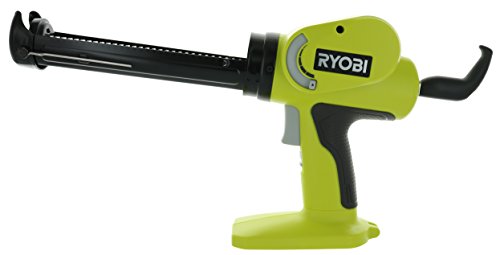
Ryobi P310 18V ONE+ Power Caulk and Adhesive Gun
Best Budget CordlessPros
- Cheapest route into a cordless caulk gun
- Variable trigger gives decent control on latex caulk
- Shares batteries with the very large ONE+ range
Cons
- Trigger-only control is harder to keep consistent than a dial
- Composite housing feels less solid than the pro-grade guns
The Ryobi P310 is the best budget option for DIYers who want cordless convenience without paying pro-tool prices. It uses a variable speed trigger, which is adequate control for the standard paintable latex caulk used on painted cabinets, and it runs the same 10 oz cartridges as everything else here. If you already own ONE+ batteries, the bare tool is an easy add.
The honest limitation is consistency. Holding a trigger at a fixed position for the length of a cabinet run is harder than setting a numbered dial, so your bead is more likely to vary at the start and end of each pass. On thick polyurethane or heavy silicone it also works noticeably harder than the pro guns. For occasional cabinet and trim caulking it is genuinely good value; for daily professional use, it is not the tool.

DeWalt DCE560 20V MAX Cordless Adhesive Gun
Best DurabilityPros
- Robust housing built for job site handling
- Trigger plus dial gives both a ceiling and fine adjustment
- Runs on the widely owned DeWalt 20V MAX packs
Cons
- Bulkier than the M12 in confined cabinet spaces
- Cartridge-only, so 20 oz sausage packs need the DCE580 instead
The DeWalt DCE560 is the durability pick. It pairs a variable speed trigger with a speed dial, so you can cap the maximum dispense rate on the dial and still feather the trigger, which is a genuinely useful combination when you move between wide gaps and hairline cabinet joints on the same job. Automatic rod retraction handles the drip problem.
Like the Makita, its drawback for cabinet work is size. A 20V MAX pack on the grip makes it longer and heavier than the M12, and you feel that reaching into a cabinet run. If you need to run 20 oz sausage packs on larger sealing jobs, DeWalt's DCE580 is the sausage-style version of the same tool. For anyone already on the 20V MAX platform, the DCE560 is a dependable choice for cabinet caulking.
FAQs
What is the best caulking gun for cabinets?
The Milwaukee M12 2441-20 is the best overall for cabinets, thanks to its six-setting speed dial and compact 12V body. For a manual option, the Newborn Model 250 smooth rod gun gives excellent control for a fraction of the price.
Is a cordless caulking gun better than a manual one for cabinets?
Cordless guns reduce hand fatigue and hold a consistent dispense rate, which helps on long runs. Manual guns give more tactile feedback and are better for short, precise beads where you want to feel the flow. Plenty of trim carpenters carry both.
What thrust ratio do I need for cabinet caulking?
Thrust ratio applies to manual guns, not cordless ones. A 10:1 ratio handles the paintable latex and acrylic caulks used on cabinets. Move up to 18:1 or 26:1 only for thick polyurethane sealant or construction adhesive. PSI is not a meaningful spec for caulk guns.
Can I use a regular caulking gun for cabinets?
Yes, but a smooth rod or a variable speed cordless gun gives much better control for the thin, even beads cabinets need. Cheap ratchet-rod guns advance in steps, which shows up as a rippled bead.
What is the best manual caulking gun for cabinets?
The Newborn Model 250 is the best manual option, with a 10:1 thrust ratio, a smooth hex rod and a thumb-lever pressure release. Note that Milwaukee does not make manual caulk guns, only cordless M12 and M18 models.
How do I prevent drips when caulking cabinets?
Use a gun with automatic rod retraction, or hit the thumb release on a manual gun the instant you stop. Also cut the nozzle at a 45-degree angle with the smallest opening that will flow, and practice on scrap to learn the release timing.
What type of caulk should I use for cabinets?
For painted cabinets, use a paintable latex or acrylic caulk. For unpainted or high-moisture areas such as a sink surround, use a silicone or polyurethane sealant. Always check the manufacturer's recommendation for your specific material.
How do I clean a caulking gun after use?
For latex caulks, wipe the gun with a damp cloth. For silicone or polyurethane, use a solvent such as mineral spirits. Remove the tube and clean the rod and cradle thoroughly so nothing hardens around the plunger.
What is the difference between a smooth rod and a ratchet rod caulking gun?
A smooth rod is pushed by a friction plate and advances continuously for a steady bead. A ratchet rod has teeth and advances in discrete steps, which can cause a jerky, rippled bead. Smooth rods are better for precision cabinet work.
What size caulk cartridge do these guns take?
All five picks take the standard 10 oz cartridge, which is the size nearly all paintable cabinet caulks are sold in. If you need 20 oz sausage packs for larger sealing jobs, you need a sausage-style gun such as the DeWalt DCE580.