Best Caulking Guns for Big Jobs and Long Seams
Caulking guns are not rated by room size, so there is no such thing as a gun built specifically for a large room. What actually matters on a big job is cartridge capacity, steady speed control and an anti-drip mechanism, because you are laying long, continuous beads along baseboard, crown molding, window trim and sill plates rather than sealing one short joint. Here are the cordless and manual guns that hold a clean bead over those long runs.
Quick answer
For long runs, the Milwaukee M12 20 oz Caulk and Adhesive Gun (2442-20) is the best all-round pick: a 20 oz cartridge means fewer reloads, and the six-setting speed dial plus variable-speed trigger keeps the bead consistent. If you already own DeWalt 20V MAX batteries, the DeWalt DCE560 gives you the same kind of dial-plus-trigger control on a 10 oz cartridge. If you would rather skip batteries entirely, the manual Newborn 930-GTD pairs a high 26:1 thrust ratio with a drip-free release.
Why trust ToolBuyerHub
- Checked against manufacturer-published specs
- Battery & ecosystem compared
- Owner feedback read, not counted or scored
- Build quality & warranty checked
- Brand reliability
- No fake hands-on claims
Research updated August 2026.
Milwaukee M12 20 oz Caulk and Adhesive Gun (2442-20)
A 20 oz cartridge, a six-setting speed dial and anti-drip release make this the easiest gun to run continuously along long trim and baseboard seams.
| Product | Best For | Cartridge | Power | Editor score |
|---|---|---|---|---|
| Milwaukee M12 2442-20 | Overall / fewest reloads | 20 oz | M12 cordless | 4.7/5 |
| DeWalt DCE560 | Fine speed control | 10 oz | 20V MAX cordless | 4.5/5 |
| Makita XGC01Z 18V LXT | Existing LXT battery owners | 10 oz | 18V LXT cordless | 4.4/5 |
| Ryobi P310G ONE+ 18V | Budget cordless | 10 oz | ONE+ 18V cordless | 4.2/5 |
| Newborn 930-GTD | Manual / no battery needed | 1/10 gal | Manual, 26:1 thrust | 4.3/5 |

Milwaukee M12 20 oz Caulk and Adhesive Gun (2442-20)
Best Overall for Long RunsPros
- 20 oz cartridge means roughly half the reloads of a 10 oz gun
- Six-setting speed dial plus variable trigger for a repeatable bead
- Runs on any M12 RedLithium pack you already own
Cons
- Costs more than a manual gun by a wide margin
- Bare tool: battery and charger sold separately
The Milwaukee 2442-20 is the 20 oz member of the M12 caulk and adhesive family, which also includes the 10 oz 2441-20 and the sausage-style 2443-20 and 2444-20. The larger cartridge is the reason it suits big jobs: on a full perimeter of baseboard you swap tubes far less often, and every swap is a place where the bead restarts and shows.
The control layout is what keeps that bead even. You set a maximum flow on the six-position dial, then modulate within it on the trigger, so the flow rate stays matched to how fast your hand is travelling instead of surging at every squeeze. The anti-drip mechanism backs the rod off when you release, which is the difference between a clean stop at a corner and a blob you have to tool out.

DeWalt DCE560 20V MAX Adhesive Gun
Best Fine Speed ControlPros
- Variable-speed dial makes it easy to repeat a flow rate
- Tool-free rod release for quick cartridge changes
- Fits the 20V MAX packs most DeWalt owners already have
Cons
- 10 oz cartridge means more reloads than the 20 oz Milwaukee
- Bare tool: battery and charger sold separately
The DCE560 is a standard 10 oz cartridge gun and the obvious pick if your other cordless tools are DeWalt 20V MAX. The dial-and-trigger combination works the same way as the Milwaukee: set the ceiling on the dial, feather the trigger below it. That is genuinely useful when you switch materials part-way through a job, because a thin acrylic latex and a stiff silicone want very different flow rates from the same gun.
The trade-off against the Milwaukee is purely cartridge size. On a small bathroom you will never notice. Around a whole floor of baseboard, a 10 oz tube empties often enough that the reload stops become the slow part of the job.

Makita XGC01Z 18V LXT Caulk and Adhesive Gun
Best for LXT Battery OwnersPros
- Shares batteries with the very large Makita 18V LXT line
- Well balanced, so the nozzle stays put on long horizontal runs
- Typical Makita build quality and warranty
Cons
- 10 oz cartridge only, so frequent reloads on big jobs
- Little reason to buy it if you are not already on LXT
The XGC01Z is Makita's 10 oz cordless caulk and adhesive gun, and it does the same job as the DeWalt with the same trade-offs. The case for it is the battery platform: if you already have a shelf of 18V LXT packs, a bare-tool gun is a cheap add-on and one 5.0Ah pack will see you through a long session on standard latex and silicone caulks.
Balance is its quiet advantage. The barrel sits low relative to the grip, which makes it easier to hold the tip at a constant angle and distance while you walk a bead along a baseboard, and a constant angle is most of what makes a bead look even.
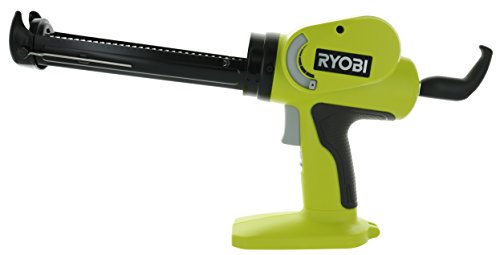
Ryobi P310G ONE+ 18V Power Caulk and Adhesive Gun
Best Budget CordlessPros
- Cheapest way into a cordless gun if you own ONE+ batteries
- Light enough for overhead crown molding work
- Huge ONE+ battery ecosystem
Cons
- More plastic in the housing than the pro-grade guns
- Better suited to latex and acrylic than stiff polyurethane
The correct model number here is P310G, Ryobi's ONE+ 18V power caulk and adhesive gun. It takes standard 10 oz cartridges and has the same dial-plus-trigger control scheme as the more expensive guns, which is the feature that actually matters for bead quality.
Where it gives ground is on stiff materials and on long-term durability. Thick polyurethane sealants and heavy construction adhesive push a cordless gun harder than latex caulk does, and this is the one on the list most likely to slow down or stall on them. For interior trim, baseboard and window caulking, it is plenty.

Newborn 930-GTD Drip-Free Caulking Gun
Best Manual OptionPros
- 26:1 thrust ratio, so stiff sealants take far less hand force
- Drip-free release stops the ooze when you let go
- No batteries, no charging, costs a fraction of a cordless gun
Cons
- Still hand-powered, so long sessions tire your grip
- Bead consistency depends entirely on your squeeze
If you want a manual gun that can keep up on a big job, thrust ratio is the number to read. It describes the mechanical advantage between your hand and the plunger, and a 26:1 gun like the Newborn 930-GTD needs roughly a quarter of the squeeze of a basic 6:1 or 10:1 hardware-store gun for the same output. That is what makes a whole day of trim work realistic without a battery.
The drip-free mechanism does the second useful thing: releasing the trigger retracts the rod slightly so pressure comes off the cartridge instead of continuing to push caulk out of the nozzle. On a long run with lots of stops at corners and door casings, that is where the mess and the wasted material normally come from.
What to Check Before Buying a Caulking Gun for a Big Job
Cartridge capacity: Standard cartridges are 10 oz (1/10 gallon). Milwaukee's 2442-20 takes 20 oz, and sausage-style guns take bulk foil packs. On a long perimeter, capacity is the single biggest time saver, because every reload is a break in the bead.
Thrust ratio or push force, read correctly: Manual guns are rated by thrust ratio, typically 6:1 on a cheap gun up to about 26:1 on a good one. Cordless guns are rated in pounds of push force, and real figures live in the hundreds of pounds, not thousands. Any listing claiming a caulk gun pushes with thousands of pounds of force is quoting the wrong spec.
Speed control: A dial that sets a maximum flow, combined with a variable trigger underneath it, is what lets you match flow to hand speed. That is the difference between an even bead and a wavy one over a long run.
Anti-drip release: Look for a mechanism that backs pressure off the cartridge when you release the trigger. Over a whole room of stops and starts it saves both material and cleanup time.
Battery platform: If you go cordless, stay on the platform you already own. A caulk gun is not a good enough reason to start a second battery system.
Mistakes to Avoid
Buying on a force number: Force and thrust specs are not comparable between manual and cordless guns, and inflated numbers are common in listings. Compare cartridge size, speed control and drip behavior instead.
Using a low-thrust manual gun on stiff sealant: A 6:1 gun with polyurethane sealant will fight you and produce a lumpy bead. Either move up to a high-thrust manual gun or go cordless.
Ignoring reload count: On a large perimeter, a 10 oz gun means a lot of tube changes. Plan for it, or buy the larger cartridge.
Skipping the anti-drip feature: It is not just about mess. Caulk that oozes out between beads is caulk you paid for and then wipe away.
FAQs
Is there such a thing as a caulking gun for large rooms?
No. Caulking guns are not rated by room size. What suits a big job is a larger cartridge, good speed control and an anti-drip release, because those reduce reloads and keep long beads even.
What is the best caulking gun for a long trim or baseboard run?
The Milwaukee M12 2442-20, mainly because its 20 oz cartridge roughly halves the number of tube changes compared with a standard 10 oz gun.
What thrust ratio do I need on a manual caulking gun?
Basic guns are around 6:1 and are fine for occasional latex caulk. For long sessions or stiff sealant, look for 18:1 to 26:1, which needs far less hand force for the same output.
How much push force does a cordless caulking gun have?
Cordless caulk and adhesive guns are typically rated in the hundreds of pounds of push force. Claims of thousands of pounds are a misquoted spec, not a real caulk gun rating.
Are cordless caulking guns worth it?
They pay off if you caulk regularly or work with stiff sealants, since flow stays constant instead of tracking your grip. For one weekend project, a high-thrust manual gun is usually better value.
Can I use a manual caulking gun for a whole room?
Yes, but choose a high thrust ratio such as the 26:1 Newborn 930-GTD. A cheap low-thrust gun will tire your hand long before the job is done.
What cartridge sizes do caulking guns take?
Most take 10 oz (1/10 gallon) cartridges. Some, like the Milwaukee 2442-20, take 20 oz. Sausage-style guns such as the Milwaukee 2443-20 and 2444-20 take bulk foil packs instead.
Do I need a variable speed caulking gun?
For long seams, yes. Setting a maximum flow on a dial and feathering the trigger underneath it is what keeps the bead width constant as your hand speed changes.
What battery platform is best for a caulking gun?
Whichever one you already own. Milwaukee M12, DeWalt 20V MAX, Makita 18V LXT and Ryobi ONE+ all have good caulk guns and wide battery availability.
How long does a battery last on a caulking gun?
Runtime varies with material stiffness and speed setting, but a caulk gun draws far less power than a saw or drill, so a mid-size pack will normally outlast a session's worth of tubes.
Can I use a caulking gun for construction adhesive?
Yes, most caulk guns are sold as caulk and adhesive guns. Adhesive is stiffer than caulk, so favor a high thrust ratio manual gun or a pro-grade cordless model.
How do I clean a caulking gun after use?
Wipe the rod, plunger and nozzle area before the caulk skins over. Dried latex caulk comes off with warm water and a scraper; cured silicone or polyurethane usually needs mineral spirits.
Our verdict
For long interior seams, the Milwaukee M12 2442-20 is the best overall choice because its 20 oz cartridge cuts reloads and its speed dial keeps the bead consistent. If you are on another battery platform, the DeWalt DCE560 and Makita XGC01Z do the same job on 10 oz tubes, and the Ryobi P310G is the budget cordless option. For most homeowners the honest answer is the manual Newborn 930-GTD: 26:1 thrust and a drip-free release handle a whole room for a fraction of the price.