Best Paint Brushes for Trim Work
Trim work is where a paint job either looks crisp or looks like a weekend accident, and the brush in your hand decides most of that outcome. A sash brush with the right bristles and a comfortable handle lets you cut clean lines along baseboards, door casings, and crown molding without constant taping.
Quick answer
The Wooster Silver Tip 2 Inch Angle Sash Brush is the best overall pick for most trim projects thanks to its firm synthetic bristles, sharp edge, and comfortable handle.
Why trust ToolBuyerHub
- Cross-checked manufacturer-published specifications before writing any recommendation
- Verified US market availability and configuration for every model discussed
- Owner-feedback themes are summarized as feedback, never presented as our own hands-on testing
- No invented star ratings; see the visible Research Score criteria on this page
- Checked surface-prep and ventilation guidance against manufacturer product data
- Trim brushes are judged on bristle stiffness, edge retention, and how cleanly they release paint, so this guide weighs those factors alongside owner feedback themes rather than lab claims.
Research updated September 2026.
What Matters Most for This Category
The single biggest factor for trim work is bristle type and shape. Synthetic filaments like polyester and nylon hold their shape in water based paints and resist the mushiness that ruins cut lines, while natural bristle is better reserved for oil based finishes. An angled sash brush is the standard for trim because the slanted tip lets you lay a straight line along an edge while the fuller body carries enough paint to avoid constant dipping. Size matters too: a 2 to 2.5 inch brush covers most baseboards and casings, while a 1 to 1.5 inch brush is better for narrow moldings and window muntins. Finally, look for a brush that keeps a sharp edge after repeated cleaning, since a splayed tip is the fastest way to lose a crisp line.
| Model | Best for | Key specs | Research Score |
|---|---|---|---|
| Wooster Brush 5221 Silver Tip Angle Sash Paintbrush, 2 Inch | Best Overall | White nylon/polyester blend, 2 inches | 94/100 |
| Purdy 144080320 XL Glide Angle Sash Paintbrush, 2 Inch | Best for Smooth Finish | Chinex synthetic filament, 2 inches | 92/100 |
| Wooster Brush 5228 Silver Tip Angle Sash Paintbrush, 1.5 Inch | Best for Narrow Trim | White nylon/polyester blend, 1.5 inches | 90/100 |
| Purdy 144152325 Clearcut Glide Angle Sash Paintbrush, 2.5 Inch | Best for Large Trim Runs | Synthetic blend, 2.5 inches | 89/100 |
| Wooster Brush 5224 Silver Tip Angle Sash Paintbrush, 1 Inch | Best Budget Detail Brush | White nylon/polyester blend, 1 inch | 87/100 |
| Purdy 144100320 XL Elite Sprig Angle Sash Paintbrush, 2 Inch | Best Value | Synthetic blend, 2 inches | 85/100 |
| Wooster Brush 5229 Silver Tip Angle Sash Paintbrush, 3 Inch | Best for Wide Flat Trim | White nylon/polyester blend, 3 inches | 83/100 |

Wooster Brush 5221 Silver Tip Angle Sash Paintbrush, 2 Inch
Editor's PickPros
- Firm synthetic bristles hold a sharp edge for clean cut lines
- Blend releases water based paint smoothly with minimal drag
- Comfortable hardwood handle reduces hand fatigue on long trim runs
Cons
- Premium price compared to basic hardware store brushes
- Not ideal for oil based finishes where natural bristle performs better
The Silver Tip line is a long standing favorite among painters for trim because the synthetic blend stays stiff enough to cut a line but soft enough to lay paint flat. The angled sash shape and stainless ferrule make it a durable workhorse for baseboards, casings, and crown. Based on manufacturer specifications and owner feedback themes, it is the most reliable all around trim brush for water based paints.

Purdy 144080320 XL Glide Angle Sash Paintbrush, 2 Inch
Pro FavoritePros
- Chinex filaments are engineered to mimic natural bristle softness for a smooth finish
- Keeps a fine tip for detailed cutting along trim edges
- Holds plenty of paint to reduce dipping frequency
Cons
- Softer feel may not suit painters who prefer a stiffer brush
- Higher cost than many comparable synthetic brushes
Purdy's XL Glide uses Chinex filament, a synthetic that behaves closer to natural bristle while remaining compatible with water based paints. That makes it a strong choice for trim where a smooth, level finish matters as much as a sharp line. Owner feedback themes often mention how well it releases paint and how little it splays over time.

Wooster Brush 5228 Silver Tip Angle Sash Paintbrush, 1.5 Inch
Detail ReadyPros
- Narrow width fits window muntins and thin moldings
- Same firm Silver Tip bristles as the larger version
- Good control for cutting in tight corners
Cons
- Too small for covering wide baseboards efficiently
- Same premium pricing as the rest of the Silver Tip line
This is the smaller sibling of the 2 inch Silver Tip and is built for the places a wide brush cannot reach. Window muntins, narrow chair rails, and detailed crown profiles are where the 1.5 inch width earns its keep. It shares the same bristle blend and build quality as the larger brush, so performance is consistent.

Purdy 144152325 Clearcut Glide Angle Sash Paintbrush, 2.5 Inch
Big CoveragePros
- Wider head covers baseboards and long casings faster
- Retains a sharp edge for cutting in along ceilings and floors
- Durable build holds up to repeated cleaning
Cons
- Bulkier than a 2 inch brush in tight corners
- Overkill for small detail work
When you are painting a long run of baseboard or a full set of door casings, a 2.5 inch brush saves real time. The Clearcut Glide keeps a sharp edge despite the wider head, so you are not trading speed for sloppy lines. It is a practical choice for larger trim jobs where efficiency matters.
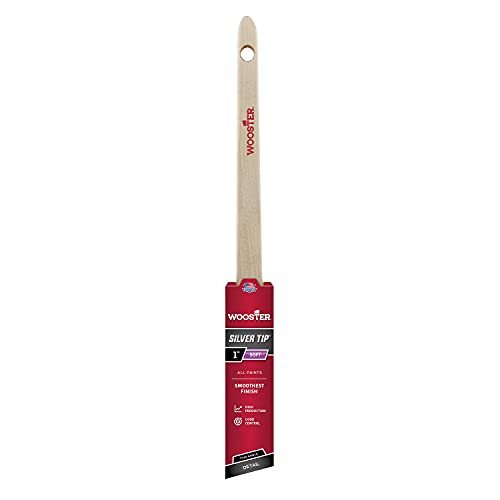
Wooster Brush 5224 Silver Tip Angle Sash Paintbrush, 1 Inch
Tight SpacesPros
- Very fine tip for detailed cutting around hardware and glass
- Affordable entry point into the Silver Tip line
- Comfortable handle for a small brush
Cons
- Small paint capacity means frequent dipping
- Not suited for broad trim surfaces
The 1 inch Silver Tip is the detail brush in the family, meant for the fussy spots where a wider brush would slop paint onto glass or hardware. It keeps the same firm synthetic bristles and sharp tip as its larger siblings. For window glazing, small moldings, and touch ups, it is a precise and affordable tool.
Purdy 144100320 XL Elite Sprig Angle Sash Paintbrush, 2 Inch
Solid ValuePros
- Good balance of price and performance for a name brand trim brush
- Keeps a usable edge through repeated cleaning
- Comfortable for extended trim sessions
Cons
- Not as refined a tip as the higher end Purdy lines
- Bristles may soften faster with heavy use
The XL Elite Sprig sits below Purdy's top tier but still delivers the sharp angle and synthetic bristles needed for trim. It is a sensible choice for homeowners who want a reliable brush without paying flagship prices. Owner feedback themes suggest it holds up well for occasional to moderate trim work.
Wooster Brush 5229 Silver Tip Angle Sash Paintbrush, 3 Inch
Wide FormatPros
- Covers wide flat trim and door slabs quickly
- Firm bristles maintain a clean edge despite the width
- Same durable Silver Tip construction
Cons
- Too wide for most detailed trim cutting
- Heavier and more tiring over long sessions
A 3 inch sash brush is a niche tool best reserved for wide flat surfaces like door slabs, wide casings, and large trim boards. It moves a lot of paint per stroke, which speeds up big jobs. For standard baseboard and crown work, a 2 or 2.5 inch brush is usually more manageable.
Who Should Avoid the Top Pick
Avoid brushes with natural bristle for water based paints, since the bristles absorb water, soften, and lose the sharp edge trim work demands. Skip cheap no name brushes with plastic ferrules and sparse filaments, as they splay quickly and leave brush marks. Also avoid overly stiff brushes meant for masonry or rough surfaces, which are too coarse for finish trim.
Before You Buy
Measure the trim you plan to paint and match brush width to the job: 1 to 1.5 inches for narrow moldings and windows, 2 to 2.5 inches for baseboards and casings, and 3 inches only for wide flat surfaces. Confirm your paint type, since water based paints call for synthetic bristles while oil based finishes work best with natural bristle. Buy at least one quality brush rather than several cheap ones, and plan to clean it thoroughly after each use to preserve the tip.
FAQs
What size brush is best for trim work?
A 2 to 2.5 inch angled sash brush handles most baseboards, casings, and crown molding, while a 1 to 1.5 inch brush is better for narrow moldings and window muntins.
Should I use natural or synthetic bristles for trim?
Use synthetic bristles like polyester or nylon for water based paints, which are the most common trim finishes today. Natural bristle is better reserved for oil based paints.
Why is an angled sash brush preferred for trim?
The angled tip lets you lay a straight line along an edge while the fuller body holds enough paint to reduce dipping, which is exactly what trim cutting requires.
How do I keep a trim brush edge sharp?
Clean the brush thoroughly after every use with the appropriate solvent, reshape the bristles by hand, and store it flat or hanging with a brush cover to protect the tip.
Can I use one brush for both walls and trim?
You can, but a dedicated trim brush with a sharper tip and firmer bristles gives noticeably cleaner lines along edges than a general purpose wall brush.
How much should I spend on a trim brush?
A quality trim brush generally costs more than a basic hardware store option, but it holds its edge longer and produces cleaner lines, so one good brush usually beats several cheap replacements.
Our verdict
For most trim projects the Wooster Silver Tip 2 inch angle sash brush offers the best mix of firm bristles, sharp edge, and comfort, making clean cut lines far easier. Purdy's XL Glide is the top alternative if you prefer a softer, natural bristle feel, and the smaller Silver Tip sizes cover windows and detail work. Match brush width to your trim and stick to synthetic bristles for water based paint, and the results will look far more professional.