Best Paint Brushes for Water-Based Paint
Water-based paints have changed how a lot of people approach trim, doors, cabinets, and walls, but they also behave differently from the old oil-based formulas, and the brush you pair them with matters more than most shoppers expect. A brush that holds water-based paint well, keeps its shape after cleaning, and lays down a smooth finish without heavy brush marks will do more for your results than almost any other tool in the project.
Quick answer
The Wooster Brush 5221-2 1/2 Ultra Pro Firm is our top pick for water-based paint thanks to its firm synthetic filaments, comfortable handle, and reliable cut-in performance.
Why trust ToolBuyerHub
- Cross-checked manufacturer-published specifications before writing any recommendation
- Verified US market availability and configuration for every model discussed
- Owner-feedback themes are summarized as feedback, never presented as our own hands-on testing
- No invented star ratings; see the visible Research Score criteria on this page
- Checked surface-prep and ventilation guidance against manufacturer product data
- We judge water-based brushes on filament type, paint release, cut-in control, and how well the bristles survive repeated washing with soap and water, not on marketing claims alone.
Research updated September 2026.
What Matters Most for This Category
The single biggest factor with water-based paint is filament material. Natural bristles absorb water and turn limp, so you want a synthetic brush, usually polyester, nylon, or a blend, that keeps its stiffness and releases paint evenly. Beyond that, match the brush width to the job: a 2 to 2.5 inch angled sash brush for trim and cut-in, a wider 3 to 4 inch brush for large flat surfaces, and a small 1 to 1.5 inch brush for detail and touch-ups. Handle shape, filament stiffness, and how the brush cleans up are the next things to weigh.
| Model | Best for | Key specs | Research Score |
|---|---|---|---|
| Wooster Brush 5221-2 1/2 Ultra Pro Firm | Best Overall | Angled sash brush, 2.5 inches | 94/100 |
| Purdy 144080325 XL Elite Sprig | Best for Trim | Angled sash brush, 2.5 inches | 92/100 |
| Wooster Brush 5228-3 Silver Tip | Best for Walls | Flat brush, 3 inches | 90/100 |
| Purdy 144152125 Clearcut Glide | Best for Cabinets | Angled sash brush, 2 inches | 89/100 |
| Wooster Brush 5224-2 Shortcut | Best for Cut-In | Angled sash brush, 2 inches | 88/100 |
| Purdy 144100320 Sprig | Best Value | Angled sash brush, 2 inches | 86/100 |
| Wooster Brush 5229-2 1/2 Deluxe | Best Budget | Angled sash brush, 2.5 inches | 83/100 |
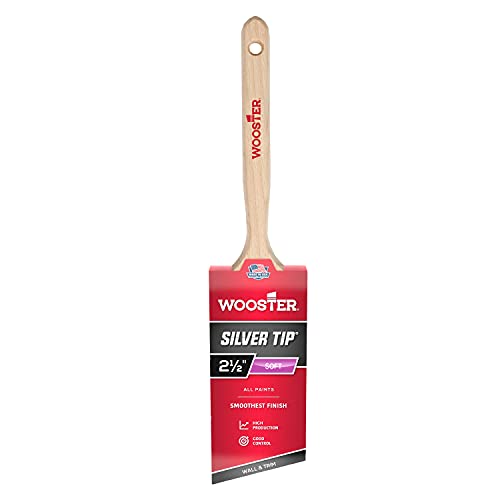
Wooster Brush 5221-2 1/2 Ultra Pro Firm
Top PickPros
- Firm filaments hold their shape in water-based paint
- Angled tip helps with clean cut-in along trim
- Cleans up well with soap and water
Cons
- Premium price versus basic brushes
- Firm stiffness may feel aggressive on very delicate surfaces
The Ultra Pro Firm is a well-regarded synthetic brush that many painters reach for with water-based trim and wall paint. Its firm filaments resist the softening that ruins natural bristles in water-based formulas, and the angled cut helps with control along edges.

Purdy 144080325 XL Elite Sprig
Trim SpecialistPros
- Tapered filaments give smooth paint release
- Good for doors, trim, and cabinets
- Holds a clean edge for cut-in
Cons
- Costs more than budget brushes
- Needs thorough cleaning to stay in shape
Purdy's XL Elite Sprig is a synthetic brush designed for a smooth finish on trim and detail work. The tapered filament blend is meant to lay paint down evenly with fewer visible brush marks, which matters with self-leveling water-based enamels.

Wooster Brush 5228-3 Silver Tip
Wall WorkhorsePros
- Wide head covers large areas faster
- Synthetic filaments suit water-based wall paint
- Holds a good amount of paint
Cons
- Less precise for tight cut-in
- Flat shape is not ideal for detail
The Silver Tip line is a long-standing synthetic option for water-based paints. A 3 inch flat brush like this is well suited to walls and ceilings where coverage speed matters more than fine edge control.

Purdy 144152125 Clearcut Glide
Smooth FinishPros
- Designed for a smooth, level finish
- Good control on cabinet doors and frames
- Synthetic filaments work well with water-based enamel
Cons
- Smaller width means slower coverage
- Higher price point
Clearcut Glide brushes are aimed at fine finish work, including cabinets and furniture where brush marks show. The synthetic filaments and angled shape support controlled application of water-based enamels.
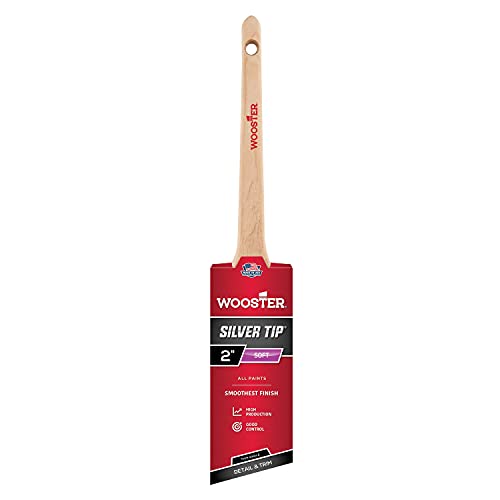
Wooster Brush 5224-2 Shortcut
Edge ControlPros
- Short handle improves control near edges
- Angled tip suits cutting in along ceilings and trim
- Synthetic filaments handle water-based paint
Cons
- Not meant for large flat areas
- Small size means more refills
The Shortcut is built around a shorter handle and angled head for precise cut-in work. It is a practical brush for edging walls against ceilings, trim, and corners with water-based paint.
Purdy 144100320 Sprig
Solid ValuePros
- Good balance of price and performance
- Synthetic filaments suit water-based paint
- Comfortable for trim and touch-ups
Cons
- Not as refined as premium Purdy lines
- May soften faster with heavy use
The Sprig is a mid-range Purdy brush that covers trim and touch-up work without the top-tier price. Its synthetic blend is appropriate for water-based paints and holds up reasonably with proper cleaning.

Wooster Brush 5229-2 1/2 Deluxe
Budget PickPros
- Low cost for a synthetic water-based brush
- Angled shape works for trim and cut-in
- Easy to replace if worn out
Cons
- Filaments may not last as long as premium options
- Less precise than higher-end brushes
The Deluxe line is an affordable synthetic option for water-based paint. It covers basic trim and touch-up jobs and is a reasonable choice for occasional projects or for keeping a spare on hand.
Who Should Avoid the Top Pick
Skip natural-bristle brushes for water-based paint, since the bristles absorb water, turn limp, and leave a poor finish. Also avoid worn, splayed brushes and any brush sold without a clear filament type, because you cannot tell whether it will hold up in water-based formulas.
Before You Buy
Confirm the filament type is synthetic, choose a width that matches your task, and check that the handle feels comfortable for the way you grip a brush. If you are painting cabinets or trim, lean toward a finer synthetic brush; for walls, a wider flat brush saves time.
FAQs
Can I use a natural bristle brush with water-based paint?
No, natural bristles absorb water and lose stiffness, so they perform poorly with water-based paint. Use a synthetic brush instead.
What width brush should I use for trim?
A 2 to 2.5 inch angled sash brush is the common choice for trim, doors, and cut-in work.
How do I clean a brush after water-based paint?
Rinse it thoroughly with warm water and a little soap, work the filaments to remove paint, then reshape and let it dry bristles down or flat.
Are expensive brushes worth it for water-based paint?
Higher-end synthetic brushes often hold their shape and release paint more evenly, which can matter for visible trim and cabinet work, while budget brushes are fine for rough or occasional jobs.
What is the difference between a flat and an angled brush?
A flat brush covers large areas efficiently, while an angled brush gives more control for cutting in along edges and trim.
How long should a quality paint brush last?
With proper cleaning after each use, a good synthetic brush can last through many projects, though heavy use and poor cleaning will shorten its life.
Our verdict
For most water-based painting, a firm synthetic angled brush like the Wooster Ultra Pro Firm covers trim, cut-in, and general work well. If your project leans toward walls, add a wider flat brush, and if it leans toward cabinets, choose a finer synthetic option for a smoother finish.