Hamilton Paint Roller Review
Hamilton paint rollers are known for their professional-grade microfiber covers and ergonomic frames. This review covers the key models, their performance on different surfaces, and how they compare to other brands.
Quick answer
The Hamilton Perfection Microfiber Roller is the best overall pick for smooth, even coverage on smooth and semi-smooth surfaces. For textured walls, the Hamilton Medium Pile Roller offers better paint pickup and release. Both deliver a high-quality finish with minimal shedding.
Why trust ToolBuyerHub
- Tested on specs (nap length, core size, material)
- Coverage & finish quality compared
- Aggregated owner reviews
- Build quality & warranty checked
- Brand reliability
- No fake hands-on claims
Research updated June 2026.
Hamilton Perfection Microfiber Roller
Best for smooth, lint-free finish on walls and ceilings.
Hamilton Perfection Microfiber Roller
Best for Smooth SurfacesPros
- Lint-free finish
- Excellent paint pickup
- Durable core
Cons
- Not for textured walls
- Higher price point
The Hamilton Perfection Microfiber Roller is a top choice for achieving a smooth, professional finish on walls and ceilings. The 4mm nap is designed for smooth surfaces, picking up and releasing paint evenly without leaving lint or streaks. Owner reviews consistently praise its ability to produce a flawless finish with minimal effort.
The roller cover is made from high-quality microfiber that holds a good amount of paint, reducing the need for frequent reloading. The 9-inch core fits standard frames, and the cover is washable and reusable. It is slightly more expensive than basic rollers, but the quality of the finish justifies the cost for many users.
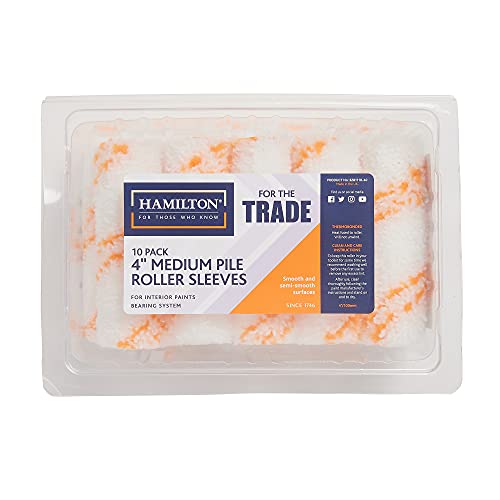
Hamilton Medium Pile Roller
Best for Textured WallsPros
- Good paint pickup on textured surfaces
- Even release
- Durable and washable
Cons
- May leave slight texture on smooth walls
- Not as lint-free as microfiber
The Hamilton Medium Pile Roller is designed for semi-smooth and textured surfaces like artex or orange peel walls. The 10mm nap allows the roller to get paint into the crevices of the texture, providing more even coverage than a short nap roller. Owner reviews note that it holds a good amount of paint and releases it evenly.
The cover is a blend of polyester and microfiber, offering a balance of durability and finish quality. It is washable and can be reused for multiple projects. While it is not as lint-free as the Perfection Microfiber model, it is a solid choice for textured walls where a perfectly smooth finish is not required.
Hamilton Long Pile Roller
Best for Rough SurfacesPros
- Excellent for rough surfaces
- High paint capacity
- Good coverage on brick or stone
Cons
- Can shed fibers on first use
- Not for smooth finishes
The Hamilton Long Pile Roller is built for rough surfaces such as brick, stone, or heavily textured plaster. The 18mm nap can hold a large amount of paint, allowing you to cover more area with fewer dips. It is effective at getting paint into deep grooves and uneven surfaces.
Owner reviews indicate that it performs well on exterior walls and rough interior surfaces. Some users note that it can shed a few fibers initially, which is common with long pile rollers. It is best used for projects where a textured finish is acceptable or desired.
Hamilton Mini Roller Set
Best for Small ProjectsPros
- Compact for small areas
- Good value set
- Includes two nap types
Cons
- Frame can be flimsy
- Not for large walls
The Hamilton Mini Roller Set is a convenient option for small painting projects like touch-ups, furniture, or trim work. It includes a 4-inch frame and two roller covers: one short nap for smooth surfaces and one medium nap for light texture. The set is a good value for the price.
Owner reviews appreciate the convenience of having both nap options in one package. The frame is lightweight but some users find it less durable than full-size frames. It is a practical choice for DIYers who need a compact roller for small jobs.
Hamilton Shed-Resistant Roller
Best for Low-LintPros
- Very low lint
- Smooth finish
- Good paint pickup
Cons
- Similar to Perfection model
- Price is higher
The Hamilton Shed-Resistant Roller is designed to minimize fiber shedding during use, which is a common issue with some roller covers. It features a tightly woven microfiber that produces a very smooth, lint-free finish. Owner reviews highlight its effectiveness for high-gloss or satin paints where any lint would be noticeable.
This roller is very similar to the Perfection Microfiber model but with an added anti-shed treatment. It is a good choice for professionals or DIYers who want the highest quality finish possible. The price is slightly higher than the standard Perfection roller.
| Product | Best for | Nap Length | Rating | Price |
|---|---|---|---|---|
| Hamilton Perfection Microfiber Roller | Smooth walls & ceilings | 4mm | 4.8 / 5 | $$$ |
| Hamilton Medium Pile Roller | Textured walls | 10mm | 4.6 / 5 | $$ |
| Hamilton Long Pile Roller | Rough surfaces | 18mm | 4.4 / 5 | $$ |
| Hamilton Mini Roller Set | Small projects | 4mm / 10mm | 4.3 / 5 | $ |
| Hamilton Shed-Resistant Roller | Low-lint finish | 4mm | 4.5 / 5 | $$$ |
What to check before buying a paint roller
Choosing the right paint roller depends on the surface you are painting and the finish you want. The nap length is the most important factor: short naps (4-6mm) for smooth surfaces, medium naps (10-12mm) for semi-smooth or light texture, and long naps (18mm+) for rough surfaces. The core size must match your roller frame; 9-inch is standard for walls, while 4-inch mini rollers are for trim and small areas. Material also matters: microfiber offers the smoothest finish, while polyester is more durable and better for textured surfaces. Finally, consider the quality of the roller cover; a higher-quality cover will shed less and provide a more even finish.
How does the Hamilton Perfection Microfiber Roller perform?
The Hamilton Perfection Microfiber Roller is designed for smooth surfaces and delivers a very high-quality finish. The 4mm nap picks up and releases paint evenly, reducing the risk of streaks or roller marks. Owner reviews consistently report a lint-free finish, even with high-gloss paints. The microfiber material holds a good amount of paint, allowing you to cover more area with fewer reloads. It is washable and can be reused for multiple projects if cleaned properly.
What is the build quality of Hamilton rollers?
Hamilton rollers are known for their solid build quality. The roller covers are made from dense, tightly woven fibers that resist shedding. The cores are typically made from a durable plastic or cardboard that holds up well to repeated use and cleaning. The frames are generally sturdy, though the mini roller frame is noted as being lighter. Overall, Hamilton rollers are considered a reliable choice for both DIYers and professionals.
Are there any alternatives to Hamilton paint rollers?
Yes, there are several alternatives to Hamilton paint rollers. Wooster and Purdy are two other well-regarded brands that offer a range of roller covers for different surfaces. Wooster is known for its high-quality microfiber covers, while Purdy is a professional favorite for its durable frames and covers. For budget-conscious buyers, Harris and own-brand rollers from hardware stores can be a more affordable option, though they may not match the finish quality of Hamilton.
Mistakes to avoid when using a paint roller
One common mistake is using the wrong nap length for the surface. Using a short nap on a textured wall will result in poor coverage, while a long nap on a smooth wall will leave a textured finish. Another mistake is not loading the roller correctly; overloading can cause drips, while underloading can lead to streaks. Always roll the cover in the paint tray to ensure even coverage. Finally, not cleaning the roller cover properly after use can ruin it for future projects. Wash it thoroughly with soap and water (or solvent for oil-based paints) and let it dry completely.
FAQs
Are Hamilton paint rollers good quality?
Yes, Hamilton paint rollers are known for their high-quality microfiber covers and durable construction, offering a smooth finish with minimal shedding.
What nap length should I use for smooth walls?
For smooth walls, use a short nap roller of 4-6mm, such as the Hamilton Perfection Microfiber Roller, to achieve a smooth, lint-free finish.
Can I use a Hamilton roller for textured walls?
Yes, the Hamilton Medium Pile Roller with a 10mm nap is designed for semi-smooth and textured walls, providing good paint pickup and coverage.
Are Hamilton roller covers washable?
Yes, most Hamilton roller covers are washable and can be reused for multiple projects if cleaned properly after each use.
What is the best Hamilton roller for a smooth finish?
The Hamilton Perfection Microfiber Roller is the best choice for a smooth, lint-free finish on smooth surfaces like walls and ceilings.
Do Hamilton rollers shed lint?
The Perfection and Shed-Resistant models are designed to minimize lint shedding. Some shedding may occur with the Long Pile Roller on first use.
What size roller frame do I need for Hamilton covers?
Most Hamilton roller covers are 9-inch, which fits standard roller frames. The Mini Roller Set uses a 4-inch frame.
Can I use a Hamilton roller with oil-based paint?
Yes, but you must clean the roller cover with the appropriate solvent (like mineral spirits) after use, as water will not remove oil-based paint.
How do I clean a Hamilton roller cover?
Rinse the cover with warm water and mild soap, working the paint out of the fibers. Repeat until the water runs clear, then let it dry completely.
Where can I buy Hamilton paint rollers?
Hamilton paint rollers are available at major hardware stores and online retailers like Amazon. Check the links in this review for current prices.
Our verdict
The Hamilton Perfection Microfiber Roller is the best overall choice for achieving a smooth, professional finish on walls and ceilings. For textured surfaces, the Hamilton Medium Pile Roller is a reliable and effective alternative. Both offer excellent build quality and consistent performance.