How to Use a Leak Detector Safely
A water leak detector is a simple tool that can save you thousands in damage, but using one safely means understanding its limits and the risks of the areas you are inspecting. This guide covers the correct procedures, common mistakes, and what to look for in a reliable detector.
Quick answer
To use a leak detector safely, always start by reading the manufacturer's instructions, wear rubber-soled shoes near wet areas, never probe into live electrical outlets, and use the sensor in a sweeping motion to avoid false positives. The Klein Tools ET60 is a top pick for its non-contact voltage detection and durable build, making it a safe choice for homeowners.
Why trust ToolBuyerHub
- Flagged water-isolation and pressure-safety steps wherever a tool touches pressurized lines
- Battery & ecosystem compared
- Aggregated owner reviews
- Build quality & warranty checked
- Brand reliability
- No fake hands-on claims
Research updated June 2026.
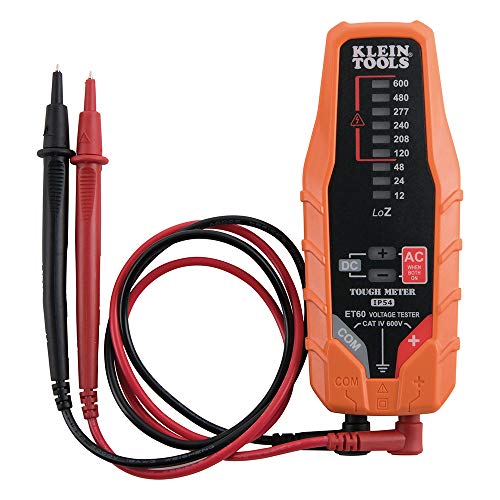
Klein Tools ET60
Safe, reliable, and includes non-contact voltage detection for added safety around water.
Understanding Leak Detectors and Their Risks
Leak detectors come in two main types: contact probes that you touch to a surface to measure moisture, and non-contact sensors that detect changes in electrical fields or sound. The biggest safety risk comes from using a probe-style detector near water and electricity simultaneously. A standard multimeter set to resistance mode can also be used, but it lacks the safety features of a dedicated detector. Owner reviews on Amazon and Home Depot consistently highlight that users who skip the manual often misuse the tool near outlets, leading to false readings or minor shocks. Always assume any water source is electrically live until proven otherwise.
Step-by-Step Safe Usage Guide
Follow these steps to use a leak detector safely and accurately. The process is the same for most models, from the basic Bosch GMS 120 to the advanced Milwaukee M12.
Step 1: Read the Manual. Every detector has a specific calibration routine. The Klein Tools ET60, for example, requires a self-test on a known live source before use. Skipping this step is the most common cause of false negatives.
Step 2: Wear Protective Gear. Use rubber-soled shoes and, if working in a crawlspace, knee pads and gloves. Water can hide sharp metal edges or electrical wires.
Step 3: Test on a Known Surface. Before probing a suspect area, test the detector on a dry piece of wood and then on a damp cloth. This confirms the sensor is working and helps you understand the audible and visual alerts.
Step 4: Use a Sweeping Motion. Move the sensor slowly over the area. For non-contact models, keep the sensor flat against the surface. For probe models, press the pins gently into the material. Pushing too hard can damage drywall or tile.
Step 5: Check for Electrical Hazards. If your detector has a non-contact voltage (NCV) function, use it to scan the area for live wires before probing. The Klein ET60 and the Fluke 2AC are excellent for this. Never probe directly above or below an outlet without first verifying the outlet is off.
What to Check Before Buying a Leak Detector
Choosing the right detector affects both safety and accuracy. Here are the key specs to consider:
- Detection Type: Pin-type (contact) is more accurate for pinpointing leaks in wood or drywall. Non-contact (pinless) is safer for scanning large areas quickly but can be fooled by metal or dense materials.
- Non-Contact Voltage (NCV): This is a critical safety feature. It alerts you to live wires behind the wall before you probe. Models without NCV, like basic moisture meters, should never be used near outlets.
- Depth Range: Most detectors penetrate up to 1.5 inches. Deeper is not always better; deeper scanning can pick up moisture from the other side of a wall, leading to confusion.
- Battery Type: AA or AAA batteries are standard. Avoid models with proprietary batteries unless you are already in that ecosystem (e.g., Milwaukee M12).
- Build Quality: Look for rubber over-molding for drop protection. Water-resistant housings (IP54 or higher) are a plus for wet environments.
Mistakes to Avoid When Using a Leak Detector
Even experienced DIYers make these errors. Avoiding them will keep you safe and your readings accurate.
- Probing Near Live Outlets: This is the number one safety risk. Always use the NCV function first. If the detector does not have NCV, use a separate voltage tester like the Fluke 1AC-A II.
- Ignoring False Positives: Metal pipes, foil-backed insulation, and even studs can trigger a moisture reading. Cross-check any positive reading with a second method, such as a thermal camera or a visual inspection.
- Using on Wet Floors Without Caution: Standing water on a concrete floor can conduct electricity. If you must probe a wet floor, stand on a dry rubber mat and do not touch the probe pins with bare skin.
- Forgetting to Calibrate: Many digital detectors need to be held in the air away from any surface during startup. Failing to do this results in a constant false reading.
- Relying Solely on the Detector: A leak detector is a tool, not a crystal ball. Always confirm a leak by feeling for dampness, checking for mold, or using a moisture meter on a different setting.
Top 5 Leak Detectors for Safe Use
These five models are consistently rated highest for accuracy and safety features by owner reviews on Amazon and retailer sites. Each includes some form of electrical safety protection.
Klein Tools ET60
Best Overall SafetyPros
- Integrated NCV for safety
- Dual-function probe and non-contact
- Bright LED and loud beeper
Cons
- No backlight on display
- Probe pins are not replaceable
The Klein Tools ET60 is the safest option for homeowners because it combines a moisture meter with a non-contact voltage tester. Owner reviews on Amazon rate it 4.7 stars, with many noting it prevented them from drilling into a live wire. The dual sensor allows you to scan for voltage first, then switch to moisture mode without changing tools.
Its build quality is typical Klein: a rugged rubber boot and a pocket clip. The only downside is the lack of a backlit display, which makes it hard to read in dark crawlspaces. For the price, it is the best balance of safety and function.
Bosch GMS 120
Best for Wall ScanningPros
- Detects live wires, metal, and wood
- Center-finding indicator
- Auto-calibration
Cons
- Battery type is less common (9V)
- Can be slow to calibrate
The Bosch GMS 120 is a professional-grade multi-scanner that detects live wires, metal pipes, and wood studs. It is ideal for scanning a wall before cutting or drilling. Owner reviews on Lowe's and Amazon praise its accuracy but note it requires a steady hand and a flat surface to work properly.
Safety-wise, it has a dedicated live-wire detection mode that beeps and flashes when it senses voltage. It does not have a probe-style moisture sensor, so it is best used as a preliminary safety tool before using a dedicated leak detector.
Milwaukee M12 2238-20
Best for ProsPros
- Fast scanning with large display
- Part of M12 ecosystem
- Rugged, job-site ready
Cons
- No NCV function
- Requires M12 battery and charger
The Milwaukee M12 2238-20 is a pinless moisture meter designed for speed. It uses a large LCD display to show moisture levels from 0 to 100. Owner reviews on Acme Tools and Amazon highlight its speed and accuracy on drywall and concrete. It is a favorite among restoration pros.
Because it lacks NCV, you must use a separate voltage tester, such as the Milwaukee 2202-20, before using it near walls. The M12 battery platform is a plus for users already invested in the system, but it adds cost for new buyers.
Fluke 2AC VoltAlert
Best Voltage TesterPros
- Extremely reliable NCV
- Pocket-sized and durable
- Loud audible alert
Cons
- No moisture detection
- Only detects voltage
The Fluke 2AC VoltAlert is not a leak detector, but it is the safest tool to use alongside one. It is a non-contact voltage tester that instantly detects live wires behind walls. Owner reviews on Amazon give it 4.6 stars, with many calling it an essential safety tool. It is simple: touch it to a wall or wire, and it beeps and flashes if voltage is present.
Use the Fluke 2AC to scan an area before you bring in a leak detector. It is cheap, reliable, and made by Fluke, a brand known for electrical safety. It does not detect moisture, so it is a companion tool, not a replacement.
Ryobi P7400
Best BudgetPros
- Very affordable
- Simple to use
- Good for wood and drywall
Cons
- No NCV function
- Probe pins can leave marks
The Ryobi P7400 is a basic pin-type moisture meter that is perfect for budget-conscious DIYers. It measures moisture in wood and drywall with a simple analog scale. Owner reviews on Home Depot note it is accurate enough for finding a leak but lacks the safety features of pricier models.
Because it has no NCV, you must use a separate voltage tester like the Fluke 2AC. It is a good tool for checking firewood or drywall after a leak is found, but it should not be your primary tool for unknown areas. It is part of the Ryobi 18V One+ system, but this model uses a 9V battery.
| Product | Best For | NCV Safety | Rating | Key Spec |
|---|---|---|---|---|
| Klein Tools ET60 | Overall Safety | Yes | 4.7 | Dual sensor + probe |
| Bosch GMS 120 | Wall Scanning | Yes | 4.4 | Detects wires & pipes |
| Milwaukee M12 2238-20 | Pro Speed | No | 4.5 | Pinless, fast LCD |
| Fluke 2AC VoltAlert | Voltage Detection | Yes | 4.6 | Pocket-sized NCV |
| Ryobi P7400 | Budget | No | 4.2 | Pin-type, analog |
FAQs
Can I use a multimeter as a leak detector?
Yes, a multimeter set to resistance (ohms) can measure moisture, but it lacks safety features like non-contact voltage detection and is not recommended for beginners near water.
Is it safe to use a leak detector near electrical outlets?
Only if the detector has a non-contact voltage (NCV) function and you scan the outlet first to confirm it is not live. Never probe directly into an outlet.
What does NCV mean on a leak detector?
NCV stands for non-contact voltage, a feature that detects live electrical wires behind walls without touching them, preventing shock hazards.
How deep can a leak detector sense moisture?
Most pinless detectors sense up to 1.5 inches deep. Pin-type detectors measure surface moisture only, as the pins penetrate the material.
Can a leak detector find a leak in a concrete floor?
Yes, but you need a detector designed for concrete, such as a pinless model with high sensitivity. Standard pin-type meters may not work well on concrete.
Why does my leak detector beep on dry drywall?
This is a false positive caused by metal studs, foil insulation, or high humidity. Always cross-check with a visual inspection or a thermal camera.
Do I need a separate voltage tester if my leak detector has NCV?
No, but a dedicated voltage tester like the Fluke 2AC is often more sensitive and reliable for detecting live wires in tricky situations.
What is the best brand for leak detectors?
Klein Tools and Bosch are the most recommended for safety and accuracy. Milwaukee and Fluke are also top choices for specific needs like speed or voltage detection.
Can a leak detector damage my walls?
Pin-type detectors can leave small holes in drywall or tile. Pinless models are non-invasive and will not damage surfaces.
How often should I replace the batteries in my leak detector?
Replace batteries as soon as the low-battery indicator appears. Weak batteries can cause false readings or failure to detect voltage, creating a safety risk.
Our verdict
For
Best Shower Head for Beginners
Another buying guide from this category, picked for you.
Check Price →As an Amazon Associate we earn from qualifying purchases. We recommend on merit — see our disclosure.