Best Ash Vacuum for Wood Stoves and Fireplaces
Cleaning out a wood stove, fireplace, or pellet stove produces extremely fine ash that a regular shop vac will blow straight back into the room, and that can smoulder if any warm embers are still buried in it. A dedicated ash vacuum uses a metal canister, a heat-resistant hose, and a two-stage filter built for that dust. Below are the ash vacs worth considering, with real capacities rather than the oversized numbers you often see quoted.
Quick answer
The PowerSmith PAVC101 is the ash vacuum most people should buy: a 10-amp motor, an all-metal canister of roughly 3 gallons, a heat-resistant hose, and a two-stage filter with a HEPA-rated cartridge. If you clean less often and want to spend less, the Snow Joe ASHJ201 covers the same job with a smaller 4.8-amp motor. Neither one, and no consumer ash vac, is safe on live or glowing embers.
Why trust ToolBuyerHub
- Compared on published manufacturer specs
- Tank material and filter stages checked
- Safety limits taken from the makers' own guidance
- Build quality & warranty checked
- Brand reliability
- No fake hands-on claims
Research updated August 2026.
PowerSmith PAVC101
The best all-round balance of suction, filtration, and an all-metal body for regular stove and fireplace cleanup.
| Product | Best For | Motor | Tank | Price |
|---|---|---|---|---|
| PowerSmith PAVC101 | Overall pick | 10 Amps | ~3 gal metal | Check |
| Snow Joe ASHJ201 | Occasional cleanups, lower price | 4.8 Amps | ~4.8 gal metal | Check |
Note: ash vacuums are deliberately small. A 10 or 12-gallon drum belongs to a wet/dry shop vac, which is the wrong tool for ash. If you see a "10-gallon ash vac" listed, it is almost always a general shop vac being marketed for ash duty.
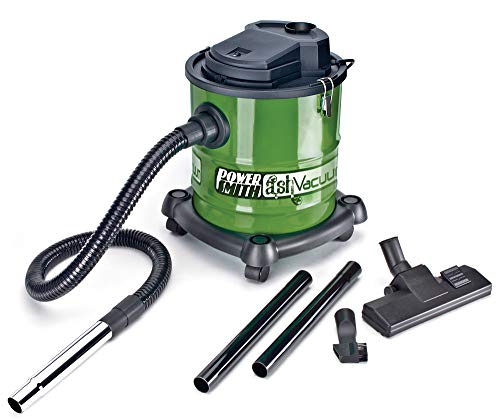
PowerSmith PAVC101
Best OverallPros
- Two-stage filtration holds onto the very fine ash dust
- All-metal canister and metal hose end, not plastic
- 10-amp motor is strong for a vac this size
Cons
- Small tank by shop-vac standards, so you empty it more often
- Filters need tapping out regularly or suction drops fast
The PowerSmith PAVC101 is the ash vacuum most stove owners end up with. The metal canister holds roughly 3 gallons, which sounds small until you remember that ash is dense and that a full bucket of it is heavy and awkward. The two-stage setup, a pre-filter sleeve over a HEPA-rated cartridge, is the part that matters most: fine ash is what escapes cheaper vacuums and settles across the room hours after you have finished.
The 10-amp motor gives it real suction for a machine this compact, and the metal hose end and metal wand mean the parts nearest the ash are not plastic. It is designed for cold ash. PowerSmith, like every other ash vac maker, tells you not to pick up glowing embers or anything still hot, and that instruction is not a formality.
Snow Joe ASHJ201
Best BudgetPros
- Cheaper than the PowerSmith and easy to live with
- Slightly larger canister than most compact ash vacs
- Light enough to carry one-handed to the hearth
Cons
- 4.8-amp motor is noticeably weaker than a 10-amp unit
- Slower going on deep, packed ash beds
The Snow Joe ASHJ201 is the sensible option if you light a fire at weekends rather than heating the house with wood all winter. The canister is metal and a little larger than the PowerSmith's, so you empty it less often, but the 4.8-amp motor does less work per pass. On a light layer of cold ash that is fine. On a packed firebox you will notice you are working slower.
Treat the filters the same way as on any ash vac: tap the pre-filter out after each use and wash it when it stops shaking clean. Ash blinds a filter faster than almost any other dust, and a clogged filter is the usual reason an ash vac "loses suction" a season in.
What to check before buying an ash vacuum
Canister material comes first. Metal is the standard for ash vacuums because ash holds heat far longer than people expect, and a plastic drum can soften or melt if something warm gets pulled in. The hose and wand matter too: a proper ash vac uses a heat-resistant hose and usually a metal nozzle, which is exactly what a general shop vac does not have.
Filtration is the second thing to check. Ash particles are fine enough to pass straight through a standard shop vac filter and get thrown out of the exhaust, which is why a room can look dustier after vacuuming than before. Look for a two-stage arrangement, a coarse pre-filter protecting a fine or HEPA-rated cartridge.
Capacity is where most listings mislead. Real ash vacuums run roughly 3 to 5 gallons, and that is deliberate. Ash is heavy, and a bigger drum mostly means a container you cannot lift once it is full. A 10 or 12-gallon "ash vac" is a wet/dry shop vac wearing a different label.
Motor amperage is a rough guide to suction. Around 10 amps is strong for this class; 4 to 5 amps is adequate for lighter, occasional use. Amps measure electrical draw rather than airflow, so use it as a comparison between similar machines rather than a performance rating.
Mistakes to avoid when buying and using an ash vacuum
The biggest one is reaching for a wet/dry vacuum. Cordless and corded shop vacs, including popular models like the DeWalt DCV581H, are built for sawdust, water, and workshop debris. They have plastic tanks and standard hoses and are not rated for ash. They are excellent tools, just not for this job.
The second is vacuuming too soon. Ash insulates embers so well that a firebox can still hold live coals a day after the fire looks dead. Wait until the ash is completely cold, at least 24 hours after the last fire, and longer for a deep bed in a stove that has been running continuously. No consumer ash vacuum is designed to pick up hot embers, whatever the marketing implies.
The third is skipping filter maintenance. Ash clogs filters faster than ordinary dust. Tap the pre-filter out after every use, wash it when tapping stops working, let it dry fully before refitting, and replace the fine cartridge when it stays grey after cleaning.
FAQs
Can I use a regular shop vac to clean ash?
No. Standard shop vacs have plastic tanks, ordinary hoses, and filters that let fine ash straight through into the room. They also give you no protection if a warm ember is buried in the ash. Use a vacuum sold specifically as an ash vacuum.
How often should I clean the filter on my ash vacuum?
Tap the pre-filter out after every use and wash it when tapping no longer restores airflow. Let it dry completely before refitting. Replace the fine or HEPA-rated cartridge when cleaning no longer brings the suction back, which for regular winter use is usually once a season or so.
What size ash vacuum do I need?
Three to five gallons covers almost everyone, including large fireplaces. Ash is heavy, so a bigger drum mainly means a container that is hard to carry out to the bin. If you are cleaning several stoves, it is easier to empty a small vac twice than to wrestle a full 10-gallon drum.
Is a HEPA filter necessary for an ash vacuum?
It is the single most useful upgrade. Ash dust is fine enough to stay airborne for a long time, and a HEPA-rated cartridge behind a pre-filter is what keeps it inside the machine rather than in the room.
Can I vacuum hot ash with these machines?
No. Consumer ash vacuums are for cold ash. Wait at least 24 hours after the last fire, and longer for a deep ash bed, and check with a metal shovel that nothing is still glowing underneath before you start.
Is there a good cordless ash vacuum?
There is no mainstream cordless model built to ash-vac standards, which is why the picks here are corded. Cordless wet/dry vacs are not a substitute: they lack the metal canister and heat-resistant hose that make an ash vac appropriate for the job.
How long does an ash vacuum last?
A metal-bodied ash vac used a few times a week through the heating season typically lasts several years. What kills them early is neglected filters rather than motor failure, so the maintenance routine matters more than the brand.
Are plastic ash vacuums safe?
They are the weaker option. Plastic can soften or melt if warm ash is picked up, and ash retains heat far longer than it looks like it should. A metal canister is worth the small price difference.
Can I use an ash vacuum for other debris?
It will handle dry material like pellet dust, soot, and grill ash. It is not a wet vacuum, so do not use it on liquids, and it is not a substitute for a shop vac on heavy workshop debris, which will clog the fine filters quickly.
Can an ash vacuum clean a pellet stove?
Yes, and pellet stoves are one of the best uses for one, since the fine fly ash inside the burn pot and heat exchanger is exactly what a shop vac spreads around. Let the stove cool fully first, and follow the manufacturer's cleaning schedule for the exchanger tubes.
Our verdict
The PowerSmith PAVC101 is the one to buy for regular wood stove or fireplace cleanup: a 10-amp motor, an all-metal canister, and two-stage filtration that actually holds fine ash. The Snow Joe ASHJ201 is the cheaper alternative for occasional fires, trading motor power for price. Whichever you choose, treat "cold ash only" as a hard rule rather than a suggestion.