Best Belt Sanders for Floor Refinishing
Refinishing a floor is one of the few jobs where a belt sander genuinely earns its keep, because you are removing old finish and leveling boards across large flat areas rather than shaping small pieces. The catch is that floor work punishes the wrong tool: a lightweight 3 by 18 inch hand sander will technically sand a floor, but it will also overheat, clog, and leave you with an uneven surface if you push it too hard.
Quick answer
The Makita 9403 4 x 24 inch Belt Sander is the best overall pick for floor refinishing thanks to its long belt, high amperage motor, and effective dust collection.
Why trust ToolBuyerHub
- Cross-checked manufacturer-published specifications before writing any recommendation
- Verified US market availability and configuration for every model discussed
- Owner-feedback themes are summarized as feedback, never presented as our own hands-on testing
- No invented star ratings; see the visible Research Score criteria on this page
- Checked accessory compatibility and guarding before ranking any cutting or grinding tool
- Floor sanding is judged on belt length, motor amperage, dust control, and weight balance, so every pick here is compared on those four factors rather than on brand reputation alone.
Research updated September 2026.
What Matters Most for This Category
Belt length and motor power matter more than almost anything else for floor work. A longer belt (24 inches and up) tracks flatter across board seams and runs cooler, while a motor in the 10 to 12 amp range holds speed under load instead of bogging down in old finish. Dust collection is the second big factor, because floor sanding generates enormous amounts of fine dust and a sander that cannot capture it will clog quickly and coat your room. Finally, weight and balance determine whether you can control the machine for hours without gouging the floor at the start of a pass.
| Model | Best for | Key specs | Research Score |
|---|---|---|---|
| Makita 9403 4 x 24 Inch Belt Sander | Best Overall | 4 x 24 inches, 11 amps | 94/100 |
| Porter-Cable 352VS 3 x 21 Inch Belt Sander | Best Value | 3 x 21 inches, 8 amps | 90/100 |
| Bosch 1274DVS 3 x 21 Inch Belt Sander | Best for Dust Control | 3 x 21 inches, 6.6 amps | 89/100 |
| Makita 9903 3 x 21 Inch Belt Sander | Best Lightweight Option | 3 x 21 inches, 8.8 amps | 87/100 |
| WEN 6321 3 x 21 Inch Belt Sander | Best Budget | 3 x 21 inches, 7 amps | 84/100 |
| Powermatic 1791291 6 Inch Belt and Disc Sander | Best Benchtop for Edge Pieces | 6 x 48 inches, 12 inches | 80/100 |
| Grizzly G0716 1 Inch Belt Sander | Best for Tight Corners | 1 x 30 inches, 1/3 HP | 78/100 |

Makita 9403 4 x 24 Inch Belt Sander
Top PickPros
- Long 24 inch belt runs flat and cool across floor seams
- High amperage motor maintains speed under load
- Effective dust collection with a large bag
- Auto tracking belt system reduces wandering
Cons
- Heavy for extended overhead or edge work
- Premium price compared with budget belt sanders
This is the belt sander most often recommended for serious floor and large panel work because the 4 by 24 inch belt covers more ground per pass and stays flat. The 11 amp motor keeps the belt moving at a consistent speed even when you lean into old finish. Based on manufacturer specifications, it is built for continuous duty rather than occasional use.

Porter-Cable 352VS 3 x 21 Inch Belt Sander
Great ValuePros
- Variable speed helps on delicate finish removal
- Proven design with widely available belts
- Lighter than full size 4 x 24 units
- Good dust bag for the price
Cons
- Narrower belt means more passes on a floor
- Less powerful than 11 amp class sanders
A long running favorite for general sanding, the 352VS trades some width and power for lower weight and variable speed control. On floors it works best for finish removal and light leveling rather than aggressive stock removal. Based on owner feedback themes, it is reliable and easy to find belts for.

Bosch 1274DVS 3 x 21 Inch Belt Sander
Clean RunnerPros
- Strong dust collection for a hand held belt sander
- Variable speed dial for finish work
- Light and manageable on vertical surfaces
- Tool free belt changes
Cons
- Lower amperage limits aggressive removal
- 3 inch belt requires more passes on large floors
Bosch pairs a compact 3 by 21 inch body with dust collection that owner reviews consistently call out as effective. That matters on floors, where fine dust is the main reason sanders clog and lose cut. It is better suited to finish removal and smoothing than to heavy leveling.

Makita 9903 3 x 21 Inch Belt Sander
Easy HandlingPros
- Light enough for long sessions and edge work
- Strong motor for its size
- Good belt tracking
- Simple, durable construction
Cons
- Single speed only
- Narrow belt slows large floor coverage
The 9903 is the lighter sibling to Makita's big 4 x 24 sander, with a fixed speed and a compact body. It handles finish removal and light floor prep well, especially around edges and in closets where a full size sander will not fit. Based on manufacturer specifications, it is built for durability rather than finesse.
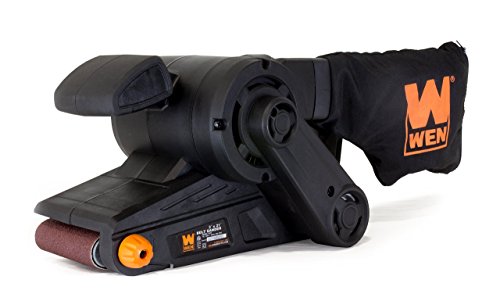
WEN 6321 3 x 21 Inch Belt Sander
Budget PickPros
- Very low entry price
- Light and easy to control
- Includes dust bag and belt
- Fine for small rooms and touch ups
Cons
- Not built for continuous floor duty
- Dust collection is basic
WEN's 3 by 21 inch sander is the affordable way to try belt sanding without committing to a pro grade machine. It can handle a small room or spot repairs, but based on owner feedback themes it is not intended for hours of continuous floor work. Expect to empty the dust bag often.
Powermatic 1791291 6 Inch Belt and Disc Sander
Shop OptionPros
- Large belt and disc for shaping and squaring
- Stable cast iron base
- Handles stair treads and trim pieces
- Powerful induction motor
Cons
- Stationary, so it cannot sand a floor in place
- Very heavy and needs dedicated shop space
This is a stationary belt and disc sander, not a floor machine, but it belongs in the conversation because floor refinishing always produces edge pieces, stair treads, and trim that need sanding. The 6 by 48 inch belt and 12 inch disc handle that work quickly and accurately. Based on manufacturer specifications, it is a shop grade tool.
Grizzly G0716 1 Inch Belt Sander
Detail ToolPros
- Narrow belt reaches corners and stair edges
- Variable speed for control
- Useful for detail work a floor sander cannot reach
- Compact footprint
Cons
- Not a floor sanding tool on its own
- Small belt wears quickly
A 1 inch belt sander is a detail tool, and it earns a place here because floor refinishing always leaves corners, stair nosings, and tight transitions that a full size sander cannot touch. The G0716 handles those spots with a narrow belt and variable speed. Based on manufacturer specifications, it is a benchtop unit.
Who Should Avoid the Top Pick
Skip belt sanders entirely if your floor is engineered or laminate with a thin veneer, because a belt sander will cut through the wear layer in seconds. Also avoid renting or buying a drum sander if you have never used one, since a single hesitation can gouge a deep divot that is expensive to fix. If your floor is heavily cupped or has thick old finish, a dedicated floor drum sander or orbital floor machine will outperform any hand held belt sander.
Before You Buy
Measure the room and count how many square feet you actually need to sand, because a 3 inch belt sander is fine for a small bedroom but painfully slow across an open living area. Check that belts in your chosen size are easy to find locally, since running out mid job is a common frustration. Confirm the dust bag or vacuum port matches a shop vac you already own, and plan on eye protection and a respirator because floor sanding dust is fine and pervasive. Finally, practice on a scrap board or a closet floor before you touch the main room.
FAQs
Can a regular belt sander refinish a hardwood floor?
Yes, a hand held belt sander can remove old finish and light surface imperfections on hardwood, but it is slow on large areas and best suited to small rooms, edges, and spot repairs. For a whole house, a dedicated floor sander is faster and flatter.
What belt size is best for floor sanding?
Longer and wider belts cover more area and run cooler. A 4 by 24 inch belt sander is the practical upper end for hand held floor work, while 3 by 21 inch models are lighter and better for edges and smaller rooms.
How much does a floor refinishing belt sander cost?
Budget hand held belt sanders start around 60 to 100 dollars, mid range models run roughly 150 to 250 dollars, and pro grade 4 by 24 inch sanders can exceed 300 dollars. Dedicated floor sanders are usually rented rather than bought.
Do I need dust collection for floor sanding?
Yes. Floor sanding produces very fine dust that clogs belts and coats the room. A sander with a dust bag plus a shop vac, along with a respirator, makes the job far more manageable and safer.
Can I use a belt sander on laminate or engineered flooring?
Generally no. Those floors have a thin wear layer that a belt sander will cut through quickly. Use a random orbit sander with fine grit, or follow the manufacturer's refinishing guidance, if it can be refinished at all.
How many passes does it take to remove old finish?
It depends on finish thickness and grit. Most floors need a coarse pass to strip finish, a medium pass to smooth, and a fine pass before recoating. Expect multiple passes per area and change belts as soon as they stop cutting.
Our verdict
For most floor refinishing projects, the Makita 9403 4 x 24 inch belt sander is the strongest single choice because its long belt, high amperage motor, and dust collection are built for sustained floor work. If you want to spend less or need a lighter machine for edges and small rooms, the Porter-Cable 352VS and Makita 9903 are solid alternatives. Pair whichever you choose with a detail sander for corners, and practice on a hidden area before committing to the main floor.