Best Brush Cutter Under $100: What That Budget Actually Buys
Search "brush cutter under $100" and you will get pages of string trimmers. That is not a bait and switch, it is the market: a true brush cutter runs a steel blade on a straight shaft with a bike handle and a harness, and new units start closer to $200. Under $100 you are buying a line trimmer, and a good one will still clear tall grass, weeds and soft green overgrowth. Here is what is actually worth buying at that price, and where the line gets drawn.
Quick answer
The best pick under $100 is the BLACK+DECKER BESTA510, a 6.5 amp corded trimmer with a 14 inch swath and an automatic feed spool, so you never bump the head. If you want the widest cut for the money, the WORX WG119 covers 15 inches on 5.5 amps. Be clear on the limits though: none of these are brush cutters. For brambles with woody stems or saplings thicker than a pencil, you need a blade capable unit such as a gas straight shaft trimmer with a brush blade, and that means budgeting $200 or more.
Why trust ToolBuyerHub
- Specs checked against manufacturer listings (amps, volts, cut width)
- Corded vs cordless trade-offs compared
- Line diameter and feed system verified
- Availability checked on Amazon.com
- Category limits stated honestly, no overselling
- No fake hands-on claims
Research updated August 2026.
BLACK+DECKER BESTA510
Simple corded trimmer and edger that just keeps running, no batteries to manage.
| Product | Best For | Power | Cut Width | Rating |
|---|---|---|---|---|
| BLACK+DECKER BESTA510 | Overall, small to mid yards | 6.5 amp corded | 14 in | 4.4/5 |
| WORX WG119 | Widest cut for the money | 5.5 amp corded | 15 in | 4.2/5 |
| CRAFTSMAN CMESTE920 | Edging paths and beds | 6.5 amp corded | 14 in | 4.1/5 |
| BLACK+DECKER LSTE523 | Cordless around the $100 mark | 20V MAX battery | 12 in | 4.2/5 |
| Sun Joe TRJ13STE | Cheapest that is still worth owning | 4 amp corded | 13 in | 4.0/5 |

BLACK+DECKER BESTA510
Best OverallPros
- Automatic feed spool, no bumping the head
- Converts to a wheeled edger in seconds
- Unlimited runtime on an extension cord
- Light enough for long sessions
Cons
- Cord limits how far you can roam
- 0.065 in line is grass and weed duty only
The BESTA510 is the default answer at this price. The 6.5 amp motor is at the top of what corded trimmers in this class offer, and the 14 inch swath is wide enough to finish an average suburban lot without feeling slow. The AFS automatic feed spool pays out line as it wears instead of making you tap the head on the ground, which is the single most annoying part of cheap trimmers.
It also flips into an edger with a guide wheel, so you can cut a clean line along a driveway or sidewalk without buying a second tool. What it will not do is cut brush. The 0.065 inch line handles grass, dandelions, and soft weed stalks. Anything woody will just fray the line.
WORX WG119
Widest Cut Under $100Pros
- 15 in swath covers ground fast
- Head rotates 90 degrees to edge
- Adjustable handle and shaft length
- Very low price for the cut width
Cons
- Slightly less motor than the 6.5 amp models
- Wider head is clumsier around tight beds
The WG119 trades a little motor for the widest cutting swath in this roundup. On open grass that is a real time saver, because 15 inches per pass adds up over a big yard. The shaft telescopes and the auxiliary handle slides, so tall and short users can both get a comfortable stance.
The head rotates 90 degrees for edging, and there is a guard wheel to keep the line off concrete. Around tight flower beds and fence posts the wide head is less precise than a 12 or 13 inch trimmer, so if your yard is mostly awkward corners, pick something narrower.
CRAFTSMAN CMESTE920
Best for EdgingPros
- Strong 6.5 amp motor
- Dedicated edger conversion with a guide wheel
- Solid handle and guard for the price
- Widely stocked, easy to find parts
Cons
- Heavier in the hands than the BLACK+DECKER
- Cord retainer is basic
Craftsman's corded trimmer and edger matches the BESTA510 on motor size and cut width, and its edger conversion is the part people actually keep using. Drop the guide wheel, rotate the head, and you can walk a straight line along a driveway without kneeling down with a spade.
It feels a bit more nose heavy than the BLACK+DECKER, which you notice after twenty minutes. In exchange you get a sturdier feeling guard and handle. If you already own Craftsman gear and like the ecosystem, there is no reason to look further at this price.
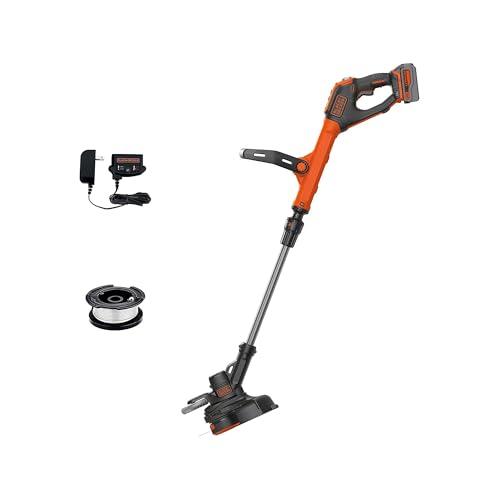
BLACK+DECKER LSTE523
Best Cordless Near $100Pros
- No cord, go anywhere in the yard
- Two speed control trades power for runtime
- Ships with two 20V batteries
- Converts to an edger
Cons
- Runtime is short, roughly 20 to 30 minutes of mixed use per battery
- Narrower 12 in swath
- Often sits right at or just above $100
This is the cordless option that gets closest to the budget without leaving you battery-less. The LSTE523 bundle includes two 20V MAX batteries, which matters because a bare tool plus a battery and charger usually costs more than the kit. The EASYFEED button pays out line on demand instead of bump feeding.
The two speed switch is the useful feature. Low speed stretches runtime for ordinary grass, high speed gives you the torque for thicker weeds. Realistically you get 20 to 30 minutes of mixed cutting per pack, so swap batteries and expect to recharge for a large yard. Price on this one moves around, so check it before you commit to the under $100 plan.

Sun Joe TRJ13STE
Cheapest Worth OwningPros
- Costs a fraction of the others
- Automatic line feed at a bargain price
- Light and easy for smaller users
- Telescoping shaft
Cons
- 4 amps bogs down in thick, wet grass
- Mostly plastic construction
- Not a tool for a big yard
At 4 amps the TRJ13STE is the weakest motor here, and you will feel it the moment you push into a dense clump of wet grass. Take lighter passes and it copes fine. For a small yard, a townhouse strip, or as a second trimmer kept in the shed, the price is hard to argue with.
The automatic feed head is a genuinely nice inclusion at this price, since most ultra cheap trimmers use a manual or bump spool. The build is plastic and it will not survive being dropped off a truck, but treated normally it does the job it is sold for.
Brush cutter vs string trimmer: the difference that matters
A string trimmer spins nylon line. A brush cutter spins a steel blade, usually a three tooth grass blade or an 80 tooth circular blade, on a rigid straight shaft, and it comes with a harness because the tool is heavy and the blade can kick back. That blade is what lets it cut woody stems, saplings and dense brambles. No amount of extra motor power turns nylon line into a blade.
The practical test: if the stems bend when you push them, line will cut them. If the stems snap or stay rigid, you need a blade. Grass, nettles, dandelions, soft weeds and green bramble tips are line territory. Old woody bramble canes, blackberry crowns and finger thick saplings are not.
What to check before buying under $100
Start with the power source. Corded gives you the most sustained motor power per dollar and never runs out mid job, which is why four of the five picks here plug in. Cordless is worth the compromise only if you have no outdoor outlet or a very small yard, and only if the price includes a battery. A bare tool plus a battery and charger will blow past $100 every time.
Then look at cut width and line diameter. A 14 or 15 inch swath finishes a yard noticeably faster than 12 inches. Line diameter matters more than most listings admit: 0.065 inch is standard on budget corded units and suits grass, while 0.080 inch and up cuts heavier weeds and lasts longer, but only if the head is rated for it. Finally, prefer automatic or push button feed over bump feed. It is the feature owners are gladdest they paid for.
Mistakes to avoid
The most expensive mistake is buying a $95 trimmer to clear an overgrown lot full of woody brush, then buying a real brush cutter three weeks later anyway. Match the tool to the vegetation before you spend anything. If you only need to clear brush once, renting a gas brush cutter for a day is usually cheaper than owning the wrong tool.
Second, do not assume a cordless deal is a deal. Check whether the listed price includes the battery and charger. Third, do not ignore line thickness when you restock. Fitting line thicker than the head is rated for causes the spool to jam and the motor to overheat. Check the manual for the diameter, then buy that.
FAQs
Can any brush cutter under $100 actually cut brambles?
Not honestly. Under $100 you are buying a nylon line trimmer, which cuts green bramble tips but frays on woody canes. A blade capable brush cutter starts around $200 for a gas straight shaft unit with a grass blade.
Is corded or cordless better under $100?
Corded, in almost every case. You get more sustained motor power per dollar and unlimited runtime. Cordless only wins if you have no outdoor outlet or a very small yard, and only when the battery is included in the price.
What is the best string trimmer under $100 overall?
The BLACK+DECKER BESTA510. A 6.5 amp motor, a 14 inch swath and an automatic feed spool cover most suburban yards without any of the usual budget annoyances.
What cutting width do I need?
Twelve inches is fine for a small yard or lots of tight corners. Fourteen to fifteen inches finishes open lawn noticeably faster but is clumsier around beds and posts.
How long does a cordless trimmer run on one charge?
Roughly 20 to 30 minutes of mixed cutting on a single 20V pack at this price. High speed and thick grass shorten that considerably, which is why two battery kits are worth seeking out.
What line diameter should I buy?
Use the diameter in the manual, typically 0.065 inch on budget corded models. Thicker 0.080 inch line cuts heavier weeds but jams the spool and strains the motor if the head is not rated for it.
Is automatic feed better than bump feed?
For most people, yes. Automatic and push button feed heads pay out line without stopping to tap the head on the ground. Bump feed is more forgiving of line tangles but slower to use.
Can I edge my lawn with one of these?
Yes. The BESTA510, WG119 and CMESTE920 all rotate the head for edging, and two include a guide wheel to keep the line off concrete.
Are trimmers this cheap durable?
From the established brands here, yes, for normal homeowner use. They are plastic bodied and will not tolerate abuse, but a few hours of trimming a month is well within what they are built for.
Should I rent instead of buying?
If your job is a one time clearing of heavy overgrowth, rent a gas brush cutter for a day. Buying an underpowered trimmer for that job wastes the money twice.
Our verdict
Under $100 the honest recommendation is a corded string trimmer, and the BLACK+DECKER BESTA510 is the one to buy: 6.5 amps, a 14 inch swath, automatic line feed and an edger mode. Take the WORX WG119 if you want the widest cut, the CRAFTSMAN CMESTE920 if edging is the main job, and the BLACK+DECKER LSTE523 only if a cord is genuinely impossible. If your problem is woody brush rather than tall grass, stop shopping in this price bracket. Save up for a blade capable brush cutter or rent one for the weekend.