Best Cabinet Door Bumpers
Thickness is the only specification that really matters on a cabinet door bumper, because the bumper sets how far the door stands off the frame. Too thick and the door no longer sits flush, which on a run of cabinets is immediately visible. Too thin and it does nothing.
Worth knowing if you have soft close hinges: the hinge already controls the closing speed, so the bumper is not there to cushion impact. Its job becomes stopping the door face touching the frame, taking up a small misalignment, and killing the last click of contact noise. That changes which bumper you want.
Quick answer
For most cabinets, 3M SJ5302 clear Bumpon pads are the right choice, thin enough to keep doors flush and with adhesive that actually stays put. Go to the thicker 3M SJ5312 if you need to take up a gap. Slipstick bumpers are the purpose-made cabinet option, and SoftTouch foam is the quietest on an older cabinet with no soft close.
Why trust ToolBuyerHub
- Every bumper here is a named brand sold on Amazon US, checked against the live listing
- Specifications come from manufacturer and listing data, not from guesswork
- Owner-feedback themes are summarized as feedback, never as our own hands-on testing
- No invented star ratings; the Research Score criteria are visible on each pick
- Thickness and diameter are stated for each pick, because those decide door gap and contact area
- The fact that this category is dominated by rotating generic sellers is said plainly rather than hidden
Research updated October 2026.
What Matters Most When Choosing Cabinet Bumpers
Thickness first. A bumper holds the door off the frame by its own height, so a 0.14 inch pad sets a noticeably larger gap than a thin 0.06 inch one. On a single door nobody notices; across a kitchen run, uneven gaps are the first thing you see. Diameter is next and affects how the load is spread and how visible the pad is: a 3 eighths to 1 half inch round pad is the usual choice, and a 3 quarter inch one is for heavier doors or where the door face is slightly bowed. Material decides the sound: clear rubber or urethane gives a soft click, while foam absorbs more and is quieter but compresses and eventually flattens. Then there is adhesive, which is where cheap bumpers fail, usually within a season on a painted or laminated surface. Finally, check what your hinges do, because with soft close hinges the bumper is about gap and noise, not cushioning.
| Model | Best for | Key specs | Research Score |
|---|---|---|---|
| 3M SJ5302 Clear Bumpon Protective Bumpers, 96 Pack | Keeping doors flush on a whole kitchen | Low, Clear polyurethane | 93/100 |
| 3M SJ5312 Clear Bumpon, 0.500 in Diameter x 0.140 in Thick | Taking up a gap or a bowed door | 0.500 in, 0.140 in | 90/100 |
| Slipstick Premium Cabinet Door Bumpers, 3/8 in Round Clear Adhesive Pads | A product designed for this exact job | 3/8 in, Cabinet door bumper | 91/100 |
| SoftTouch Assorted Round Self-Stick Noise Dampening Foam Cabinet Bumpers | Quietening cabinets with no soft close | Foam, Assorted round | 88/100 |
| Scotch Clear Adhesive Bumper Pads, 1/2 in Round, 40 Pack | A few doors on a small budget | 1/2 in, Clear rubber | 86/100 |
| Shepherd Hardware 9565 SurfaceGard Transparent Adhesive Bumper, 3/4 in | Heavy or warped doors | 3/4 in, Transparent vinyl | 85/100 |
| Super Sliders Gorilla Glue Clear Self-Stick Bumper Pads, 1/2 in Round | Surfaces where pads keep falling off | 1/2 in, Gorilla Glue backing | 87/100 |

3M SJ5302 Clear Bumpon Protective Bumpers, 96 Pack
Best OverallPros
- Low profile, so the door still sits flush rather than standing proud of the frame
- 3M adhesive is the real differentiator and stays stuck on painted and laminated surfaces
- Ninety six pads is enough for an entire kitchen with spares
Cons
- Thin profile will not take up a visible gap or a bowed door
- Clear polyurethane gives a softer click than foam but is not silent
The pad to use when you want the doors to look untouched. Bumper thickness directly sets how far the door stands off the frame, and a low profile pad keeps a kitchen run looking even, which is the thing people notice. Adhesive is the other half: cheap bumpers let go within a season on paint or melamine, and 3M is the brand whose adhesive does not. Ninety six covers a kitchen.

3M SJ5312 Clear Bumpon, 0.500 in Diameter x 0.140 in Thick
Best Thicker ProfilePros
- A 0.140 inch thickness takes up a real gap, which thin pads cannot
- A 0.500 inch diameter spreads contact on a slightly bowed or warped door
- Same 3M adhesive and clear polyurethane as the low profile version
Cons
- Thicker pads hold the door further off the frame, so use them consistently or gaps look uneven
- More visible than a low profile pad on a light coloured frame
The version to reach for when the door does not sit right. Old cabinets settle and doors bow slightly, and a thin pad cannot bridge the resulting gap, so the door rattles at one corner. A 0.140 inch pad does. The rule to follow is consistency: if you use thicker pads on one door, use them on every door in the run, or the differing gaps will be obvious.

Slipstick Premium Cabinet Door Bumpers, 3/8 in Round Clear Adhesive Pads
Best Purpose-MadePros
- Designed and sold specifically as a cabinet door bumper rather than a generic pad
- A 3/8 inch diameter is the right size for a cabinet door stile without being obvious
- Clear finish disappears against both light and dark frames
Cons
- Fewer pads per pack than the bulk 3M options, so a whole kitchen costs more
- Still a rubber pad, so it quietens rather than silences the close
Worth considering because the product is aimed at this job rather than adapted to it, and the sizing reflects that: a 3 eighths inch pad sits neatly on a cabinet stile without being visible when the door is open. Clear is the right finish choice since it works against painted white and dark wood equally. For a few doors this is the tidiest option; for a whole kitchen the 3M bulk packs are better value.
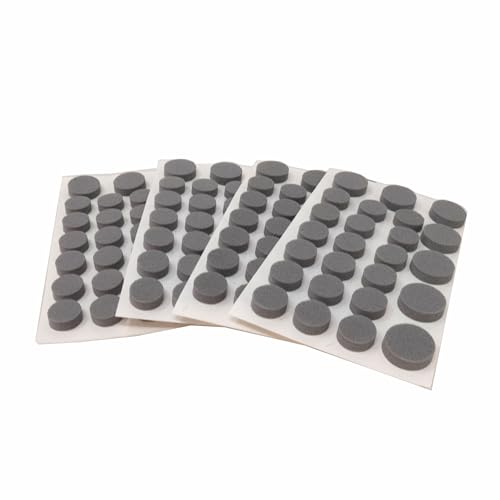
SoftTouch Assorted Round Self-Stick Noise Dampening Foam Cabinet Bumpers
QuietestPros
- Foam absorbs considerably more impact noise than rubber, which matters on cabinets without soft close
- Assorted sizes let you match the pad to the door and fix uneven gaps across a run
- Easy to trim or stack for an awkward door
Cons
- Foam compresses over time and eventually flattens, so it needs replacing
- Less durable than polyurethane in a kitchen where doors are used constantly
The right choice if the problem you are solving is noise rather than gap, and your hinges do not already soften the close. Foam deforms more on impact so it absorbs more energy, which is why it is quieter than a rubber pad. The trade is lifespan, because that same deformation eventually becomes a permanent flattening. Expect to replace them every few years on heavily used doors.

Scotch Clear Adhesive Bumper Pads, 1/2 in Round, 40 Pack
Best ValuePros
- Cheap, widely available and from a brand whose adhesive is dependable
- A 1/2 inch diameter suits most cabinet doors and furniture
- Forty pads covers a small kitchen or a few pieces of furniture
Cons
- General purpose furniture pads rather than cabinet specific, so sizing is less considered
- Rubber rather than foam, so less effective on noise
The sensible pick for a handful of doors or for mixed use around the house. These are general purpose bumper pads rather than a cabinet product, which mostly means the sizing is one-size-fits-most rather than chosen for a cabinet stile. The adhesive is the part that matters and Scotch is reliable there. For a whole kitchen, the bulk 3M packs work out cheaper per pad.

Shepherd Hardware 9565 SurfaceGard Transparent Adhesive Bumper, 3/4 in
Best Large DiameterPros
- A 3/4 inch diameter spreads load over a much wider area on a heavy or bowed door
- Shepherd is an established hardware brand with consistent product
- Larger contact area resists the pad peeling at one edge
Cons
- Clearly visible at this size, so it is wrong for a prominent frame
- Oversized for a typical cabinet door stile
Useful for the awkward cases rather than general use. A heavy solid door, or one with a noticeable bow, concentrates load on a small pad and peels it from one edge. A 3 quarter inch pad spreads that out and stays put. The downside is simply that you can see it, so keep these for inside faces, appliance panels and utility cabinets rather than a show kitchen.

Super Sliders Gorilla Glue Clear Self-Stick Bumper Pads, 1/2 in Round
Best AdhesionPros
- Gorilla Glue adhesive targets the one failure that affects every cheap bumper, letting go
- A 1/2 inch clear pad suits most cabinet and furniture applications
- Useful on melamine, laminate and painted surfaces where adhesion is poorest
Cons
- Strong adhesive makes clean removal harder and can mark a delicate finish
- Rubber pad, so noise reduction is modest compared with foam
The pick for the surfaces that defeat normal pads: melamine, laminate and some paints are slick enough that standard adhesive releases within months, usually leaving the pad stuck to the frame instead of the door. A stronger adhesive fixes that. Be aware it cuts both ways, since removing one later is more likely to lift a delicate finish, so test on an inside door first.
Thickness sets the door gap, so choose it first
A bumper holds the door off the frame by exactly its own height. A low profile pad of around 0.06 inch keeps the door effectively flush, while a 0.14 inch pad creates a gap you can see. Neither is wrong, but mixing them across a run of cabinets gives uneven gaps, which is the most noticeable result of a bumper job done carelessly. Decide what the job is first. If the door closes correctly and you only want to quieten it or stop the faces touching, go thin. If a door rattles, sits proud at one corner or has bowed, you need thickness to take that up, and then use the same thickness on every door in the run.
What changes if you have soft close hinges
A soft close hinge controls the last part of the closing arc, so the door is already arriving gently and a bumper is not needed to cushion impact. What a bumper still does is stop the door face contacting the frame, which protects paint and stops the quiet click of contact, and it takes up small misalignments so the door sits evenly. That means with soft close you want the thinnest pad that does the job, in rubber or polyurethane rather than thick foam, since thick foam will push the door out of flush for no benefit it is not already providing.
Material, noise and lifespan
Clear rubber and polyurethane pads are durable and give a soft click. Foam pads deform far more on impact so they absorb more energy and are noticeably quieter, which is the right choice on older cabinets with no soft close. The trade is that the same deformation becomes permanent flattening, so foam needs replacing every few years on doors in constant use while polyurethane lasts much longer. Clear finishes disappear against both painted and timber frames, which is why almost everything in this category is sold clear.
Fitting them so they stay on
Adhesive failure, not wear, is why most people buy bumpers twice. Clean the spot with isopropyl alcohol and let it dry completely, because kitchen surfaces carry a film of cooking grease that defeats any adhesive. Press the pad firmly for several seconds rather than just placing it, and leave it a few hours before using the door hard. Position matters too: put the pad on the door rather than the frame where possible, near the latch edge at the height the door actually contacts, and on tall doors use two, top and bottom, so load is shared and neither peels.
FAQs
What thickness cabinet door bumper should I use?
Use the thinnest pad that does the job, around 0.06 inch, if the door already closes correctly and you only want to quieten it or stop the faces touching. Step up to about 0.14 inch if a door rattles, sits proud at one corner or has bowed. Use the same thickness on every door in a run, or the gaps will look uneven.
Do I need bumpers if I have soft close hinges?
Not for cushioning, since the hinge already controls the close. Bumpers still help by keeping the door face off the frame, which protects the finish, by removing the last click of contact noise, and by taking up a small misalignment. With soft close, choose the thinnest rubber pad rather than thick foam.
Why do my cabinet bumpers keep falling off?
Almost always surface contamination or the wrong adhesive. Kitchen surfaces carry a film of cooking grease that defeats adhesive, so clean the spot with isopropyl alcohol and let it dry fully first. Press firmly for several seconds rather than just placing the pad. On slick melamine and laminate, a stronger adhesive pad is worth paying for.
Are foam or rubber cabinet bumpers better?
Foam is quieter, because it deforms more on impact and absorbs more energy, which suits older cabinets with no soft close. Rubber and polyurethane last much longer, since foam eventually flattens permanently. If noise is the problem choose foam and expect to replace it; if durability and keeping the door flush matter more, choose rubber.
Where should cabinet door bumpers be placed?
On the door rather than the frame where possible, near the latch edge, at the height where the door actually makes contact. Close the door slowly and look for where it touches. On tall doors fit two, one near the top and one near the bottom, so the load is shared and neither pad peels from one edge.
What size diameter bumper do I need?
Around 3/8 to 1/2 inch suits most cabinet doors, being large enough to spread the load and small enough to be unobtrusive. Step up to 3/4 inch for heavy or noticeably bowed doors, where a small pad concentrates load and peels at one edge. On a visible frame, keep to the smaller sizes.
Can cabinet bumpers fix a door that will not sit flush?
They can take up a small gap or a slight bow, which is what the thicker pads are for. They cannot fix a hinge that is out of adjustment or a door that is genuinely twisted. Adjust the hinges first, since most concealed cabinet hinges adjust in three directions, and use bumpers only for what is left over.
Will removing bumpers damage my cabinet finish?
Standard adhesive pads usually come off cleanly, with any residue removed by isopropyl alcohol or a citrus adhesive remover. Stronger adhesives such as the Gorilla Glue backed pads are more likely to lift a delicate paint or veneer, so test one on an inside door before using them on a visible face.
How many bumpers do I need for a kitchen?
Count two per door for tall doors and one per door for short doors and drawers, then add spares, which typically lands between 40 and 100 pads for an average kitchen. This is why the 96 pack 3M option works out cheapest per pad for a whole kitchen, while a 40 pack suits a few doors or mixed furniture use.
Our verdict
Buy the 3M SJ5302 low profile Bumpon pads for a whole kitchen where the doors already close correctly, since they keep everything flush and the adhesive holds. Switch to the thicker 3M SJ5312 for any door that rattles or has bowed, and use the same thickness across the run. Choose SoftTouch foam if noise is the real complaint and you have no soft close hinges, and the Gorilla Glue backed Super Sliders pads if adhesive failure is why you are buying bumpers again.