Best Heavy Duty Wet/Dry Shop Vacs for Cars and Trucks
If you are pulling gravel, mud, sand and jobsite grit out of a truck cab, a small handheld car vacuum will not last. What you actually want is a wet/dry shop vac or a dust extractor with a car-friendly hose kit. Below are five real models compared on their published manufacturer specs, with a clear note on which are corded and which run on a battery.
Quick answer
For the heaviest work, the corded Ridgid WD1450 is the pick: a 14-gallon drum with a 6.0 peak HP motor, which is far more suction and capacity than any handheld car vacuum. If you want something cheaper for the same job, the Stanley SL18116P is a 6-gallon, 4.0 peak HP corded unit that is easier to move around a car. If you need cordless freedom in a driveway or on a jobsite, the DeWalt DCV580 is a 2-gallon battery vac, not a full shop vac, so treat it as a portability pick rather than a power pick.
Why trust ToolBuyerHub
- Specs checked against manufacturer listings
- Corded vs cordless stated clearly, never blurred
- Peak HP only quoted where the maker publishes it
- Build quality & warranty checked
- Brand reliability
- No fake hands-on claims, no invented review counts
Research updated June 2026.
Ridgid WD1450
The most drum capacity and the strongest published motor rating here, for the dirtiest vehicles.
| Product | Best for | Power | Capacity | Price |
|---|---|---|---|---|
| Ridgid WD1450 | Overall Heavy Duty | Corded, 6.0 peak HP | 14 gal | $$ |
| Stanley SL18116P | Budget Value | Corded, 4.0 peak HP | 6 gal | $ |
| Bosch VAC090AH | Fine Dust Control | Corded dust extractor | 9 gal | $$$ |
| DeWalt DCV580 | Cordless Portability | 20V MAX battery | 2 gal | $$ |
| Milwaukee 0880-20 | Cordless Wet Pickup | M18 battery | 2 gal | $$ |
Ridgid WD1450
Best OverallPros
- 6.0 peak HP motor, the strongest rating here
- 14-gallon drum swallows a whole truck cleanout
- Handles standing water as well as dry grit
Cons
- Big, heavy drum is awkward to drag around a car
- Standard 2-1/2 in. hose is too fat for tight footwells without a car nozzle kit
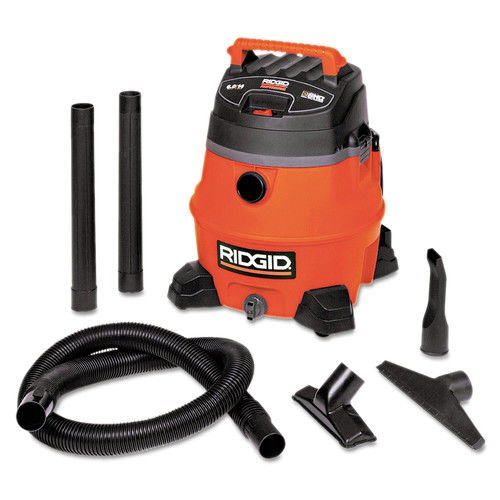
The Ridgid WD1450 is a full-size corded shop vac, and that is exactly why it belongs at the top of a heavy duty list. Its 6.0 peak HP motor and 14-gallon drum are aimed at gravel, sand, sawdust and wet spills, so a muddy truck interior is well inside what it was designed for.
The trade-off is handling. This is a rolling drum, not a car vacuum, and the stock 2-1/2 inch hose is sized for jobsite debris rather than seat rails. Budget for a smaller-diameter car detailing nozzle set if the interior work matters more than the footwells and cargo bed. Warranty terms on Ridgid wet/dry vacs vary by model and retailer, so check the current listing rather than assuming.

Stanley SL18116P
Best Budget ValuePros
- Cheapest way to get real shop-vac suction
- 6-gallon drum is a sensible size for one vehicle
- Easier to lift and carry than a 14-gallon unit
Cons
- Cartridge filter only, not HEPA
- Plastic body feels lighter duty than pro brands
The Stanley SL18116P is a 6-gallon corded wet/dry vac rated at 4.0 peak horsepower. For a single car or truck, that combination is the sweet spot: enough suction for gravel and floor mat grit, and a drum you can actually carry to the driveway without a second trip.
The compromise is filtration and materials. The standard cartridge filter handles general debris fine but will load up quickly on drywall or brake dust, and the housing is lighter plastic than the Ridgid or the Bosch. Warranty length on this model varies by seller, so confirm it on the listing before you buy.
Bosch VAC090AH
Best Fine Dust ControlPros
- Certified HEPA filtration for fine dust
- Automatic filter cleaning keeps airflow up
- Tool-activated outlet for sanders and grinders
Cons
- Costs far more than a plain shop vac
- Built as a dust extractor first, car cleaning second
The Bosch VAC090AH is a 9-gallon dust extractor rather than a general shop vac, and that distinction is the whole point. It runs a HEPA filter with an automatic filter-cleaning system that pulses the media so suction does not fall off as the filter loads, which is what kills cheap vacuums on fine dust.
For vehicles, this matters if you are cleaning up after bodywork, sanding, or hauling drywall and cement dust in a work truck. For plain mud and leaves it is more machine than you need, and the price reflects the extractor hardware rather than raw drum size.
DeWalt DCV580
Best Cordless PortabilityPros
- No cord, so it works anywhere you park
- Wet or dry pickup in a compact body
- Runs on batteries you may already own
Cons
- Only a 2-gallon tank, so frequent emptying
- Usually sold bare, battery and charger extra
- Nowhere near corded shop-vac suction
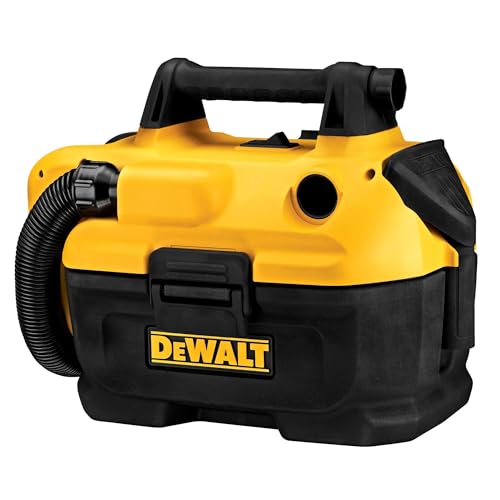
Be clear about what the DCV580 is: a 2-gallon cordless wet/dry vacuum that runs off DeWalt's battery platform, not a big corded shop vac. It is included here because portability genuinely matters for vehicle work, especially roadside, in a customer's driveway, or anywhere without a nearby outlet.
Within that role it is well built and covered by DeWalt's standard three-year limited warranty. What it will not do is match the Ridgid or the Bosch on sustained suction or capacity, and runtime depends entirely on the amp-hour rating of the pack you fit. Treat it as a companion to a corded vac, not a replacement for one.

Milwaukee 0880-20
Best Cordless Wet PickupPros
- Handles spills and damp carpet without a cord
- Compact enough to live in a work van
- Fits the M18 battery platform
Cons
- 2-gallon tank fills fast on a wet job
- Filter needs cleaning often on fine dust
- Sold as a bare tool
The Milwaukee 0880-20 is an M18 cordless wet/dry vacuum with a 2-gallon tank and a published 45 CFM airflow rating. Like the DeWalt, it is a portable unit rather than a shop vac, and it earns its place for damp work: spilled drinks, a wet trunk liner, a leaking cooler in the bed.
There is no pump on this vac, so it lifts water into the tank and you empty it by hand, which comes around quickly at 2 gallons. On fine dry dust the filter loads faster than a cartridge-and-drum setup, so plan on cleaning it more often than you would a corded vac.
What to check before buying a heavy duty vacuum for a vehicle
Choosing the right vacuum for car and truck work depends on how you will actually use it. Here are the factors that matter, based on published manufacturer specs.
Corded or cordless is the first fork in the road, and it decides almost everything else. Corded shop vacs like the Ridgid WD1450 and Stanley SL18116P give you sustained suction and large drums. Cordless units like the DeWalt DCV580 and Milwaukee 0880-20 give you a 2-gallon tank and battery-limited runtime in exchange for going anywhere.
Peak horsepower is a marketing figure that corded shop vac makers publish, and it only lets you compare corded models against each other. It is not measured at the nozzle, and battery vacuums are not rated in HP at all, so never compare a cordless vac's suction to a corded vac's peak HP number.
Capacity decides how often you stop to empty. Six gallons is plenty for one car. Fourteen gallons like the Ridgid is for trucks, multiple vehicles, or jobsite debris. Two gallons on a cordless unit is for touch-ups, not cleanouts.
Filtration is what keeps suction alive and dust out of your lungs. A standard cartridge filter is fine for leaves, sand and crumbs. A HEPA setup with automatic filter cleaning, like the Bosch VAC090AH, is what you want for drywall, cement or bodywork dust.
Hose diameter is the spec nobody checks. A 2-1/2 inch shop vac hose will not fit between a seat rail and a console. If interior detailing matters, add a small-diameter car nozzle kit that fits your vac's port.
Mistakes to avoid when buying a vacuum for car cleaning
Most buyers pick on headline numbers and end up with the wrong shape of tool. Avoid these.
Reading a cordless spec sheet as if it were a shop vac. A 2-gallon battery vac and a 14-gallon corded drum are different categories of tool. Decide which category you need before you compare individual models.
Ignoring filter type. A basic cartridge filter clogs fast on fine dust and suction drops off with it. If you work around drywall or brake dust, pay for HEPA and self-cleaning.
Overlooking hose length and attachments. A short hose means moving the drum around the car repeatedly. Look for a hose of at least 6 feet plus a crevice tool for seat tracks.
Buying more drum than you can move. A 14-gallon vac is superb power and a genuine nuisance to lift into a trunk. Match the size to where the vac will live and how often it moves.
FAQs
What is the best vacuum for wet messes in a car?
Among the cordless picks, the Milwaukee 0880-20 is built for wet pickup in a 2-gallon tank. For larger volumes of standing water, a corded wet/dry vac like the Ridgid WD1450 is the better tool.
Is a HEPA filter necessary for a car vacuum?
Only if you deal with fine dust such as drywall, cement or sanding residue, or you have allergies. HEPA filters trap 99.97% of particles at 0.3 microns. For crumbs, sand and leaves a cartridge filter is enough.
How often should I clean the filter?
Clean it after every few uses, or as soon as you notice suction dropping. Dust extractors such as the Bosch VAC090AH pulse the filter automatically while you work.
Can I use a shop vacuum for car interior cleaning?
Yes, and it is usually the better choice for heavy debris. The one catch is hose diameter: a standard 2-1/2 inch shop vac hose is too large for tight interior gaps, so add a car detailing nozzle kit.
What capacity do I need?
Six gallons handles a single car comfortably. For trucks, SUVs or several vehicles in one session, step up to 9 gallons or more.
Are cordless vacuums good for heavy duty use?
Not for sustained heavy debris. Cordless models like the DCV580 and 0880-20 carry 2-gallon tanks and battery-limited runtime, so they suit touch-ups and remote jobs. Corded vacs remain the answer for real cleanouts.
How do I keep suction strong?
Empty the drum before it gets close to full, clean or replace the filter on schedule, and check the hose and nozzle for clogs. A partially blocked hose costs more suction than most people expect.
Is the DeWalt DCV580 a full shop vac?
No. It is a 2-gallon cordless wet/dry vacuum that runs on DeWalt 20V MAX batteries. It is a portable unit, not a corded shop vac, and it should not be compared to one on suction or capacity.
Is the Ridgid WD1450 too big for a small car?
The vacuum itself is fine, but the 14-gallon drum is bulky to move and the stock hose is wide. For a small car, the 6-gallon Stanley is easier to live with.
What is the difference between a shop vac and a dust extractor?
A shop vac moves bulk debris. A dust extractor like the Bosch VAC090AH adds HEPA filtration and automatic filter cleaning to capture fine respirable dust and keep airflow steady while it works.
Our verdict
For heavy duty vehicle cleanouts, the corded Ridgid WD1450 is the strongest all-round pick on capacity and published motor rating. The Stanley SL18116P gets you most of the way there for less if you are cleaning one car. Pay up for the Bosch VAC090AH only if fine dust is your real problem, and treat the DeWalt DCV580 and Milwaukee 0880-20 as what they are: compact 2-gallon cordless vacs for portability, not replacements for a shop vac.