Best Heavy Duty Circular Saws: Cordless and Corded Picks
When you need to rip through thick lumber, framing stock, or dense sheet goods day after day, a light DIY circular saw runs out of motor fast. We compared published manufacturer specifications, battery ecosystems, and owner feedback to shortlist the 7-1/4 inch saws that hold their speed under load for professional and serious DIY work.
Quick answer
For most heavy duty users, the Makita XSR01Z 18V X2 (36V) rear-handle saw offers the best blend of raw power, job-site build quality, and rear-handle control for long rip cuts. If you want the most torque from a single battery platform, the DeWalt DCS578 60V MAX FlexVolt is the top choice, with a full 7-1/4 inch blade and a FlexVolt pack that also runs DeWalt 20V MAX tools.
Why trust ToolBuyerHub
- Compared on published specs (amps, volts, blade size)
- Battery & ecosystem compared
- Owner feedback read across retailers
- Build quality & warranty checked
- Brand reliability
- No fake hands-on claims
Research updated August 2026.
Makita XSR01Z 18V X2 (36V) Rear-Handle
A true rear-handle cordless saw that runs on two 18V LXT batteries for 36V output.
| Product | Best For | Key Spec | Rating | Price |
|---|---|---|---|---|
| Makita XSR01Z | Best Overall | 18V X2 (36V), rear handle, 7-1/4 in | 4.7/5 | Check Amazon |
| DeWalt DCS578 | Best Power | 60V MAX FlexVolt, 7-1/4 in | 4.6/5 | Check Amazon |
| Milwaukee 2732-20 | Best M18 Fuel | M18 Fuel sidewinder, 7-1/4 in | 4.5/5 | Check Amazon |
| Bosch CS5 | Best Corded | 15 Amp, 7-1/4 in | 4.4/5 | Check Amazon |
| Skilsaw SPT77WML-22 | Best Worm Drive | 15 Amp worm drive, 7-1/4 in | 4.5/5 | Check Amazon |

Makita XSR01Z 18V X2 (36V) Rear-Handle
Best OverallPros
- Corded-like power from two 18V LXT batteries
- True rear-handle layout for long rip cuts
- Electric brake and built-in dust blower
Cons
- Needs two 18V batteries, sold separately (bare tool)
- Rear-handle balance takes practice if you are used to a sidewinder
The Makita XSR01Z is the rear-handle version of Makita's 36V cordless saw platform. It runs two 18V LXT batteries together to produce 36V, which is why owners regularly compare its cutting speed with corded saws. Note that Makita also sells the XSH03Z, which is the sidewinder version of the same 18V X2 system, so check the model number carefully before you buy, as the two are not the same tool.
With two batteries fitted, expect roughly 11 to 12 pounds in hand, which is normal for a rear-handle saw. The rear-handle layout puts the motor behind the blade, so you push the saw through the cut rather than steering it from the side, and that is exactly what long rips in wet framing lumber reward. An electric brake stops the blade quickly and the dust blower keeps the cut line visible.

DeWalt DCS578 60V MAX FlexVolt
Best PowerPros
- Very strong sustained torque from the 60V MAX system
- FlexVolt battery also runs DeWalt 20V MAX tools
- Electric brake and brake override for plunge-style cuts
Cons
- One of the heavier cordless saws here
- Battery and charger sold separately on the bare-tool version
The DeWalt DCS578 is among the most powerful cordless circular saws you can buy. The 60V MAX FlexVolt pack feeds a brushless motor that holds speed through dense hardwood and thick engineered lumber, and owners regularly report long rip cuts in wet pressure-treated stock without the saw bogging down.
Bevel capacity runs to 57 degrees, which is more than most saws in this class, and the electric brake stops the blade fast. At around 12 pounds with a FlexVolt battery it is not a light tool, but the power-to-weight ratio suits heavy framing. The same FlexVolt battery drops into DeWalt 20V MAX tools, which softens the cost of buying into the platform.
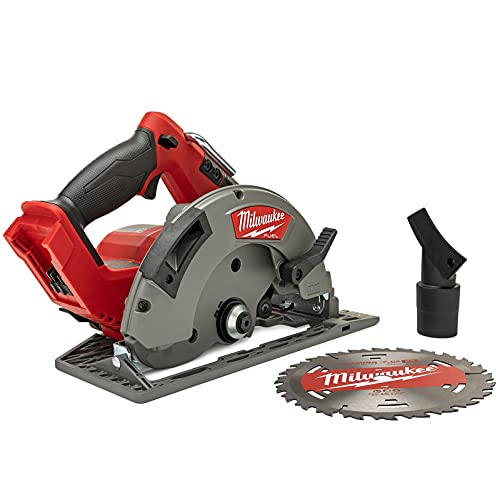
Milwaukee 2732-20 M18 Fuel 7-1/4 in
Best M18 FuelPros
- One of the lighter saws in this group
- PowerState brushless motor with Redlink Plus electronics
- Rafter hook and integrated LED on a solid metal shoe
Cons
- Single 18V pack gives up some headroom to 36V and 60V saws
- Dust blower could be stronger
The Milwaukee 2732-20 is the M18 Fuel 7-1/4 inch sidewinder, and it is the obvious pick if you already run M18 batteries. Milwaukee's PowerState brushless motor and Redlink Plus electronics deliver high torque in a compact body, and owners report it handles framing lumber and plywood without complaint. Milwaukee also builds a separate rear-handle M18 Fuel saw, the 2830, which is a heavier tool aimed at production framing.
At roughly 10 pounds with a battery it is lighter than both the Makita 18V X2 and the DeWalt FlexVolt, which matters over a full day on a roof or deck. The rafter hook and onboard LED are genuinely useful, and the bevel adjustment locks securely. It is a well-rounded heavy duty saw rather than an outright power champion.

Bosch CS5 15 Amp Corded
Best CordedPros
- Constant corded power, no battery fade
- Anti-snag lower guard for small offcuts
- Wide 56 degree bevel range
Cons
- Tethered to an outlet or extension cord
- No brake or battery-platform convenience
The Bosch CS5 is a corded workhorse that delivers a steady 15 amps without any charge management. The die-cast footplate and a robust gearbox stand up to job-site handling, and owner reviews frequently mention clean cut quality and predictable performance in thick hardwood.
Bevel adjustment is precise with positive stops at the common angles, and the anti-snag lower guard is a small detail that pays off when trimming narrow offcuts. It is not as portable as a cordless saw, but for shop use or a site with power nearby it gives unlimited runtime with no battery outlay. Use a heavy-gauge extension cord so the motor is not starved on long runs.

Skilsaw SPT77WML-22 Magnesium Worm Drive
Best Worm DrivePros
- Classic worm drive torque for ripping
- Blade on the left for a clear cut-line view
- Magnesium construction keeps it light for a worm drive
Cons
- Heaviest option here at over 11 lbs
- Gearbox oil needs checking and changing periodically
The Skilsaw SPT77WML-22 is the magnesium version of the worm drive saw that has been a framing-site staple for decades. A 15 amp motor plus worm drive gearing produces the high torque that makes ripping thick lumber and stacked material feel effortless, and owners consistently praise its durability. Do not confuse it with the SPT67WM, which shares the Skilsaw name and magnesium build but is a lighter sidewinder, not a worm drive.
The blade-on-left layout gives right-handed users a clear view of the line. Magnesium housing keeps it near 11.5 pounds, which is light for a worm drive but still the heaviest saw in this roundup. The gearbox uses oil rather than grease, so it needs a periodic top-up or change, and in return it lasts for years of professional use. It is corded, so runtime is never a question.
What to Check Before Buying a Heavy Duty Circular Saw
Selecting the right heavy duty circular saw comes down to a few specifications. Motor power matters most. For cordless saws, look for a brushless motor, and note that higher-voltage systems (36V from two 18V packs, or 60V) generally sustain torque better under load than a single 18V or 20V pack, although the best 18V saws close much of that gap. For corded models, 15 amps is the standard for heavy duty work.
Blade size is next. A 7-1/4 inch blade is standard for framing and sheet goods, and it is what gives you enough depth to cut a 2x4 at 45 degrees. Check bevel capacity too, since 50 degrees or more covers most roof and rafter work. Finally, decide on layout: rear-handle and worm drive saws put the motor behind the blade for leverage on long rips but weigh more, while sidewinders sit the motor beside the blade and feel more balanced overhead.
Mistakes to Avoid
One common mistake is choosing a saw on price alone. A cheap saw bogs down under load and often has a flimsy shoe that will not stay square. Another is ignoring the battery ecosystem. If you already own tools from a brand, staying on that platform saves real money on batteries and chargers. Also check whether the listing is a bare tool or a kit, because most of the saws here are sold both ways and the bare-tool price looks deceptively low.
Do not overlook the blade. A heavy duty saw is only as good as what is spinning on the arbor, so buy a quality carbide-tipped blade matched to the material you cut most. And do not push through with a dull blade: it forces the motor to work harder, burns the cut, and makes kickback more likely.
FAQs
What is the best voltage for a heavy duty cordless circular saw?
A 36V (two 18V packs) or 60V system generally gives the strongest sustained torque, though a top-tier 18V saw such as the M18 Fuel is close enough for most framing work.
Is a worm drive saw better than a sidewinder for heavy duty work?
Worm drive saws deliver more torque and are favoured for framing rips, but they are heavier and their gearbox needs oil checks, while sidewinders are lighter and easier to handle overhead.
Can I use a 6-1/2 inch blade in a 7-1/4 inch saw?
It is not recommended. Even with the right arbor size, a smaller blade loses you depth of cut and does not sit correctly relative to the guard and shoe. Always fit the blade diameter the saw is rated for.
How long do batteries last on a heavy duty circular saw?
Runtime depends on material, blade sharpness, and cut type. A large-capacity 60V or 12.0Ah pack can give a few hundred crosscuts in dry 2x4, but long rips in wet pressure-treated lumber can drain the same pack in a fraction of that.
What is the best blade for cutting pressure-treated lumber?
A 24-tooth carbide-tipped framing blade is the usual choice, as it clears wet, resinous material quickly without loading up.
Are corded circular saws still relevant for heavy duty use?
Yes. Corded saws give unlimited runtime and constant power, which suits shop work, repetitive cutting, and any job with an outlet nearby.
What is the difference between a rear-handle and sidewinder saw?
Rear-handle (and worm drive) saws place the motor behind the blade for push-through leverage on long rips. Sidewinders place the motor beside the blade, which makes them lighter and better balanced for overhead work.
How important is a magnesium shoe for a heavy duty saw?
A magnesium shoe is lighter than steel and resists bending, which helps the saw stay square and cut accurately after it has been knocked about on site.
Can I use a heavy duty circular saw for metal cutting?
Only with a blade specifically rated for metal, and it is not ideal. Wood saws run at high RPM with no chip control, so a dedicated metal-cutting circular saw is the safer tool if you cut metal regularly.
What safety features should I look for in a heavy duty saw?
Look for an electric brake, a lower guard that retracts and returns smoothly, and a trigger lock-off to prevent accidental starts.
Our verdict
For most heavy duty users, the Makita XSR01Z is the best overall choice: 36V output from two 18V LXT batteries, a proper rear-handle layout, and a battery platform you can grow into. If raw power is the priority, the DeWalt DCS578 60V MAX FlexVolt is unmatched. If you would rather not buy batteries at all, the corded Bosch CS5 gives you constant 15 amp power for less, and the Skilsaw SPT77WML-22 is the pick for anyone who wants a true worm drive.