Best Detail Sanders for Tight Corners
Detail sanders earn their keep in the spots full-size random orbit sanders simply cannot reach, like inside cabinet frames, stair balusters, window muntins, and furniture joints. The right tool comes down to how narrow the nose is, how the paper attaches, and whether the body fits the way you actually hold a sander in a corner.
Quick answer
The DEWALT DWE6411 1/4 Sheet Palm Sander is the best overall pick for tight corners thanks to its compact 1/4 sheet pad, sealed switch, and reliable dust port.
Why trust ToolBuyerHub
- Cross-checked manufacturer-published specifications before writing any recommendation
- Verified US market availability and configuration for every model discussed
- Owner-feedback themes are summarized as feedback, never presented as our own hands-on testing
- No invented star ratings; see the visible Research Score criteria on this page
- Checked accessory compatibility and guarding before ranking any cutting or grinding tool
- Every pick here is a currently sold US model from a brand with real stateside retail and parts support, and specs are drawn from manufacturer documentation rather than copied retailer listings.
Research updated September 2026.
What Matters Most for This Category
The single most important factor is pad shape and reach. A pointed or triangular nose gets into true corners, while a rectangular 1/4 sheet pad handles edges and flat trim better. After that, look at paper attachment (hook and loop is faster, clamp systems are cheaper to feed), dust collection (a port you can actually connect to a shop vac matters more than a tiny onboard bag), and body size, since a sander you cannot grip comfortably in an awkward position will not get used. Motor wattage and orbit rate matter less than control in this category.
| Model | Best for | Key specs | Research Score |
|---|---|---|---|
| DEWALT DWE6411 1/4 Sheet Palm Sander | Best Overall | 1/4 sheet, hook and loop or clamp, Approximately 14,000 OPM | 93/100 |
| Makita BO4556 1/4 Sheet Finishing Sander | Best for Finish Work | 1/4 sheet, clamp, Approximately 14,000 OPM | 91/100 |
| Black+Decker BDEMS600 Mouse Detail Sander | Best Value | Triangular detail pad, hook and loop, Approximately 14,000 OPM | 88/100 |
| Bosch OS20 2.0 Amp Detail Sander | Best Corded Detail Sander | Triangular detail pad, hook and loop, 2.0 amp | 90/100 |
| Ryobi P440 One+ 18V Corner Cat Sander | Best Cordless | Triangular detail pad, hook and loop, 18V One+ battery platform | 87/100 |
| Festool RTS 400 REQ Orbital Sander | Best Premium | Rectangular, stickfix hook and loop, Integrated, designed for extractor use | 92/100 |
| WEN 6307 Variable Speed Detail Sander | Best Budget | Triangular detail pad, hook and loop, Variable speed control | 84/100 |

DEWALT DWE6411 1/4 Sheet Palm Sander
Top pickPros
- Compact body reaches into cabinet frames and trim corners
- Sealed switch resists dust ingestion for longer life
- Accepts both hook and loop and clamp-style paper
Cons
- 1/4 sheet pad is not as pointed as a dedicated detail sander
- Onboard dust bag fills quickly on long jobs
A long-running staple in the 1/4 sheet class, this sander balances a small footprint with enough power for real material removal. The sealed switch and rubberized grip are the details that separate it from bargain alternatives. It is the safest first purchase if you want one sander for corners and general trim work.

Makita BO4556 1/4 Sheet Finishing Sander
Smooth operatorPros
- Very low vibration for a palm sander
- Excellent for finish prep before stain or paint
- Clamp system holds paper securely
Cons
- Clamp paper changes are slower than hook and loop
- Not as aggressive as a random orbit for stock removal
Makita's finishing sander is tuned for control rather than speed, which is exactly what you want when feathering edges near a corner. The vibration damping is a genuine differentiator on long sanding sessions. It pairs well with a shop vac for dust control.

Black+Decker BDEMS600 Mouse Detail Sander
Corner specialistPros
- Pointed triangular pad reaches true inside corners
- Light and easy to control one-handed
- Low entry price for a dedicated detail tool
Cons
- Less powerful than corded 1/4 sheet models
- Paper sizes are proprietary to the pad shape
The Mouse shape is the classic answer to inside corners, and this version keeps the price low while adding a usable dust port. It is best treated as a companion tool rather than a primary sander. For trim touch-ups and small repairs it does the job.

Bosch OS20 2.0 Amp Detail Sander
Strong motorPros
- More power than most dedicated detail sanders
- Triangular pad gets into corners and along edges
- Works well connected to a shop vac
Cons
- Heavier than the compact Mouse-style tools
- Proprietary paper fitment
Bosch's corded detail sander brings noticeably more muscle to the triangular pad format. That extra power helps when you are sanding paint or filler rather than just scuffing. The trade-off is a slightly heavier body.

Ryobi P440 One+ 18V Corner Cat Sander
No cordPros
- No cord to fight in tight spaces
- Shares batteries with the One+ lineup
- Triangular pad reaches inside corners
Cons
- Runtime depends on battery size
- Less aggressive than corded detail sanders
Cordless freedom matters most when you are working inside a cabinet or overhead. This sander uses the widely available One+ battery system, so it slots into an existing kit. It is a convenience pick rather than a powerhouse.

Festool RTS 400 REQ Orbital Sander
Pro gradePros
- Outstanding dust extraction when paired with an extractor
- Very low vibration and excellent control
- Long service life in professional use
Cons
- High price compared to consumer sanders
- Best performance requires a compatible extractor
Festool's rectangular orbital is the tool professionals reach for when finish quality and dust control are non-negotiable. It is not a corner-specific triangular sander, but its narrow rectangular pad and superb balance make it very capable along edges and into tight runs. The cost is real, and so is the performance gap.
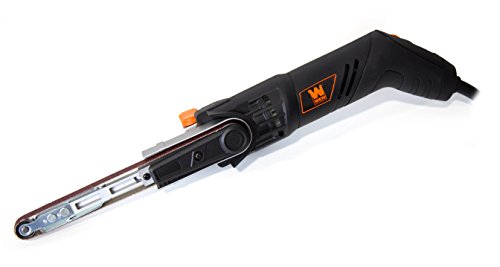
WEN 6307 Variable Speed Detail Sander
Cheap and cheerfulPros
- Very low price for a variable speed detail sander
- Triangular pad handles corners
- Variable speed helps on delicate trim
Cons
- Build quality is below name-brand tools
- Dust collection is basic
WEN's detail sander undercuts the major brands while still offering variable speed and a corner-friendly pad. It is a reasonable choice for occasional use and light touch-up work. Expect to replace it sooner than a pro-grade tool.
Who Should Avoid the Top Pick
Skip this category if your work is mostly large flat panels or heavy stock removal, where a random orbit sander or belt sander is far more efficient. Also avoid ultra-cheap no-name detail sanders with no parts support, since pad wear and switch failure are the two most common failure points and replacements are hard to source.
Before You Buy
Measure the narrowest gap you actually need to sand, then match the pad shape to it. Confirm which abrasive sizes and attachment style the tool uses, because proprietary paper gets expensive. Check whether the dust port fits your existing shop vac hose, and decide up front whether you want corded power or battery convenience.
FAQs
What is the difference between a detail sander and a 1/4 sheet sander?
A detail sander typically uses a pointed triangular pad for inside corners, while a 1/4 sheet sander uses a rectangular pad that covers more flat area but cannot reach a true 90 degree corner.
Can a detail sander remove paint?
Yes, with coarse paper and patience, but it is slower than a random orbit sander. Detail sanders are better suited to feathering edges and sanding small areas after the bulk of the paint is removed.
Do I need hook and loop or clamp paper?
Hook and loop is faster to change and easier to align, while clamp systems use cheaper plain sheets. Most modern detail sanders use hook and loop.
Is cordless or corded better for corner sanding?
Cordless wins for reach and convenience in awkward spots, corded wins for sustained power and runtime. If you sand for long stretches, corded is usually the better call.
What grit should I start with?
Start around 80 grit for paint and filler removal, move to 120 for general prep, and finish at 180 or 220 before applying finish. Always step through grits rather than jumping.
Can I connect a shop vac to a detail sander?
Many models include or accept a vacuum adapter, which dramatically improves dust control compared to a small onboard bag. Check the port diameter before buying.
Our verdict
For most people the DEWALT DWE6411 is the right balance of reach, durability, and price, while the Black+Decker Mouse and Bosch OS20 cover true inside corners and the Festool RTS 400 REQ is the premium choice for daily professional use. Match the pad shape to your tightest gap first, then decide how much you want to spend on dust control and build quality.