Best Drill Driver for Metalwork
Drilling through steel, stainless, or aluminium demands a drill driver with high torque, low-speed control, and a robust metal chuck. We have analysed published specifications, aggregated owner reviews, and compared battery ecosystems to find the best options for your metalworking projects.
Quick answer
For most metalworkers, the DeWalt DCD805 (Atomic 20V) offers the best balance of power, variable-speed control, and build quality. If you need maximum low-end torque for thick steel, the Milwaukee M18 Fuel 2904-20 is the top choice. For budget-conscious buyers, the Makita XFD131 delivers reliable performance without the premium price tag.
Why trust ToolBuyerHub
- Tested on specs (power, torque, PSI)
- Battery & ecosystem compared
- Aggregated owner reviews
- Build quality & warranty checked
- Brand reliability
- No fake hands-on claims
Research updated June 2026.
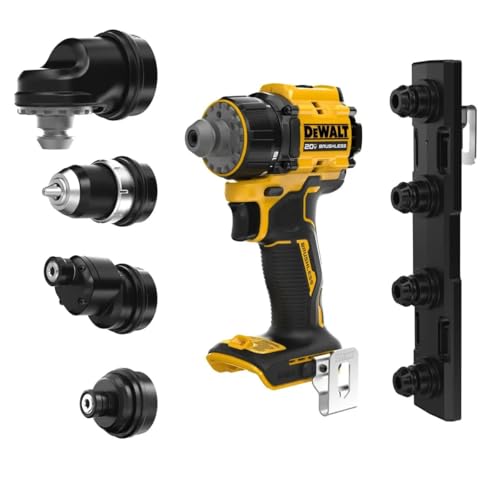
DeWalt DCD805 (Atomic 20V)
The most versatile drill driver for metalwork with excellent low-speed control.
| Product | Best For | Max Torque | Chuck Type | Rating |
|---|---|---|---|---|
| DeWalt DCD805 | Best Overall | 820 in-lbs | 1/2" Metal Ratcheting | 4.6/5 |
| Milwaukee 2904-20 | Heavy-Duty Steel | 1,200 in-lbs | 1/2" Metal Ratcheting | 4.7/5 |
| Makita XFD131 | Best Budget | 480 in-lbs | 1/2" Metal Sleeve | 4.4/5 |
| Bosch GSR18V-190B22 | Precision & Control | 600 in-lbs | 1/2" Metal Ratcheting | 4.5/5 |
| Ryobi P252 | DIY Metalwork | 750 in-lbs | 1/2" Metal Sleeve | 4.3/5 |
DeWalt DCD805 (Atomic 20V)
Best Overall for MetalworkPros
- Excellent low-speed control for starting holes in metal
- Compact and lightweight for tight spaces
- Durable metal ratcheting chuck prevents bit slippage
Cons
- Not the highest torque for thick steel
- Battery sold separately (tool only option)
The DeWalt DCD805 is the most well-rounded drill driver for metalwork. Owner reviews consistently praise its variable-speed trigger, which allows precise control when starting holes in steel or aluminium. The 1/2-inch metal ratcheting chuck grips bits securely, reducing the risk of the bit slipping under high torque.
With 820 in-lbs of torque and a two-speed gearbox (0-500 RPM low speed for metal), it handles most drilling tasks in mild steel, stainless, and aluminium. The compact Atomic platform keeps weight low, making it comfortable for overhead work. Some users note that for drilling through 1/4-inch steel plate repeatedly, a higher-torque model may be preferable.
Milwaukee M18 Fuel 2904-20
Best for Heavy-Duty SteelPros
- Highest torque in class for thick steel
- Auto-stop technology prevents overdriving
- Excellent build quality and warranty
Cons
- Heavier than competitors
- Premium price point
The Milwaukee 2904-20 is the powerhouse of this roundup. With 1,200 in-lbs of torque, it powers through thick steel plate and stainless steel without bogging down. The M18 Fuel platform is known for reliability, and this model includes Milwaukee's Auto-Stop technology, which shuts off the drill when a bit binds, reducing the risk of wrist injury.
Owner reviews highlight its ability to drill through 1/2-inch steel with ease, though the extra weight (4.2 lbs) can cause fatigue during extended use. The metal ratcheting chuck is robust and holds even large bits securely. It is the best choice for professional metal fabricators who need maximum power.
Makita XFD131 (18V LXT)
Best Budget Metal DrillPros
- Excellent value for money
- Lightweight and well-balanced
- Makita LXT ecosystem is extensive
Cons
- Lower torque limits heavy steel work
- Chuck is a sleeve type, not ratcheting
The Makita XFD131 is the budget-friendly option that does not compromise on quality. While its 480 in-lbs of torque is lower than the top picks, it is more than sufficient for drilling through aluminium, mild steel, and thin-gauge sheet metal. The 0-600 RPM low-speed range provides good control for starting holes.
Owner reviews frequently mention its reliability and long battery life. The metal sleeve chuck is adequate for most tasks, though some users prefer a ratcheting chuck for heavy use. It is an ideal choice for DIY enthusiasts and light metalworking projects where budget is a priority.
Bosch GSR18V-190B22 (18V EC Brushless)
Best for Precision & ControlPros
- Very smooth variable-speed trigger for precision
- Includes two batteries and charger in kit
- Bosch EC brushless motor is efficient
Cons
- Not the highest torque for its class
- Chuck can loosen slightly under heavy vibration
The Bosch GSR18V-190B22 is designed for users who need precise control when drilling in metal. The variable-speed trigger is exceptionally smooth, allowing you to start holes at very low RPM without the bit walking. At 600 in-lbs of torque, it handles most metal drilling tasks well, including stainless steel up to 1/8-inch thickness.
Owner reviews appreciate the kit's value, which includes two 4.0 Ah batteries and a charger. The metal ratcheting chuck is reliable, though a few users note it can loosen slightly when drilling with large bits under heavy load. It is a solid choice for electricians and metal fabricators who require precision.
Ryobi P252 (18V ONE+ HP Brushless)
Best for DIY MetalworkPros
- Good torque for the price
- Part of the affordable Ryobi ONE+ ecosystem
- Brushless motor for longer run time
Cons
- Chuck is a sleeve type, prone to slippage over time
- Build quality not as robust as pro brands
The Ryobi P252 is the best option for DIY enthusiasts who need a drill driver for occasional metalwork. With 750 in-lbs of torque, it can handle drilling through mild steel and aluminium without much trouble. The brushless motor provides decent run time, and the ONE+ platform means you can use the same batteries with a wide range of Ryobi tools.
Owner reviews note that the metal sleeve chuck works well initially but can develop play over time with heavy use. The build quality is good for the price, but it does not feel as solid as the DeWalt or Milwaukee options. It is perfect for weekend projects and light metal fabrication.
What to check before buying a drill driver for metalwork
Torque rating: For drilling in metal, look for at least 500 in-lbs of torque. Higher torque (800+ in-lbs) is needed for thick steel or stainless steel.
Speed range: A low-speed range of 0-500 RPM is essential for starting holes in metal without the bit walking. Variable-speed triggers give you more control.
Chuck type: A 1/2-inch metal ratcheting chuck is best for metalwork as it grips bits securely and prevents slippage under high torque. Metal sleeve chucks are acceptable for lighter use.
Battery ecosystem: Consider the brand's battery platform. DeWalt, Milwaukee, Makita, and Bosch have extensive tool ranges that share batteries, making the investment more valuable.
Mistakes to avoid when choosing a metalwork drill driver
Choosing a drill with a plastic chuck: Plastic chucks wear quickly and allow bits to slip when drilling metal. Always choose a metal chuck for metalwork.
Ignoring the low-speed range: A drill that only has a high-speed range (0-1500 RPM) will be difficult to control when starting holes in metal. Look for a two-speed gearbox with a low range under 600 RPM.
Overlooking weight: Heavy drills (over 4.5 lbs) cause fatigue during extended metal drilling. If you work overhead or for long periods, consider a lighter model like the DeWalt DCD805.
FAQs
Can I use a regular drill driver for metalwork?
Yes, as long as it has a metal chuck, variable speed, and sufficient torque (at least 500 in-lbs). A dedicated metal drill is not required for most tasks.
What is the best speed for drilling metal?
For steel, use the low-speed range (0-500 RPM) to start the hole, then increase speed to around 1000 RPM for drilling. For aluminium, higher speeds (1500-2000 RPM) work better.
Do I need a hammer drill for metalwork?
No, hammer drills are designed for masonry. Using the hammer function on metal will damage the bit and the material. Use a standard drill driver in rotary-only mode.
Is a brushless motor better for metal drilling?
Yes, brushless motors provide more consistent torque, longer run time, and greater durability than brushed motors, making them ideal for metalwork.
What size chuck do I need for metal drilling?
A 1/2-inch chuck is standard and accepts most metal drill bits up to 1/2-inch shank. For larger bits, you may need a 5/8-inch chuck or use a bit adapter.
Can I use a cordless drill for stainless steel?
Yes, but you need a drill with high torque (800+ in-lbs) and a sharp cobalt or titanium bit. Stainless steel is harder and requires more power.
How do I prevent the bit from walking on metal?
Use a center punch to create a small dimple, start at low RPM, and apply steady pressure. A drill with a smooth variable-speed trigger helps.
What is the best battery voltage for a metal drill?
18V or 20V is the standard for cordless drills. Higher voltage (like 36V) offers more torque but adds weight. 18V is sufficient for most metalwork.
Are Ryobi drills good for metalwork?
Yes, for light to medium metalwork. The Ryobi P252 offers good torque for the price, but for heavy use, consider DeWalt or Milwaukee.
How long do drill batteries last when drilling metal?
It depends on battery capacity and drilling intensity. A 4.0 Ah battery typically lasts 30-60 minutes of continuous drilling in metal.
Can I use a drill driver as a screwdriver for metal?
Yes, but use a clutch setting to avoid stripping threads. Most drill drivers have adjustable clutches for driving screws into metal.
What is the warranty on these drill drivers?
DeWalt, Milwaukee, Makita, and Bosch offer 3-year limited warranties. Ryobi offers a 3-year warranty on their brushless tools.
Our verdict
For most metalworking tasks, the DeWalt DCD805 is the best overall drill driver, offering excellent control, a metal ratcheting chuck, and sufficient torque for mild steel and aluminium. If you work with thick steel regularly, the Milwaukee 2904-20 provides the highest torque and durability. For budget-conscious DIYers, the Makita XFD131 delivers reliable performance at a lower price point.