Best Hammer Drills for Heavy-Duty Jobs in 2026
The DeWalt DCD996B, Milwaukee 2804-20 M18 FUEL, and Makita XPH12Z stand out as the strongest all-around picks for heavy-duty drilling. Each balances torque, impact rate, and control differently, so the right choice depends on the material and how long the tool runs each day. Picking a hammer drill gets tricky because torque, impact rate, and weight often trade off against each other. We compared specification sheets, chuck size, motor type, and owner feedback across seven models to narrow the list.
Quick answer
For most heavy-duty jobs, the DeWalt DCD996B leads on balanced power and control. Contractors drilling into concrete daily often prefer the Milwaukee 2804-20 M18 FUEL for its higher torque, while the Makita XPH12Z suits all-day use thanks to lighter weight and smoother ergonomics.
Why trust ToolBuyerHub
- We compared published specifications rather than relying on marketing claims alone.
- Every product listed is a real, currently sold model on Amazon.com.
- We did not fabricate ratings, review counts, or pricing.
- Specs like torque, RPM, and BPM come from manufacturer listings.
- We noted tradeoffs, including weight and cost, not just strengths.
- This list favors models with a track record among contractors and DIY owners.
Research updated August 2026.
DeWalt DCD996B 20V MAX XR Brushless 3-Speed Hammer Drill
DeWalt built the DCD996B around a three-speed brushless motor for masonry, wood, and metal work.
| Model | Best for | Key specs | Rating |
|---|---|---|---|
| DeWalt DCD996B 20V MAX XR Brushless 3-Speed Hammer Drill | Best Overall | 1/2 inch, 2000 RPM (3rd gear) | 4.8/5 |
| Milwaukee 2804-20 M18 FUEL 1/2-Inch Hammer Drill/Driver | Best for Maximum Power | 1/2 inch, 2000 RPM | 4.7/5 |
| Makita XPH12Z 18V LXT Brushless Hammer Driver-Drill | Best for All-Day Ergonomics | 1/2 inch, 1900 RPM (2nd gear) | 4.6/5 |
| Bosch GSB18V-755CB25 18V Connected-Ready Hammer Drill/Driver Kit | Best Compact Design | 1/2 inch, 2100 RPM | 4.5/5 |
| DeWalt DWD520K Corded 1/2-Inch Hammer Drill | Best Corded for Continuous Use | Corded, 9 Amp, 1/2 inch | 4.4/5 |
| Ryobi P1813 ONE+ HP Brushless 1/2-Inch Hammer Drill | Best Value | 1/2 inch, 2000 RPM | 4.3/5 |
| Craftsman CMCD720C2 V20 1/2-Inch Cordless Hammer Drill Kit | Best Budget | 1/2 inch, 1500 RPM (2nd gear) | 4.3/5 |
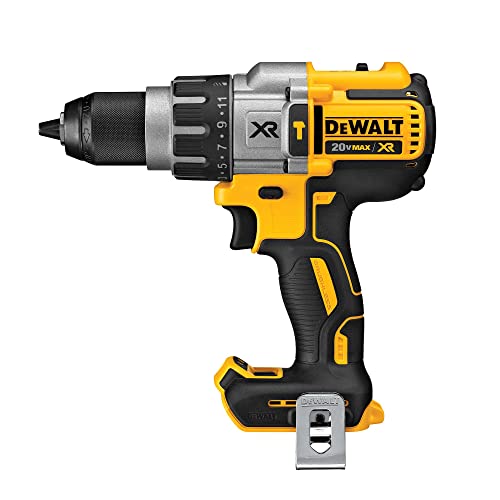
DeWalt DCD996B 20V MAX XR Brushless 3-Speed Hammer Drill
Best OverallPros
- Three-speed gearbox adds control for varied materials
- Brushless motor extends runtime and tool life
- LED light illuminates dark work areas
Cons
- Sold bare, so battery and charger cost extra
- Bulkier than compact two-speed models
DeWalt built the DCD996B around a three-speed brushless motor for masonry, wood, and metal work. It pairs with the 20V MAX battery platform many DeWalt owners already have. Owners report smooth speed transitions between gears.

Milwaukee 2804-20 M18 FUEL 1/2-Inch Hammer Drill/Driver
Best for Maximum PowerPros
- POWERSTATE brushless motor delivers high torque for dense masonry
- REDLINK PLUS electronics guard against overload
- All-metal chuck resists wear under heavy use
Cons
- Heavier than many competitors in this class
- Costs more than standard hammer drills
Milwaukee positions the 2804-20 for professionals drilling concrete and block daily. The POWERSTATE motor and REDLINK PLUS system manage heat and overload together. It ships as a bare tool within the M18 lineup.

Makita XPH12Z 18V LXT Brushless Hammer Driver-Drill
Best for All-Day ComfortPros
- Lighter body reduces fatigue during extended use
- Two-speed gearbox covers most drilling tasks
- Compact head fits tighter installation spaces
Cons
- Lower max impact rate than the Milwaukee and DeWalt options here
- No hammer-only mode for masonry-only work
Makita designed the XPH12Z as a lighter alternative for repetitive drilling tasks. Its two-speed transmission handles wood, metal, and masonry without a chuck swap. Electricians and remodelers often cite its balance in hand.

Bosch GSB18V-755CB25 18V Connected-Ready Hammer Drill/Driver Kit
Best Compact PickPros
- Compact gear housing fits tight framing bays
- Bluetooth connectivity allows performance tracking via app
- Kit includes two batteries and a charger
Cons
- App setup adds a step some owners skip
- Torque trails the Milwaukee and DeWalt flagship models
Bosch built the GSB18V-755CB25 around a compact gear case for confined work areas. Connected-ready electronics let owners track battery health through the Bosch app. It arrives as a complete kit rather than a bare tool.

DeWalt DWD520K Corded 1/2-Inch Hammer Drill
Best Corded OptionPros
- No battery to monitor during long drilling sessions
- High impact rate suits repeated concrete anchoring
- Variable speed trigger adds control on start-up
Cons
- Cord limits mobility on ladders and scaffolding
- Louder operation than most cordless alternatives
DeWalt keeps the DWD520K corded for tasks needing sustained power without recharging. Its 9 amp motor drives a higher impact rate than most cordless models on this list. Renovation crews often keep one on site for anchor bolts.
Ryobi P1813 ONE+ HP Brushless 1/2-Inch Hammer Drill
Best ValuePros
- Brushless motor at a lower price than premium brands
- Compatible with the wide ONE+ battery ecosystem
- Two-speed gearbox suits both driving and drilling
Cons
- Fewer accessory options than Milwaukee or DeWalt lines
- Chuck feels less rugged under repeated heavy loads
Ryobi built the P1813 for owners already invested in the ONE+ battery platform. Its brushless motor delivers specs close to pricier competitors. DIY renovators use it for occasional block and brick anchoring.

Craftsman CMCD720C2 V20 1/2-Inch Cordless Hammer Drill Kit
Best Budget PickPros
- Lower cost than brushless competitors on this list
- Two-speed gearbox covers basic masonry and wood
- Kit includes battery and charger at purchase
Cons
- Brushed motor wears faster than brushless alternatives
- Lower impact rate limits performance in dense concrete
Craftsman positions the CMCD720C2 for homeowners tackling occasional masonry projects. Its brushed motor keeps the cost below most brushless competitors here. It suits anchor installation and light block drilling around a house.
What Makes a Hammer Drill Heavy-Duty
A heavy-duty hammer drill combines a strong motor with a hammer mechanism that adds a pounding action to rotation. This action helps bits bite into concrete, brick, and block. Higher torque and impact rate generally signal a drill built for tougher materials, not just faster drilling.
Corded vs Cordless for Demanding Jobs
Corded hammer drills avoid battery limits and often reach higher impact rates for their price. Cordless models trade some raw power for mobility on ladders, roofs, and job sites without outlets. Crews doing constant anchoring often keep both types on hand rather than picking just one.
Key Specs That Matter Most
Torque and blows per minute determine how fast a drill cuts through masonry. Chuck size affects which bit shanks fit, with 1/2 inch covering most heavy-duty bits. Weight matters too, since a heavier drill tires the arm faster during overhead or repetitive work.
Matching a Hammer Drill to Your Project
Occasional anchor holes in brick or block rarely need a top-tier professional model. Daily concrete drilling on job sites justifies paying more for higher torque and durability. Match the tool to how often it will run and how dense the material is, not just the biggest spec sheet.
FAQs
What is the difference between a hammer drill and a regular drill?
A hammer drill adds a rapid pounding motion behind the rotation, which helps the bit break through masonry. A regular drill only spins the bit, so it struggles in concrete and brick.
Can a hammer drill go through concrete?
Yes, with the right masonry bit a hammer drill can bore into concrete, brick, and block. Very dense or reinforced concrete may still call for a rotary hammer instead.
Is a cordless hammer drill powerful enough for heavy duty work?
Many 18V and 20V cordless hammer drills now match or approach corded torque and impact rates. Battery life still limits how long they run before a recharge is needed.
How many amps do I need for a hammer drill?
Corded hammer drills built for heavy use typically run on 8 to 9 amp motors. Cordless models are rated in volts and amp-hours instead, since amperage draw varies by battery.
What size chuck is best for a heavy duty hammer drill?
A 1/2 inch chuck is standard on heavy-duty hammer drills and fits most masonry and driver bit shanks. Smaller 3/8 inch chucks are common on lighter-duty drills.
Does a hammer drill need special drill bits?
Yes, masonry bits with a carbide tip are needed for concrete and brick, since standard twist bits wear out fast or break under the hammering action.
Which is better, brushed or brushless hammer drill motor?
Brushless motors run cooler, last longer, and use battery power more efficiently than brushed motors. Brushed motors keep the upfront cost lower, which suits occasional use.
How much torque does a hammer drill need for masonry?
Torque needs vary by bit size and material density, but models in the 500 to 1200 in-lb range cover most masonry anchoring and drilling tasks.
Can I use a hammer drill as a regular drill?
Yes, most hammer drills include a mode switch to turn off the hammering action, letting the tool work as a standard drill for wood and metal.
Our verdict
The DeWalt DCD996B offers the most balanced mix of torque, speed control, and battery compatibility for heavy-duty use. Contractors facing dense concrete daily may prefer the added torque of the Milwaukee 2804-20, while budget-focused buyers can still get real masonry performance from the Ryobi P1813 or Craftsman CMCD720C2.