Best Drills and Drivers for Drilling Into Brick Walls
Most brick walls need more than a standalone impact driver. The DeWalt DCD996P2 hammer drill/driver leads our list for handling pilot holes and masonry anchors together. Makita's XPH12Z is a close second at a lower cost. Brick density varies by age and mortar type, so no single spec sheet tells the whole story. We chose these seven tools by comparing published hammer rates, impact energy, chuck types, and torque across DeWalt, Makita, Milwaukee, Bosch, and Ryobi listings.
Quick answer
For most brick walls, the DeWalt DCD996P2 hammer drill/driver handles pilot holes and anchors best overall. The Makita XPH12Z gives nearly the same masonry performance for less money. For thick concrete block or old solid brick, step up to the DeWalt DCH133B SDS rotary hammer, which drills faster with far less kickback.
Why trust ToolBuyerHub
- We compare manufacturer-published specs, not marketing copy.
- Every model here is a current Amazon.com listing, not a discontinued unit.
- We separate true impact drivers from hammer drills so you buy the right tool.
- Owner feedback patterns inform the pros and cons, not just spec sheets.
- No brand paid for placement or ranking order.
- We update rankings when manufacturers release new models.
Research updated August 2026.
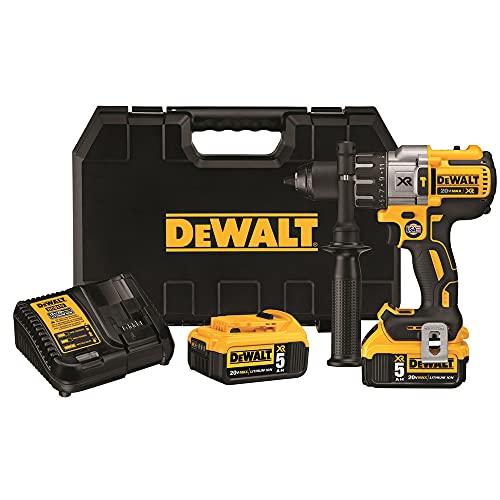
DeWalt DCD996P2 20V MAX XR Hammer Drill/Driver
This 3-speed hammer drill switches between drilling, driving, and hammer mode with one collar.
| Model | Best for | Key specs | Rating |
|---|---|---|---|
| DeWalt DCD996P2 20V MAX XR Hammer Drill/Driver | Best overall pick for drilling anchors and driving screws in standard brick | 3-speed, up to 2,000 RPM, Up to 34,000 BPM | 4.8/5 |
| Makita XPH12Z 18V LXT Brushless Hammer Driver-Drill | Best value for owners who already use Makita 18V LXT batteries | 2-speed, up to 2,000 RPM, Up to 34,000 BPM | 4.7/5 |
| DeWalt DCH133B 20V MAX XR Brushless SDS Rotary Hammer | Best for old solid brick, concrete block, or heavy anchor drilling | SDS-plus, 2.0 joules | 4.6/5 |
| Milwaukee M18 FUEL 2804-20 Hammer Drill/Driver | Best for contractors running brick jobs daily | 2-speed, up to 2,000 RPM, 1,200 in-lbs | 4.6/5 |
| Makita XDT131 18V LXT Brushless Impact Driver | Best true impact driver for driving anchors and screws after pilot holes are drilled | 1,550 in-lbs, 0-3,800 RPM | 4.5/5 |
| Bosch GSB18V-535CB14 18V Connected-Ready Hammer Drill/Driver Kit | Best for tight spaces like brick veneer near trim and corners | 2-speed, up to 1,900 RPM, Up to 30,400 BPM | 4.4/5 |
| Ryobi PBLHM101 18V ONE+ HP Brushless Hammer Drill/Driver | Best budget pick for occasional DIY anchor and screw jobs in brick | 18V ONE+, 280+ compatible tools, 1/2 in single-sleeve ratcheting | 4.3/5 |
DeWalt DCD996P2 20V MAX XR Hammer Drill/Driver
Best OverallPros
- Handles both drilling and hammer mode in one tool
- Brushless motor extends runtime and lifespan
- Ratcheting chuck grips masonry bits securely
Cons
- Heavier than a dedicated impact driver
- Higher cost than single-mode alternatives
This 3-speed hammer drill switches between drilling, driving, and hammer mode with one collar. Brushless motor and 34,000 BPM handle common red brick and mortar joints. Two 5.0Ah batteries in the kit support all-day anchor work.

Makita XPH12Z 18V LXT Brushless Hammer Driver-Drill
Best ValuePros
- Strong torque for its size and weight
- Compact design reaches tight corners
- Compatible with the wide Makita 18V LXT lineup
Cons
- Sold bare, so battery and charger cost extra
- Two-speed range is narrower than 3-speed rivals
This bare-tool hammer driver-drill matches much of the DCD996's hammer performance for less money. Two-speed gearing covers slow anchor setting and fast pilot holes. Compact head length fits closer to wall corners.

DeWalt DCH133B 20V MAX XR Brushless SDS Rotary Hammer
Best for Heavy MasonryPros
- Cuts dense block and old brick far faster
- SDS chuck accepts tool-free bit changes
- Rotation-stop mode works for light chiseling
Cons
- Not designed for driving screws or fasteners
- Bulkier than a compact hammer drill
A true SDS-plus rotary hammer, not a standard drill with hammer mode. Its 2.0-joule impact energy cuts through dense block and old solid brick faster than a hammer drill. Rotation-stop mode also allows light chiseling.

Milwaukee M18 FUEL 2804-20 Hammer Drill/Driver
Best for Daily Pro UsePros
- Class-leading torque for large masonry anchors
- All-metal chuck holds up under daily use
- REDLINK Plus electronics guard against overload
Cons
- Sold as bare tool without battery
- Overkill for occasional homeowner projects
Milwaukee's POWERSTATE brushless motor pushes 1,200 in-lbs of torque through large masonry bits. REDLINK Plus electronics protect the motor during long anchor-setting sessions. All-metal gear case adds durability on job sites.

Makita XDT131 18V LXT Brushless Impact Driver
Best True Impact DriverPros
- Drives long masonry anchors with little kickback
- Compact and light for extended overhead work
- Four-mode control reduces fastener overdriving
Cons
- Cannot drill masonry holes on its own
- Needs a separate hammer drill for pilot holes
This is a genuine impact driver, built to drive fasteners fast rather than bore holes. Once a masonry bit sets a pilot hole, the XDT131 sinks concrete screws and anchor bolts with minimal wrist torque. Four speed and torque modes fine-tune output.

Bosch GSB18V-535CB14 18V Connected-Ready Hammer Drill/Driver Kit
Best for Tight SpacesPros
- Compact body fits tight brick veneer corners
- Kit includes battery and charger
- App connectivity tracks tool usage and location
Cons
- Lower torque than Milwaukee and DeWalt flagships
- App features require a smartphone to use
Bosch keeps this hammer drill compact without giving up masonry power. Connected-Ready electronics let owners track battery charge and tool usage from a phone app. Included battery and charger make it ready to use out of the box.

Ryobi PBLHM101 18V ONE+ HP Brushless Hammer Drill/Driver
Best BudgetPros
- Lowest cost tool on this list
- Fits the large Ryobi ONE+ battery ecosystem
- Light enough for occasional overhead use
Cons
- Less torque than pro-grade hammer drills
- Not built for daily heavy masonry work
This brushless hammer drill costs far less than pro-grade options while still handling occasional brick anchors. It runs on the ONE+ battery platform, compatible with over 280 other Ryobi tools. A single-sleeve ratcheting chuck keeps bit changes quick.
Impact Driver vs Hammer Drill for Brick
An impact driver spins and delivers rotational blows to drive fasteners. It does not add the forward hammering action needed to bore into masonry. A hammer drill or SDS rotary hammer adds that forward punch, letting a masonry bit chip through brick and mortar. For most brick projects, you actually need a hammer drill first and an impact driver second, if at all.
How Brick Type Changes Which Tool You Need
Newer veneer brick and softer mortar joints usually drill fine with a standard 18V or 20V hammer drill. Old solid brick, load-bearing walls, and concrete block resist harder and heat up standard drills quickly. In those cases, an SDS rotary hammer like the DCH133B clears material faster with less bit wear. Match the tool to the wall's age and density, not just the brand name.
Matching Chuck Type and Bit to Your Brick Wall
Standard hammer drills use round-shank masonry bits held in a keyless or ratcheting chuck. SDS rotary hammers require SDS-plus shank bits that lock and release without a chuck key. Using the wrong bit type in the wrong tool wastes grip and can slip mid-hole. Always check bit shank type against the tool's chuck before buying anchors or bits.
Battery Platform and Anchor Size Considerations
Larger masonry anchors and longer screws need higher torque, which favors Milwaukee's M18 FUEL or DeWalt's 20V MAX XR lineup. Light-duty jobs like hanging shelves or house numbers work fine on Ryobi's ONE+ or Bosch's compact 18V kits. Staying within one battery platform also saves money over time, since batteries fit dozens of other tools. Buy into the ecosystem you already own before chasing a new brand.
FAQs
Can you use a regular impact driver to drill into brick?
A standard impact driver can drive screws but cannot bore a clean hole in brick on its own. It lacks the forward hammering action a hammer drill or rotary hammer provides. Most brick jobs need a hammer drill for the hole and an impact driver, or the same tool's driving mode, for the fastener.
What is the difference between a hammer drill and an impact driver?
A hammer drill adds forward hammering motion to a spinning bit, which helps it bore through brick and concrete. An impact driver adds rotational blows instead, which helps it drive long screws without stripping. They solve different problems and are often used together on masonry projects.
Do you need a rotary hammer for old brick walls?
Old solid brick and load-bearing walls are often denser than newer veneer brick. A standard hammer drill can still work, but it may overheat or wear bits out faster. An SDS rotary hammer like the DeWalt DCH133B handles that density with less strain on the tool and the user.
What size masonry bit works for anchors in brick?
Bit size depends on the anchor manufacturer's stated hole diameter, usually printed on the anchor packaging. Common sizes for light-duty brick anchors range from 3/16 in to 1/4 in. Always match the bit to the anchor spec sheet rather than guessing by eye.
Is an SDS rotary hammer overkill for hanging a shelf on brick?
For a single shelf or picture frame on veneer brick, a standard hammer drill or even a corded drill with a masonry bit is usually enough. An SDS rotary hammer is better suited to multiple anchors, thick block, or old solid brick walls.
Can an impact driver drive concrete screws into brick?
Yes, once a pilot hole is drilled with a masonry bit, an impact driver like the Makita XDT131 can drive concrete screws efficiently. The impact driver alone cannot create that pilot hole in brick or mortar.
Which battery voltage is best for drilling brick, 18V or 20V?
DeWalt's 20V MAX and Makita or Milwaukee's 18V platforms use similar actual cell voltage under load. Real-world masonry performance depends more on motor design, gearing, and impact energy than the voltage number on the label.
How do you stop a masonry bit from slipping on brick?
Start the hole at a slight angle to create a notch, then straighten the drill once the bit bites. Light, steady pressure works better than forcing the bit, and a center punch mark can help on smooth brick faces.
Do cordless hammer drills work as well as corded ones on brick?
Modern brushless cordless hammer drills, including the models compared here, match or exceed older corded drills for typical brick anchor work. Corded rotary hammers still have an edge for continuous heavy-duty drilling into concrete block or thick masonry.
Our verdict
For everyday brick anchor and screw work, the DeWalt DCD996P2 offers the best balance of hammer power and driving versatility. Homeowners on a budget can get similar results from the Ryobi PBLHM101, while anyone facing old solid brick or concrete block should reach for the DeWalt DCH133B rotary hammer instead.