Best Nail Gun for Tight Spaces: 7 Compact Picks
A slim nose and a light body matter more than raw power once you're nailing inside a cabinet box or against a stair stringer. DeWalt's DCN680D1, Ryobi's P320, and Grex's P635 topped our comparison because each trims bulk somewhere a full-size nailer can't. Corners hide obstacles a showroom floor never shows: door casings, closet returns, crown molding miters that leave inches of swing room. We narrowed this list by nose length, head height, hose or cord presence, and how each tool's magazine sits relative to the trigger, since that geometry decides whether it actually reaches the spot you're aiming at.
Quick answer
DeWalt DCN680D1 leads for tight spaces with its slim nose and cordless freedom, while Ryobi P320 offers nearly the same maneuverability for less money. Grex P635's headless 23-gauge pins slip into corners standard brad nailers cannot reach, making it the top pick for delicate trim and cabinet returns.
Why trust ToolBuyerHub
- We read manufacturer spec sheets rather than repeating marketing copy
- Nose dimensions and weight came from listed product specifications, not estimates
- We favored tools with independent owner reviews mentioning corner or cabinet work
- Pneumatic and cordless options are both included so hose access isn't assumed
- Pricing tiers were cross-checked against typical retail listings, not flagged with exact figures
- Every model here is currently sold through major US retailers, not discontinued
Research updated August 2026.
DeWalt DCN680D1
This 20V cordless brad nailer pairs a brushless motor with a narrow nose that slips into cabinet corners without a hose dragging behind it.
| Model | Best for | Key specs | Rating |
|---|---|---|---|
| DeWalt DCN680D1 | Best Overall | 18-gauge, 5/8 in to 2-1/8 in | 4.8/5 |
| Ryobi P320 | Best Value | 18-gauge, 5/8 in to 2 in | 4.7/5 |
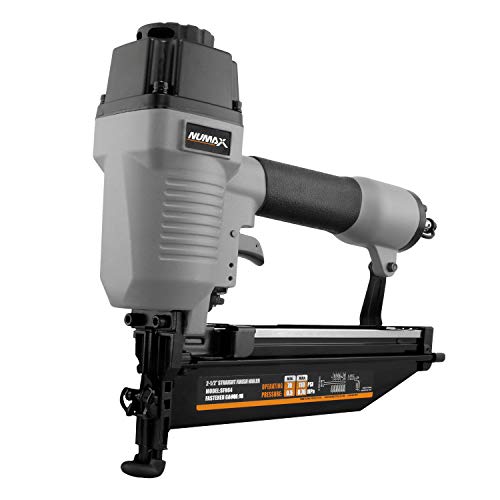
| NuMax SFN64 | Best Budget | 16-gauge, 1 in to 2.5 in | 4.6/5 |
| Grex P635 | Best for Delicate Trim and Cabinet Returns | 23-gauge, Up to 1-3/8 in | 4.5/5 |
| Metabo HPT NT1850DE | Best for Cabinet Installation | 18-gauge, 5/8 in to 2 in | 4.5/5 |
| BOSTITCH BTFP12233 | Best Pneumatic for Angled Corners | 18-gauge, 3/4 in to 2 in | 4.4/5 |
| Makita AF505N | Best for Trim Carpenters | 18-gauge, 5/8 in to 2 in | 4.3/5 |

DeWalt DCN680D1
Best OverallPros
- No hose to snag in tight corners
- Brushless motor needs less maintenance
- Tool-free jam clearing saves time
Cons
- Battery adds weight versus pneumatic guns
- Pricier than corded or pneumatic options
This 20V cordless brad nailer pairs a brushless motor with a narrow nose that slips into cabinet corners without a hose dragging behind it. Tool-free jam release means fewer interruptions mid-project. Owners report it handles both trim and cabinet assembly without swapping tools.

Ryobi P320
Best ValuePros
- Compatible with the wide One+ battery lineup
- Lighter than most cordless competitors
- Tool-free jam clearing
Cons
- Battery and charger sold separately on bare tool
- Less nail length range than 20V rivals
Built on the One+ 18V platform, this brad nailer shares batteries with other Ryobi tools many DIYers already own. Its compact head reaches into corners nearly as well as pricier cordless models. Tool-free jam clearing and a rear exhaust keep dust off the work.
NuMax SFN64
Best BudgetPros
- Low upfront cost versus cordless guns
- Angled magazine clears tight corners
- Drives longer nails for baseboard work
Cons
- Requires an air compressor and hose
- Heavier than most cordless brad nailers
A pneumatic 16-gauge finish nailer that costs far less than cordless alternatives while still driving nails long enough for baseboard and door casing. A 15-degree angled magazine helps it slip into corners a straight magazine would block. No battery to charge or replace.

Grex P635
Best for Delicate TrimPros
- Slimmest nose in this comparison
- Leaves nearly invisible pin holes
- Very light for extended overhead work
Cons
- Headless pins offer less holding strength
- Needs glue for most structural joints
This 23-gauge pin nailer fires headless pins that leave almost no visible hole, ideal for delicate trim returns inside cabinets. Its slim body and no-mar tip fit into corners where even a compact brad nailer feels bulky. Best paired with glue since headless pins hold less on their own.
Metabo HPT NT1850DE
Best for CabinetsPros
- Compact housing suited to cabinet boxes
- Tool-free depth adjustment
- Brushless motor for longer tool life
Cons
- Battery sold separately on bare tool
- Shorter max nail length than some rivals
A brushless 18V cordless brad nailer with a compact housing built for repeated use inside cabinet boxes. Tool-free depth adjustment lets installers switch between face frames and thin panel stock quickly. No compressor setup needed between cabinet runs.

BOSTITCH BTFP12233
Best for Angled WorkPros
- Low-profile head clears face frames
- Oil-free operation reduces maintenance
- Selectable trigger for different tasks
Cons
- Requires compressor and air hose
- Nail length range is more limited
This oil-free pneumatic brad nailer uses a Smart Point nose designed for precise placement in corners and miters. A low-profile head clears cabinet face frames that trip up bulkier guns. Selectable trigger modes suit both single shots and rapid trim runs.

Makita AF505N
Best for ProsPros
- Consistent, tool-less depth control
- Rafter hook for jobsite mobility
- Comfortable for extended daily use
Cons
- Needs a compressor on site
- No cordless option in this model line
A pneumatic 18-gauge brad nailer with tool-less depth adjustment and a rafter hook for moving between jobsite corners quickly. Its narrow nose and low weight suit long days of repetitive trim work. Consistent drive depth reduces sanding and puttying afterward.
Why Tight Spaces Change What Matters
Raw power takes a back seat once a nailer has to fit inside a cabinet box or against a stair stringer. Nose length, head height, and whether a hose trails behind the tool decide access more than driving force does. A powerful nailer that can't physically reach the nail point is no help at all.
Gauge and Nail Length: Matching Tool to Trim
An 18-gauge brad nailer covers most trim, door casing, and cabinet work, while 23-gauge pin nailers suit delicate returns where a visible hole would matter. Sixteen-gauge finish nailers drive longer nails for baseboard but carry a bulkier nose. Match gauge to the material thickness before comparing brands.
Cordless vs Pneumatic in Cramped Corners
Cordless brad nailers remove the hose that often catches on cabinet edges or stair rails. Pneumatic guns stay lighter in the hand and skip battery costs, but the hose itself can become the obstacle in a tight closet or crawlspace. Weigh which limitation you'll hit more often on your project.
Reading the Spec Sheet Before You Buy
Compare nose length and head height side by side rather than trusting a product photo. Weight matters for overhead work inside cabinets, while nail length range determines whether one tool covers both trim and thicker stock. A tool-free jam release also saves real time when working in a cramped, awkward position.
FAQs
What is the best nail gun for tight spaces like cabinets?
Cordless brad nailers such as the DeWalt DCN680D1 tend to work best in cabinets since there's no hose to catch on the box sides.
Can a pin nailer work in tight corners?
Yes, 23-gauge pin nailers like the Grex P635 have a slimmer nose than most brad nailers, making them useful for the tightest trim returns.
Is a cordless or pneumatic nail gun better for corners?
Cordless models avoid a trailing hose, while pneumatic guns are lighter in hand, so the better choice depends on which obstacle your workspace presents more often.
What gauge nail gun is best for trim in small spaces?
An 18-gauge brad nailer suits most trim and cabinet work, while 16-gauge is better reserved for baseboard where more holding strength is needed.
Does a smaller nail gun sacrifice power?
Not necessarily. Many compact brad nailers, including cordless brushless models, drive nails at full depth despite their reduced nose size.
Can I use a nail gun inside a cabinet box?
Yes, compact brad nailers with a low-profile head, such as the Metabo HPT NT1850DE, are designed for repeated use inside cabinet installs.
What is the smallest nose nail gun for tight corners?
Headless 23-gauge pin nailers like the Grex P635 generally have the slimmest nose profile in typical trim carpentry lineups.
Is a battery-powered nail gun heavier than a pneumatic one?
Usually yes, since the battery adds weight, though the tradeoff is not needing a compressor or hose nearby.
How do I choose between brad and pin nailers for tight spots?
Choose a brad nailer for general trim needing more holding strength, and a pin nailer for delicate returns where a nearly invisible hole matters more than strength.
Our verdict
For most tight-space jobs, the DeWalt DCN680D1 offers the best balance of a slim nose, cordless freedom, and enough power for both trim and cabinet work. Budget-conscious DIYers should look at the Ryobi P320 or NuMax SFN64, while the Grex P635 remains the specialist choice for delicate returns no brad nailer can reach.