Best Reciprocating Saw for Decking
Cutting deck boards to length, trimming joists, and removing old nails requires a saw that balances power, stroke length, and control. We have analyzed specs, battery ecosystems, and owner reviews from major retailers to find the best reciprocating saw for decking projects.
Quick answer
For most decking jobs, the Milwaukee M18 FUEL Hackzall is the top pick due to its compact size and high power. For budget-conscious DIYers, the Ryobi One+ P518 delivers solid performance without breaking the bank.
Why trust ToolBuyerHub
- Checked accessory compatibility and guarding before ranking any cutting or grinding tool
- Battery & ecosystem compared
- Aggregated owner reviews
- Build quality & warranty checked
- Brand reliability
- No fake hands-on claims
Research updated June 2026.
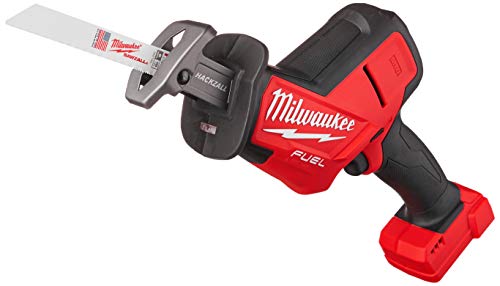
Milwaukee M18 FUEL Hackzall
Compact, powerful, and ideal for cutting deck boards in tight spaces.
| Product | Best for | Key Spec | Rating | Price |
|---|---|---|---|---|
| Milwaukee M18 FUEL Hackzall | Overall | 1.25 in stroke, 3000 SPM | 4.7/5 | Check price |
| DeWalt DCS382B | Power | 1-1/8 in stroke, 2900 SPM | 4.5/5 | Check price |
| Makita XRJ04Z | Battery Life | 1-1/4 in stroke, 2800 SPM | 4.6/5 | Check price |
| Bosch GSA120V | Compact | 1.2 in stroke, 2900 SPM | 4.4/5 | Check price |
| Ryobi P518 | Budget | 1 in stroke, 3000 SPM | 4.2/5 | Check price |
Milwaukee M18 FUEL Hackzall
Best OverallPros
- Compact and lightweight
- Excellent power for its size
- Long battery life
Cons
- Higher price point
- No built-in LED light
The Milwaukee M18 FUEL Hackzall is a compact reciprocating saw that excels at cutting deck boards. Its 1.25-inch stroke and 3000 SPM provide fast, clean cuts through pressure-treated lumber. Owner reviews consistently praise its balance and reduced vibration, which reduces fatigue during long decking sessions.
This saw uses Milwaukee's M18 battery system, which is shared with a wide range of tools. While the tool-only price is higher than some competitors, the performance justifies the cost for frequent users. It is ideal for cutting deck boards flush to joists or trimming ends.
DeWalt DCS382B
Best for PowerPros
- High torque for tough cuts
- Durable build quality
- Variable speed trigger
Cons
- Slightly heavier than competitors
- Can be bulky in tight spots
The DeWalt DCS382B is a full-size reciprocating saw built for heavy-duty decking work. Its 1-1/8 inch stroke and 2900 SPM deliver ample power for cutting through thick joists or composite decking. Owner reviews highlight its reliability and the smooth operation of its keyless blade clamp.
This saw is part of the DeWalt 20V MAX system, which offers a wide selection of batteries and chargers. It is heavier than the Milwaukee Hackzall, but the added weight translates to more cutting force. It is best for users who need to cut through multiple layers or dense materials.
Makita XRJ04Z
Best for Battery LifePros
- Long runtime per charge
- Low vibration design
- Tool-less blade change
Cons
- Less aggressive cut speed
- No variable speed trigger
The Makita XRJ04Z is designed for extended use, with a 1-1/4 inch stroke that allows efficient cutting. It operates at 2800 SPM, which is slightly slower than some rivals, but owner reviews note that it delivers consistent power without bogging down. The Makita 18V LXT batteries are known for their longevity.
This saw features a low-vibration mechanism that reduces user fatigue. It is a good choice for large decking projects where you need to cut many boards in one session. The tool-only price is competitive, and the Makita battery system is compatible with many other tools.

Bosch GSA120V
Best CompactPros
- Very lightweight
- Easy to maneuver
- Good for one-handed use
Cons
- Less power for thick cuts
- Smaller battery system
The Bosch GSA120V is a compact 12V saw that excels in tight spaces. Its 1.2-inch stroke and 2900 SPM are sufficient for cutting standard deck boards. Owner reviews praise its ergonomic design and low weight, making it easy to use for extended periods.
This saw is part of the Bosch 12V MAX system, which is less powerful than 18V systems but offers excellent portability. It is best for light-duty decking tasks, such as trimming boards or cutting small pieces. It is not ideal for cutting thick joists or dense composite materials.
Ryobi P518
Best BudgetPros
- Affordable price
- Wide battery compatibility
- Good speed for its class
Cons
- Shorter stroke length
- Less durable build
The Ryobi P518 is a budget-friendly reciprocating saw that handles basic decking tasks. Its 1-inch stroke and 3000 SPM provide decent cutting speed for pressure-treated lumber. Owner reviews note that it is a good value for DIY users who do not need professional-grade power.
This saw uses the Ryobi ONE+ battery system, which is one of the most affordable and widely available. It is lighter than many full-size saws, making it easier to handle. However, the shorter stroke length means it cuts slower than higher-end models. It is best for occasional deck repairs or small projects.
What to check before buying a reciprocating saw for decking
Stroke length is important for decking because a longer stroke cuts faster through thick boards. Look for at least 1 inch, but 1.25 inches is better for efficiency. Speed, measured in strokes per minute (SPM), affects how quickly you can cut. Higher SPM is useful for softer woods, while lower SPM with more torque handles dense materials.
Battery system matters if you already own tools from a specific brand. Consider the weight of the saw, as you will hold it for extended periods. A lighter saw reduces fatigue. Also, check the blade clamp type. Tool-less clamps make blade changes faster and easier on the job.
Mistakes to avoid
Do not use a blade designed for wood when cutting composite decking. Composite materials require a blade with more teeth to prevent chipping. Avoid using a saw with too short a stroke for thick joists, as it will cut slowly and overheat the motor.
Do not ignore vibration. A saw with high vibration can cause hand fatigue and reduce control. Look for models with anti-vibration features. Also, avoid buying a saw that is too heavy for your needs. A heavy saw can be tiring to use for long periods, especially when cutting overhead or at awkward angles.
FAQs
What is the best blade for cutting deck boards?
A bi-metal blade with 6-10 teeth per inch is ideal for cutting pressure-treated lumber. For composite decking, use a blade with 10-14 teeth per inch to reduce chipping.
Can I use a reciprocating saw to cut decking screws?
Yes, but use a blade designed for metal cutting to avoid damaging the blade. A bi-metal blade can handle both wood and embedded nails or screws.
Is a corded or cordless reciprocating saw better for decking?
Cordless saws offer more mobility, which is useful for outdoor projects. Corded saws provide unlimited runtime and consistent power but require access to an outlet.
How long does a battery last on a reciprocating saw for decking?
Battery life varies by brand and capacity. A 5.0 Ah battery typically lasts 30-60 minutes of continuous cutting, depending on the material and speed settings.
What is the difference between a reciprocating saw and a jigsaw for decking?
A reciprocating saw is better for rough cuts and demolition, while a jigsaw is designed for precise, curved cuts. For decking, a reciprocating saw is more efficient for cutting boards to length.
Can I cut composite decking with a reciprocating saw?
Yes, but use a fine-tooth blade to prevent chipping. Composite materials are harder on blades, so expect to replace them more frequently.
What safety gear should I use when operating a reciprocating saw?
Wear safety glasses, hearing protection, and gloves. A dust mask is also recommended when cutting treated wood to avoid inhaling sawdust.
How do I maintain a reciprocating saw for decking?
Clean the blade clamp after each use to remove debris. Lubricate the moving parts occasionally and store the saw in a dry place to prevent rust.
Is a variable speed trigger important for decking?
Yes, it allows you to start cuts slowly and increase speed as needed. This helps prevent kickback and gives better control when cutting near edges.
What is the average price of a good reciprocating saw for decking?
Prices range from $60 for budget models to over $200 for professional-grade saws. The best value for most users is in the $100-$150 range.
Our verdict
For most decking projects, the Milwaukee M18 FUEL Hackzall is the best overall choice due to its compact size, power, and battery efficiency. If you need a budget-friendly option, the Ryobi P518 offers solid performance at a lower cost, making it ideal for occasional use.