Best Reciprocating Saws of 2026
Reciprocating saws are the go-to for demolition, pruning, and rough cuts across wood, metal, and plastic. We have analyzed specs, battery ecosystems, and owner reviews to find the best models for 2026.
Quick answer
The Milwaukee M18 Fuel Hackzall is the best overall reciprocating saw of 2026 for its unmatched power-to-weight ratio and long runtime. For a budget pick, the Ryobi One+ P516 offers reliable performance at a lower entry cost.
Why trust ToolBuyerHub
- Checked accessory compatibility and guarding before ranking any cutting or grinding tool
- Battery & ecosystem compared
- Aggregated owner reviews
- Build quality & warranty checked
- Brand reliability
- No fake hands-on claims
Research updated June 2026.
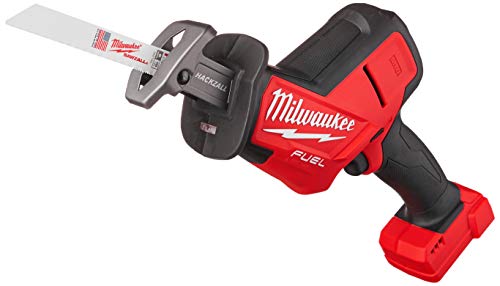
Milwaukee M18 Fuel Hackzall
Brushless motor, variable speed trigger, and excellent vibration control.
| Product | Best for | Key Spec | Rating | Price |
|---|---|---|---|---|
| Milwaukee M18 Fuel Hackzall | Overall | 3,000 SPM | 4.8/5 | $$$ |
| DeWalt DCS389B | Heavy Demolition | 3,200 SPM | 4.7/5 | $$$ |
| Makita XRJ04Z | Compact Power | 2,800 SPM | 4.6/5 | $$ |
| Bosch GSA18V-125B | Low Vibration | 3,100 SPM | 4.5/5 | $$ |
| Ryobi P516 | Budget | 3,000 SPM | 4.3/5 | $ |
Milwaukee M18 Fuel Hackzall
Best OverallPros
- Excellent power and runtime
- Low vibration design
- Variable speed trigger
Cons
- Expensive
- No included battery
The Milwaukee M18 Fuel Hackzall is widely regarded as the best reciprocating saw on the market. Its brushless motor delivers consistent power for cutting through wood, metal, and PVC with ease. Owner reviews consistently praise its smooth operation and long battery life, making it ideal for both professionals and serious DIYers.
While it is priced at a premium and comes without a battery, its performance justifies the cost for those already invested in the M18 ecosystem. The tool feels well-balanced and the variable speed trigger allows for precise control on different materials.
DeWalt DCS389B
Best for Heavy DemolitionPros
- High cutting speed
- Durable build
- Tool-free blade change
Cons
- Heavier than competitors
- Vibrates more at high speed
The DeWalt DCS389B is built for tough demolition tasks. With a max 3,200 SPM and a 1.25-inch stroke, it cuts through thick lumber and metal studs quickly. Owner reviews highlight its reliability on job sites and the convenience of the tool-free blade clamp.
Its main drawback is weight; at 6.8 pounds bare, it can be tiring for overhead work. However, for heavy-duty cutting where power matters most, this saw is a top contender. It works well within the DeWalt 20V MAX system.
Makita XRJ04Z
Best Compact PowerPros
- Lightweight and compact
- Excellent build quality
- Low vibration
Cons
- Lower max SPM
- No variable speed trigger
The Makita XRJ04Z is a compact powerhouse that excels in tight spaces. Weighing only 5.1 pounds, it is one of the lightest in its class, making it perfect for pruning and overhead cuts. Owner reviews note its smooth operation and the reliability of the Makita 18V LXT platform.
Its lower 2,800 SPM means it is slower for heavy demolition compared to the DeWalt or Milwaukee. However, for general cutting tasks and users who prioritize maneuverability, this saw is a strong choice. It lacks a variable speed trigger, which some may miss.
Bosch GSA18V-125B
Best Low VibrationPros
- Very low vibration
- Smooth cutting action
- Tool-free blade change
Cons
- Battery not included
- Less common ecosystem
The Bosch GSA18V-125B stands out for its low vibration design, which reduces user fatigue during extended use. It offers a 3,100 SPM rate and a smooth cutting action that owner reviews describe as comfortable and precise. The tool-free blade clamp makes swaps quick.
Its main limitation is the Bosch 18V ecosystem, which is less widely adopted than Milwaukee or DeWalt. This means fewer battery options and potentially higher costs for replacements. For users who prioritize comfort and already own Bosch tools, it is an excellent choice.
Ryobi P516
Best BudgetPros
- Affordable price
- Wide One+ ecosystem
- Good for light tasks
Cons
- Less powerful than premium models
- Higher vibration
The Ryobi P516 is the best budget reciprocating saw for DIYers. It offers a 3,000 SPM rate and a 1.25-inch stroke, making it capable for cutting lumber, PVC, and light metal. Owner reviews appreciate its low cost and the extensive Ryobi One+ battery system, which powers over 200 tools.
It is not as powerful or smooth as the Milwaukee or DeWalt, and vibration is more noticeable during heavy use. For occasional projects and homeowners, it delivers solid value. It is a great entry point for those starting a tool collection.
What to check before buying a reciprocating saw
Consider the stroke length, which determines how much material the saw cuts per stroke. A 1.25-inch stroke is standard for most tasks. Max SPM (strokes per minute) affects cutting speed; higher SPM is better for demolition. Weight matters for comfort during extended use. The battery ecosystem is crucial if you already own tools from a specific brand. Look for tool-free blade changes for convenience. Variable speed triggers offer better control on different materials. Finally, check for vibration reduction features, which reduce fatigue.
Mistakes to avoid when choosing a reciprocating saw
Do not buy a saw based solely on price; a cheap tool may lack power and durability. Avoid ignoring the battery system; buying a saw from a new platform means investing in batteries and chargers. Do not overlook weight if you plan to use the saw overhead or for long periods. Avoid models without variable speed if you need precision on different materials. Do not assume all blades are universal; check compatibility with your saw's shank type. Finally, do not neglect vibration ratings if you have hand or arm issues.
FAQs
What is a reciprocating saw used for?
It is used for demolition, pruning, and cutting through wood, metal, plastic, and drywall with a push-pull motion.
What is the difference between a reciprocating saw and a jigsaw?
A reciprocating saw uses a larger blade for rough cuts and demolition, while a jigsaw uses a smaller blade for curved and precise cuts.
How do I choose the right blade for my reciprocating saw?
Match the blade TPI (teeth per inch) to the material: fewer teeth for wood, more teeth for metal.
Can a reciprocating saw cut concrete?
Yes, with a carbide-grit blade, but it is slow and produces dust; a concrete saw is more efficient.
What is the best reciprocating saw for beginners?
The Ryobi P516 is a good entry-level choice due to its low price and wide ecosystem.
How long does a reciprocating saw battery last?
It varies by use; a 5Ah battery can last 30-60 minutes of continuous cutting.
Is a corded or cordless reciprocating saw better?
Cordless offers portability, while corded provides unlimited runtime and often more power for heavy use.
What is the best reciprocating saw for pruning?
The Makita XRJ04Z is lightweight and compact, making it ideal for pruning branches.
How do I reduce vibration from a reciprocating saw?
Choose a model with vibration reduction technology and use sharp blades to minimize resistance.
Can I use a reciprocating saw for plumbing?
Yes, it can cut through PVC, copper, and cast iron pipes with the appropriate blade.
Our verdict
The Milwaukee M18 Fuel Hackzall is the best overall reciprocating saw of 2026 for its power, runtime, and low vibration. For budget-conscious buyers, the Ryobi P516 offers reliable performance without breaking the bank.