Best Rubber Mallet for Professionals
Choosing the best rubber mallet for professionals means finding a tool that delivers controlled striking force without damaging surfaces. We have analyzed retailer feedback, brand reliability, and build specifications to identify the mallets that offer the best durability, grip, and balance for demanding worksites.
Quick answer
For most professionals, the Stanley FatMax Anti-Vibe Rubber Mallet offers the best balance of shock absorption, head durability, and handle comfort. If you need a dead-blow design for maximum force transfer, the Trusty-Cook 2-Pound Dead Blow is the top choice for assembly and automotive work.
Why trust ToolBuyerHub
- Checked accessory compatibility and guarding before ranking any cutting or grinding tool
- Battery & ecosystem compared (for power tools)
- Aggregated owner reviews from major retailers
- Build quality & warranty checked
- Brand reliability
- No fake hands-on claims
Research updated June 2026.
Stanley FatMax Anti-Vibe Rubber Mallet
Industry-standard anti-vibe handle and replaceable heads.
| Product | Best For | Head Weight | Handle Material | Rating |
|---|---|---|---|---|
| Stanley FatMax Anti-Vibe | Best Overall | 24 oz | Fiberglass | 4.8/5 |
| Trusty-Cook Dead Blow | Maximum Force | 32 oz | Polyurethane | 4.7/5 |
| Nupla 24 oz Rubber Mallet | Heavy Duty | 24 oz | Fiberglass | 4.6/5 |
| Estwing Sure Strike | Precision Work | 16 oz | Steel/Fiberglass | 4.5/5 |
| TEKTON 16 oz Rubber Mallet | Budget Choice | 16 oz | Wood | 4.4/5 |

Stanley FatMax Anti-Vibe Rubber Mallet
Best OverallPros
- Anti-vibe handle reduces fatigue significantly
- Replaceable rubber heads extend tool life
- Excellent balance for precise strikes
Cons
- Heads can wear quickly on rough concrete
- Higher price point than basic mallets
The Stanley FatMax Anti-Vibe Rubber Mallet is a top choice for professionals who need a reliable, comfortable tool for daily use. Owner reviews consistently praise its fiberglass handle and bi-material grip for reducing vibration transfer, making it ideal for long sessions of chisel work or form setting. The 24-ounce head provides enough mass for general carpentry and masonry tasks without being overly heavy.
Some users note that the rubber heads can show wear faster when used on abrasive surfaces like concrete forms. However, the replaceable head design mitigates this issue, and the limited lifetime warranty adds peace of mind. For a professional-grade rubber mallet that balances comfort and durability, this is the benchmark.

Trusty-Cook 2-Pound Dead Blow Mallet
Best Dead BlowPros
- Dead-blow design eliminates rebound
- Urethane head is very durable and non-marring
- Excellent for automotive and assembly work
Cons
- Heavier than standard rubber mallets
- Urethane can be too hard for delicate trim work
The Trusty-Cook 2-Pound Dead Blow Mallet is a specialist tool for professionals who need maximum force transfer with zero rebound. The steel shot inside the urethane head absorbs the impact, preventing the mallet from bouncing back. This makes it ideal for tasks like seating bearings, aligning panels, or driving chisels where follow-through is critical.
Owner reviews highlight the durability of the urethane head, which resists chipping and cracking far better than standard rubber. The main trade-off is weight; at 32 ounces, it is heavier than most rubber mallets, which can be fatiguing for overhead work. For automotive techs and metal fabricators, this is a top-tier choice.

Nupla 24 oz Rubber Mallet
Best Heavy DutyPros
- Very durable fiberglass handle resists breakage
- Replaceable heads for extended use
- Good grip texture even with gloves
Cons
- Handle can feel slick when wet
- Heads may be harder to find locally
The Nupla 24 oz Rubber Mallet is a workhorse for heavy-duty applications like concrete form work and masonry. Its fiberglass handle is known for being exceptionally tough, and owner reviews rarely report handle breakage even under hard use. The 24-ounce head provides ample striking force for driving stakes or setting forms.
Some users mention that the handle can become slippery when wet or covered in dust, so a glove is recommended. Replacement heads are available but may not be stocked at all hardware stores. For professionals who need a rugged, no-nonsense mallet that can take abuse, the Nupla is a solid choice.
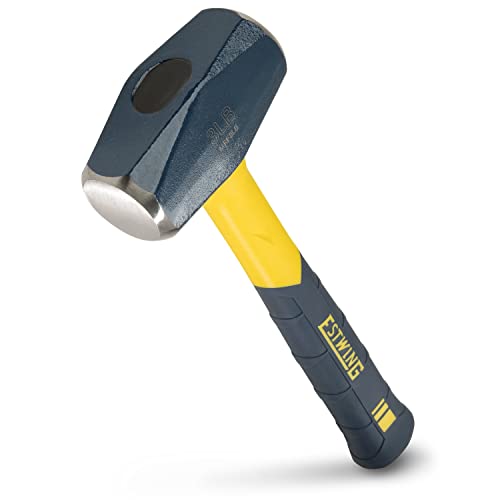
Estwing Sure Strike Rubber Mallet
Best PrecisionPros
- Compact size for tight spaces
- Estwing's reputation for quality handles
- Good balance for controlled strikes
Cons
- Lighter head may not suit heavy work
- Rubber head can deform over time
The Estwing Sure Strike Rubber Mallet is designed for precision work where a lighter touch is needed. Its 16-ounce head and shorter 12-inch handle make it easy to control in confined spaces like cabinets or machinery. Estwing's handle construction is well-regarded for durability, and the grip is comfortable for extended use.
Some owner reviews note that the rubber head can lose its shape after heavy use on hard surfaces. This mallet is best suited for light assembly, trim work, or tasks where you need to avoid damaging the workpiece. For professionals who need a precise, compact mallet, the Estwing is a reliable option.

TEKTON 16 oz Rubber Mallet
Best BudgetPros
- Very affordable price point
- Wood handle offers classic feel
- Lightweight and easy to handle
Cons
- Wood handle can crack under heavy use
- Head is not replaceable
The TEKTON 16 oz Rubber Mallet is a budget-friendly option that performs well for light to medium tasks. Its wooden handle provides a traditional feel and adequate strength for general home and shop use. The 16-ounce head is suitable for light assembly, upholstery, or tapping joints together.
Owner reviews indicate that while it is a good value, the wood handle is not as durable as fiberglass options and may crack if used for heavy striking. The head is also not replaceable, so the tool has a limited lifespan. For professionals on a tight budget or for occasional use, the TEKTON is a practical choice.
What to Check Before Buying a Rubber Mallet
Choosing the right rubber mallet depends on the specific demands of your work. Consider the head weight: lighter mallets (16 oz) are for precision and light assembly, while heavier ones (24-32 oz) are for driving stakes and concrete forms. The handle material is also critical; fiberglass offers the best durability and vibration dampening, while wood is lighter but less robust.
Look for replaceable heads if you plan on heavy use, as this extends the life of the tool. Dead-blow mallets are ideal for applications where rebound is undesirable, such as automotive work or metal fabrication. Finally, check the grip; a bi-material or textured handle reduces fatigue and improves control in wet or dusty conditions.
Mistakes to Avoid When Buying a Rubber Mallet
One common mistake is buying a mallet that is too heavy for the task, which can lead to fatigue and damage to the workpiece. Another is choosing a mallet with a non-replaceable head for professional use, as the head will wear out and require a full tool replacement. Professionals should also avoid mallets with poor grip, as this can lead to loss of control and potential injury.
Do not assume all rubber mallets are non-marring; some harder rubber compounds can leave marks on soft materials like aluminum or finished wood. Always check the head material specification. Finally, avoid the cheapest options for daily use, as they often have inferior handles that can break, creating a safety hazard.
FAQs
What is the best rubber mallet for concrete form work?
The Stanley FatMax Anti-Vibe or Nupla 24 oz are top choices due to their durable fiberglass handles and replaceable heads.
Is a dead-blow mallet better than a standard rubber mallet?
A dead-blow mallet is better for tasks where you need no rebound, such as seating bearings or aligning parts, but it is heavier.
Can I use a rubber mallet on metal?
Yes, but use a dead-blow or urethane head mallet to avoid marring the surface and to reduce rebound.
How long does a rubber mallet head last?
With regular use on wood or concrete, a rubber head can last 6-12 months before needing replacement, depending on the quality.
What size rubber mallet do I need for general construction?
A 24-ounce mallet is a good all-around size for general construction tasks like form setting and driving stakes.
Are fiberglass handles better than wood for rubber mallets?
Yes, fiberglass handles are more durable, resist moisture, and absorb vibration better than wood handles.
Can I replace the head on any rubber mallet?
No, only mallets specifically designed with replaceable heads allow this; check the product specifications before buying.
What is the best rubber mallet for automotive work?
The Trusty-Cook Dead Blow mallet is highly recommended for automotive work due to its non-rebound design and durable urethane head.
How do I clean a rubber mallet?
Wipe the head and handle with a damp cloth and mild detergent; avoid harsh chemicals that can degrade the rubber.
Is a heavier rubber mallet always better?
No, a heavier mallet can cause fatigue and over-strike damage; choose the weight that matches the task.
Our verdict
For most professionals, the Stanley FatMax Anti-Vibe Rubber Mallet is the best overall choice due to its comfort, durability, and replaceable heads. For a budget-friendly option that still performs well for light tasks, the TEKTON 16 oz Rubber Mallet is a solid value. For maximum force with no rebound, the Trusty-Cook Dead Blow is the specialist pick.